
EPISODE · Feb 4, 2026 · 41 MIN
Are You Born to Run on Less Sleep? A Neuroscientist's Guide to Genes, Fatigue, and Practical Strategies for High-Stress Environments: With Dr Allison Brager
from Optimising Human Performance
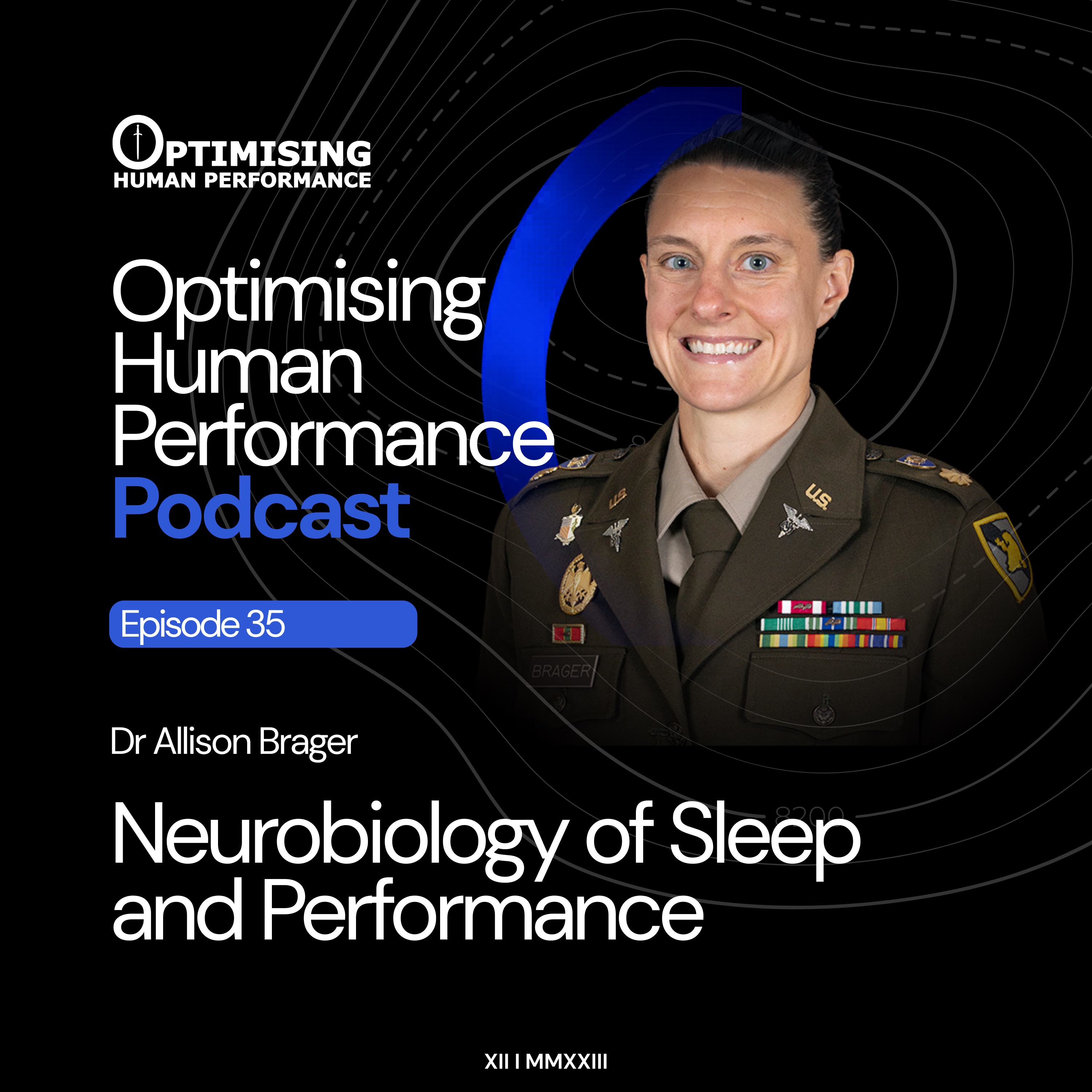
In this episode, Martin & JP talk to Dr Allison Brager, an active-duty Army officer and neuroscientist specialising in sleep and fatigue research.Dr. Brager shares her pioneering research on how both acute and chronic sleep deprivation affect physiological, cognitive, and emotional performance, especially in high-stakes environments. She breaks down the genetic factors that make some individuals resilient to sleep loss, debunks common myths about "training" yourself to need less sleep, and reveals the critical role of sleep in energy (ATP) production outside of the brain. Plus, learn about the military's evidence-based strategies for managing inevitable fatigue, including the best way to use strategic caffeine dosing.Key Takeaways:Acute (Forced Wakefulness): After 18 to 24 hours, an individual struggles to recover performance without a sleep opportunity.Chronic (5 hours/night): Three days of chronic restriction lead to a decline in physiological, cognitive, and emotional state approaching clinically significant levels (e.g., a 50% drop in testosterone).Genetic Resiliency: A naturally occurring mutation in the adenosine receptors can make individuals more resilient to sleep deprivation, slowing the rate of decline in performance under forced wakefulness.The Sleep-First Principle: Sleep is the biological foundation for readiness. It is necessary to replenish glycogen and fat reserves (ATP/energy homeostasis) to support high-intensity training and performance the following day.Nap Strategy: A simple 20-minute nap or "chill time" can significantly increase productivity, morale, and unit welfare in operational settings.Strategic Caffeine Dosing: Do not wait until you feel tired to take caffeine; it's already too late.SLANT Acronym: Optimise a suboptimal sleep environment by controlling Surface, Light (use red light, eye masks), Air quality, Noise (use earplugs), and Temperature.Busting the Morning Caffeine Myth: Dr. Brager states that for an individual with an entrained circadian rhythm, morning caffeine has a minimal effect on the body's ability to use light as a time cue. Light is the most potent time cue, and the idea that you must wait hours after waking up to consume coffee is generally considered "nonsense."Guest, Cast & CrewDr Allison Brager is a highly respected neurobiologist and active-duty US Army officer with expertise in neuroscience, sleep, and circadian rhythms. Her work examines substrates and mechanisms of resiliency to extreme environmental stress in Special Forces and other elite populations during intense maritime, aviation, and land-based training and operations in Antarctica, the Central American rainforest, and other austere environments. Her popular science book, titled Meathead: Unravelling the Athletic Brain, links exercise physiology and neuroscience to her experiences as an elite athlete.Hosted by Martin Jones & Jonpaul Nevin https://www.ophp.co.uk Produced & edited by Bess ManleyResourceshttps://www.westpoint.edu/directory/allison-j-bragerhttps://www.instagram.com/docjockzzz/?hl=en linkedin.com/in/allison-brager-80a58210 Meathead: Unraveling the Athletic Brain https://www.amazon.co.uk/Meathead-Unraveling-Athletic-Allison-Brager/dp/149086444X Born To Run https://www.amazon.co.uk/Born-Run-Hidden-Ultra-Runners-Greatest/dp/1861978774 Thanks for tuning in. If you found this podcast valuable, please take a moment to rate, share & review. If you have feedback, guest suggestions or topics that you'd love us to cover, then do email us at [email protected] or connect with us on LinkedIn. Chapters01:33 Exploring Sleep Deprivation07:55 Genetic Factors in Sleep Resilience13:43 Impact of Physical Activity on Sleep24:57 Practical Sleep Strategies for High-Stress Environments29:55 Caffeine and Sleep Management37:59 Conclusion and Final ThoughtsThanks for listening to Optimising Human Performance.This podcast is for people who can’t afford to fail. Each episode gives you practical, evidence‑based tools you can apply in the real world.For more about the podcast, speaking, coaching, and mentoring, visit:www.ophp.co.ukConnect with us:LinkedIn: https://www.linkedin.com/company/ophp/Instagram: @ophumanperformanceIf you found this episode useful, please share it with one colleague, subscribe, and leave a review – it helps us reach more people who operate in high‑stakes environments. Hosted on Acast. See acast.com/privacy for more information.
Embed this episode
Ready to play
Are You Born to Run on Less Sleep? A Neuroscientist's Guide to Genes, Fatigue, and Practical Strategies for High-Stress Environments: With Dr Allison Brager
No transcript for this episode yet
Similar Episodes
No similar episodes found.
Similar Podcasts
No similar podcasts found.