Yeah, it's weird when you see first-hand, like your friends or family, like how money affects them once they get a taste. Ah, yeah. Everyone's liberal till they get rich, right? Yeah.
Then they become socially liberal, fiscally conservative. This morning I had a terrible argument with myself that the makeup section is incredible. Every second of the boy I go on stage, I say, Jesus, allow me to reflect your light, conduct your warmth, and radiate your joy to this crowd. That takes me out of being in the service.
I think we'll be able to make a lot of those audiences. Especially the girls. Johnny Dark, the great Johnny Dark had the funniest lawyers. We performed in Korea.
He said, you accidentally got in front of the crowd. Of Koreans who didn't speak any English except for three words. You, not funny. That's a great Johnny Dark.
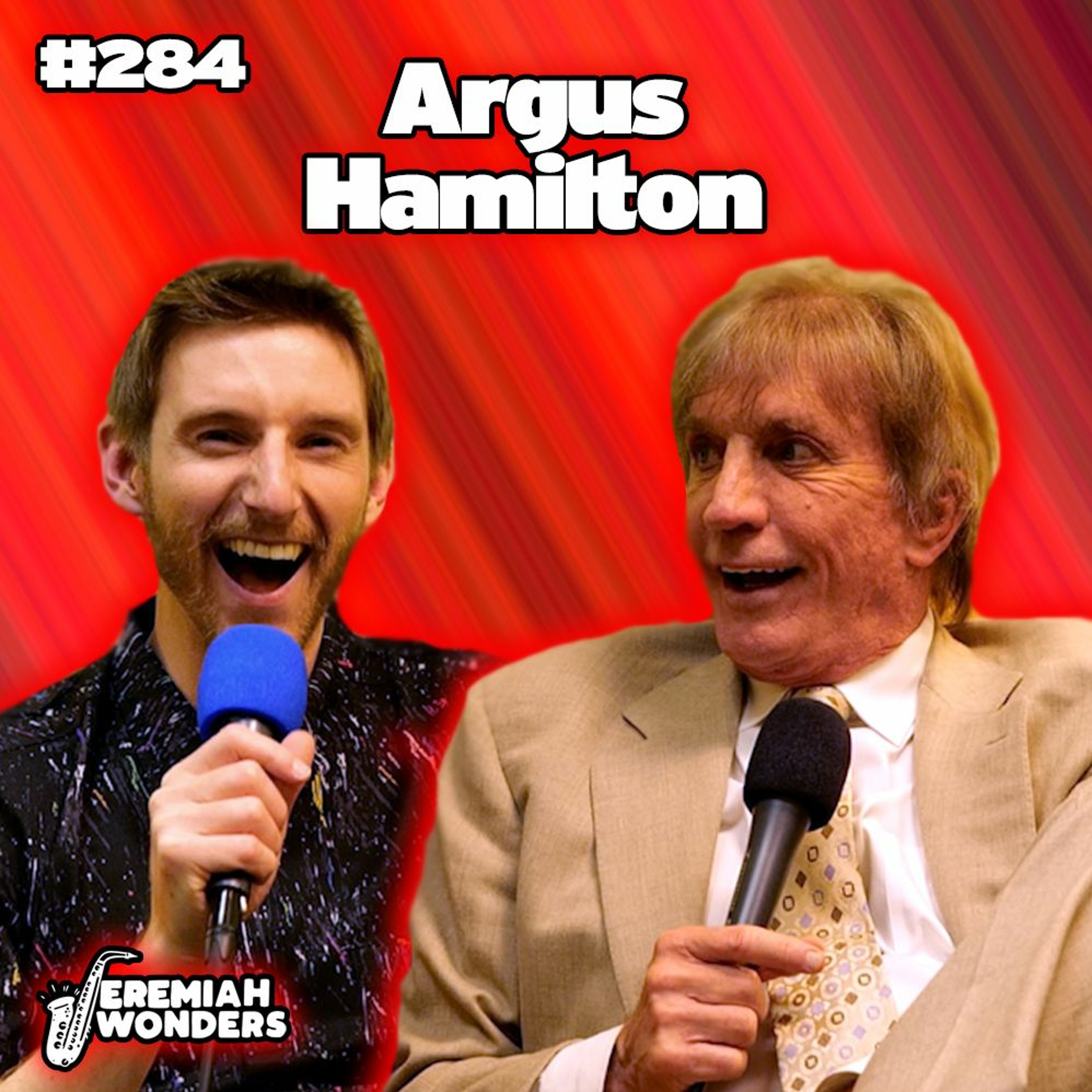
Make a laugh for Argus Hamilton. Here with the legendary comedian, one of the OGs of the Comedy Store and a guy who I'm very lucky to call my friend, here on the podcast, please welcome the great. Argus Hamilton. Argus Hamilton to the show.
Thank you, Jeremiah. Great to be here in Las Vegas. I know. It's so cool that we got to work together in Las Vegas.
We're always at the Comedy Store together. So do you gamble? I did last night. Really?
Yeah. I turned a $20 bill into $248 on the slot machines. Really? Yeah.
I got super lucky last night. Did you believe with it? Yeah. I left with it.
Fantastic. Yeah. Yeah. It was up around 300.
And then I kept going a little bit. I was like, my caps if I get down to 250, I'm pulling it out. That's what I did. Wow.
Yeah. This is so many productions. I really don't think people like me this far. I think people, they, you know, say and say, For sure.
They noticed me that I knew I'd buy this for 40 time. Maybe then, like they were dealing with locally. Some Americans, 60 maxed retired, 60 maxed, 60, 60, 50, 60, 50, 60. But remember here.
They just handle 50. Participation, 50, 90. 60 maxed, 500, 60, 60, that Sharpies did get in a little bit. And all the other things that I told you start touching the shoot are right.
Yeah. So everyone needs to pay, you always do it. I just hear what you're doing, you just going to, you're not store, it's work. And that's a good, you know, that's a compliment.
Like, I don't really understand why they still have me going on second now. I'm serious. Yeah, because ever since the pandemic, I've connected with millennials and even some generations, see, I really connect with millennials. Yeah.
And it's the same way we baby boomers connected with Rodney Dangerfield in the eighties. Sure. I'm their naughty uncle, Lord Hamilton. And I teach them how to race hell as long as they can before they have to get well.
It's crazy. The impact on the crowd, like in those main rooms, like what, how hard I see you killing like I'm the maximum space. I'm like, all right. And then unfortunately, to bring you up, I prefer that.
Sure. You know, they're gonna follow you. But yeah. Well, I used to have to follow you from time to time in the original room.
Yes. And when you would get down on your stomach and do this bit about sex, no one could follow it. And I think you stopped doing it just to be nice to the other comedians. I mean, because it was murder.
Yeah, it was, it was the bit was how women turn into like werewolf like creatures around karaoke and how you can take them to bed afterwards. And it was basically me acting like a woman getting sex in many different positions. And yeah, I was pretty, like pretty much every common suture in the book. Yeah.
Right. Yeah. And so yeah, I've been wanting to have you on the podcast for a while. So I was glad that it worked out because you're one of those guys who you came up when you know everybody in the game, like at the comedy store, you're one of the original people who helped like Mitzi like kind of like open it up with like the lineups and stuff as far as like the comedy store, the Westwood comedy store, you talked about the Dunes here in Vegas.
And I kind of wanted to pick your brain and have you share some stories about that over the years. Mitzi and her husband Sammy were extraordinarily lucky because they opened this room on the Sunset Strip, the comedy store. It was a little 135 seat room in May of 1972. Now this little room was part of a huge huge nightclub building that had been called Syros back during the heyday of Hollywood.
All the movie stars came and it had a 450 seat main room and a hundred seat belly room upstairs. But Mitzi had sub leads her and Sammy this little 135 seat room in May of 72. That's really important because as I was just talking to Liz Stone, tremendous comedian here tonight. The 70s was the time of the three network television.
And in May of 72, it so happens that's the month and the year Johnny Carson moved the tonight show to Los Angeles from New York. And suddenly this entire sub generation of comedians that had developed in New York in the late 60s had to come out to Los Angeles. And there was the comedy store waiting for them. And you had all these brilliant comics that were disciples of Robert Klein really and David Steinberg, they were disciples of these guys and they were right there and ready.
Okay, so you had all these ready comics from New York. You had sitcom stars like Red Fox and Welcome Back Hotter, Gabe Kaplan were established and Rodney Dangerfield would always drop by. So they got off to a running start in 72. It was hot right away.
Yeah, I didn't get there till 76. But the first generation of them starting in 76, 77 were doing the tonight show. And the tonight show was the Golden Door to success. Oh yeah.
And what were you doing? Had you been doing comedy elsewhere up before 76? What was your time? The campus star at the University of Oklahoma.
Okay. Okay. And two or three different ways. I emceeed all the campus shows.
But more importantly, I had a political humor column of jokes in the school newspaper in the Oklahoma Daily. And it was a 25,000 circulation newspaper. Everybody on campus read it. I had my picture three inches by two inches in the paper for eight semesters next to my column.
And I parlayed that into a campus show at a bar on campus corner in Norman called trivia night where I gave out free pictures of beer for trivia questions over the PA system and punch lines to jokes. So that's why it took me five and a half years to graduate from OU because I was having such a good time. Yeah. Yeah.
I was a social chairman at the ATO house planning all the parties. And as long as my classes were in the afternoon, we were fine. But I majored in Coors. I had a 3.2.
And due to my high intellect, I was allowed to graduate after only three terms. Nix and Ford and Carter's. So anyway, I had a ball. And so you've always been a part of your, but what not?
I didn't know if I was going to New York or LA, but one night we're sitting in the ATO house fraternity house living room. We're ATOs. We're sitting around watching Johnny Carson and Sammy Davis was the guest. And he said, Johnny, I saw this young comedian at this new place called the Comedy Store.
I want to bring him out and have him perform. Johnny said fine. This guy came out. It was Freddy Prince.
He just blew up the room there in Burbank at NBC. And the next thing you know, he had his own sitcom. And that's pretty much the way it went with everybody. You would kill on the tonight show.
And then he would help us. Just telling Liz Stone, you graduate to either your network deal or your movie deal, or you decide to keep doing talk shows until you get to host one. Pretty much the three avenues. And so when I got there in 76, it was a big, big year because the height of the baby boom was the year I was born.
And we were all getting out of college that year and the year before. Okay. And so we had a huge pledge class of comics that auditioned for Mitzi, sure, in 1976. And what was the audition process like back then, because it's changed quite a bit over the years for the different talent coordinators and stuff like that.
What was your... Mitzi, Mitzi, met Cetera Fied everybody. There were comics that were doing the tonight show that were nervous when she was in the room. But she had so much power.
She determined whether or not you were going to have a career or not. That's how powerful she was. And... Did you ever see anybody that she drastically changed her mind on?
Like that she was very cold on? Yes, absolutely. Yeah. Gary Shanley.
Really? Yeah. She treated him like a little bitch. Okay.
For about four or five years. She made him from 74 to 79. She made him audition, audition, audition, audition. And what it did was, it forced him to become a successful TV scriptwriter for sitcoms in that time.
And he just got better and better and better. And so by the time she finally relented and made him a regular, he was ready for the tonight show. And he blew it out. And the next thing you know, he was guest hosting.
And he was on his way. But that's... But that was a prime example. And later on, she claimed that she was making him sweat on purpose to make him better.
And she did that to a few people too. Okay. But what Mitzi did was, because we had the Comedy Store Westwood as well as the Sunset, she... I was telling this to Liz Stone earlier, the Westwood Comedy Store was a 235 seat room that she would send us young baby boomers over.
She would... In about two months, she approved me, Robin Williams, Michael Keaton, Marshall Warfield, Arsenio, Howie Mandel, Bob Saget, Ollie Joe Prater, Vic Dunlop, Bill Kirkenbauer. I mean, a tremendous pledge class in 1776. And Mike Binder would come along a little later that year.
But she would send us over to Westwood. And as I was talking earlier to Liz, the Westwood Comedy Store had a beer and wine license, which is important, because I meant four food items, beer and wine license, Mitzi did not have to buy liquor license. But this meant, this is why you would have been great back there, is that 18-year-olds could get in, which is beer and wine. Okay.
A restaurant. That's what it is, a restaurant. Yeah, yeah. So it became the hip nightclub, not only for young baby boomers living on the West Side, but also USC, UCLA, Tapped High School, El Camino High School, Beverly High School, Union High School, the whole West Side of Los Angeles.
That was the place. And Mitzi's intention was for us to go over to Westwood, and become one day ready for Sunset. And I was just telling Liz, three years at Westwood, we were ready for the Tonight Show before we were ready for Sunset. And the Westwood Comedy Store was a 235-seater brick walls.
It's where Jim Carrey developed, where Louis Anderson developed, and Roseanne would come in there and blow the roof off, Sam Kinison developed there. He was pretty developed in Houston, but he got his following at Westwood. Oh, just that young cold fall. He's like ready to follow him.
He didn't have to deal with a bunch of appalled adults at Sunset. He had young people at Westwood. The Rebels are ready to zag a revolt against everything's gone. In the same place, in the same way Andrew Dies Clay took off at Westwood, because he would have appalled other politically correct people on the Sunset.
Sure. Sure. But Westwood, hey, free speech. And then he goes.
Yeah. Yeah. Yeah. And so I forgot to mention Dies was in our pledge class too.
So, and he wound up building up concerts. I mean, these field houses. One of the biggest of all time, yeah. And so, we were really in a golden age.
We really were. Yeah, you just saying just your class, like, you know, everybody's listening, he's talking about classes very much like high school where the same people who are all the same lineups as you all the time that are going up around you. That's like your class of comedians or who you started with. Exactly.
Yeah. And somebody told me something back then that turned out to be true. He said, your peers, okay. Right.
We'll get you a lot more work than any age or ever will. I a thousand percent agree with that. The stuff that I've gotten as far as like even TV bookings and different things like that or like the little movies that I've done here and there, it's from referrals from comedians who saw me and know me. They're like, I think Jeremiah would be good for this and they vouch for me because they've seen me perform for years and that's it.
But now, when you came up though, when you came up, Mitzi was in decline and only met Mitzi once. Okay. Yeah. Because she really met her through all Smolstas to Tommy, the talent coordinator because she thoroughly trained Tommy to look at comics like she did.
And he was last until 2013. And by the way, that time you were on your way. Right. Yeah.
What was it like auditioning for Tommy? Well, what was strange is he never passed me before. Why? He never passed me before he left.
So I had to, I was like, he was telling me for like a year to that I was going to be next on his passing list. You know, Erica Rhodes. Yeah. The same thing.
He's just about to pass. There's a couple of comics that he was he was telling. And I had to reshoke case for Adam, you get, and I didn't get into my third showcase and the way that the showcases work now. There is a year between the showcases.
Really? Yeah. So you went out on the road and became a monster act and came back and forced to do five minutes. Yeah.
For the audition, it was like an eight minute set or something like that. And you were able to kill on the road with 30 minutes. Oh, easily. Yeah.
Easily. Yeah. No, it was it was one of those things where because I got turned down, I was like, Okay, that's the Shannon. Yeah.
Yeah. So the third time I had such an undeniable set that like he had to pass me. I'm still waiting for Erica Rhodes to come back in because she was really good. She was a great joke writer too.
And she's probably making too much money on the road to bother. Yeah, I'll run into her in New York and stuff like that. And we'll hang out in New York. She's great.
Who would you say was in your class? Your pledge, Claire? It would have so I was kind of in between a couple of the classes, but some of the people who got passed around me were like Jessica Michelle Singleton, Sandra Yolcano, the class like those kind of like how in between it's like Jamar neighbors, Willie Hunter, Jade Catapreta, Gerard Carmichael. A lot of those guys were like kind of the class above me.
Gerard make a lot of noise coming in. Oh, yeah. He was one of those comics who immediately comics would come in to watch him because he just had that, you know, that quality. He had me open for him on his HBO special.
Oh, that's awesome. And I tried to tone down my southern accent the best I could. Because you know, he drew a great crowd. Oh, yeah, absolutely.
But Spike Lee in the back. I didn't fool him. Yeah. I said, hi, Spike.
I'm Erica Samuelson. I know who you are. Come on. I gave jokes to Paul Mooney.
Yeah, exactly. Yeah. I mean, that's so cool about someone like you who's really been there and you really know the history of the comedy store. You've seen so many comics come and go that were the classes after you and you've been like a rock at the comedy store for so many years where it's always cool for me to see your name on the line ups because I'm like, oh, it's going to be a good show and I'll get something.
Thanks. Well, I was I was talking earlier as I said, it was a graduated form of development back then. It was very structured and you either got your TV deal, you got your movie deal, or you decide to hang in there till you got your talk show. Yeah.
Okay. And I'd never in my life decided wanted to be anything, but a talk show host. Okay. And as soon as I started exploding on the tonight show, I did a bunch of them and just blew the roof off.
However, it's a small town and they knew the whole town knew and they would spread it at the improv. We all are just as funny. Too bad he's a cocaine addict, alcoholic. And you know, that doesn't help you with the NBC brass.
Sure. Johnny may love you, but NBC knows about you too. As far as moving the next chest piece around and stuff like that. Yeah.
So I stalled around until Leno and Letterman cornered who was going to host the two network talk show. They cornered it. And so by that time, I was two or three years sober, but I couldn't get it in NBC. So I went over to Fox, did that late night talk show that our senior had and was leaving.
I blew the roof off that one. And then the, the then owner of Fox said, well, we'd give it to Argus, but he reminds me too much of Johnny. Oh, really? Yeah.
And why would you want somebody to remind you of Johnny who's held service for 30 years? Why would you want someone like that? So anyway, so I, so I got a lot of money and I wound up syndicating a bunch of jokes every day in the newspapers, every day, five days a week, 13 jokes a day in newspapers, all over the country. And in the 90s, that got me a lot of banquets, a lot of banquet.
Oh, yeah, I bet. And then, I decided to out wait everybody. And so now I've got a show runner, I've got the comedy store behind me and we're pitching a talk show that I had at the Comedy Store called Argus Hamilton's Comedy Store tonight. Oh, yeah.
You had me on for a versus. Yeah, that's very fun. We're pitching that to big Fox in about a month. Awesome.
Because there's a hole there. And since I'm a centrist comedian, I'd be the only centrist comedian hosting a late night talk show. Right. And I'd have plenty of opportunity to plug it with appearances on Fox News since it's the parent company.
Right. So, so we got plans to do it. I've got a great show runner, former partner at APA and then Peter Shore, the Comedy Store. So yeah, going for it.
Well, that's amazing. Yeah. But I love joking about the news. I love making people laugh and say, you know, that's a fair joke.
Like people say, right? You wear on both sides, wherever you land politically or whatever your viewpoints are, like, Hey, he's hitting it from both sides. He's funny. It's just I don't have a dog in this body.
I'm a royalist. People think I'm kidding. But I say this, I say, my line of Hamilton's, we lost the English Civil War. We lost the American Revolution.
We lost the American Civil War in the war on drugs. I bought for Columbia. And so, so, you know, your little democracy here have fun with it. I tease it from a distant.
Sure. Sure. Yeah. I got to ask you about just more stories about the store because it's truly fascinating to me just to see like the the different changes over the years and stuff like that of people coming and going.
And well, and you know, I know we got to wrap up here in a little bit because we have another show to do. No, I can wait. All right. But when you're at the Comedy Store and you're coming up, who were your guys who who you were like, these are my favorite guys to watch from the back of the room.
No doubt about it. Paul Mooney. Yeah. Paul Mooney.
He was the great black descendant spiritually and comedically from Dick Gregory. These were serious black comics. Really funny stuff. And just at a crucial time, Dick Gregory was great in the 60s when civil rights was really roiling.
And then Paul Mooney would benefit in the 70s because that was the decade of real free speech as witnessed by blazing saddles, red box, the original cast of Saturday Night Live. I mean, Animal House, this was these are all national Lampoon people, the national Lampoon magazine in the early really free speech. And Mooney wrote that. And I would say, you know, and he helped pull Richard Pryor out of the ditch when Richard cracked up on stage in Las Vegas doing cute little song impressions and stuff.
It's not Richard at all. And finally got to Richard. Mooney picked him up by the bootstraps and turned him into what I always call dark twine. That's who Richard Pryor was.
Dark twine. And red box would let them write scripts and stuff like this. But all the time, Mooney was great. He was the one and we would close the Westwood Comedy Store like at one o'clock race over to Sunset, you know, by about 10 after one, just to catch Paul Mooney, because he would always close the show in the original row.
Okay. And he was magnificent. So he was, so they always call like at the Kennison spot at the Comedy Store. That's it.
Kennison inherited that spot. He inherited from Mooney. Wow. Because Mooney would go on to great things on the road and stuff.
That slot opens up and it was Kennison's. I think Eddie Griffin would try to go on after that. But you know, yeah, he had he certainly had the material, but he didn't catch on like Kennison. He wasn't revered like Mooney was.
Right. Yeah. Who would you say for you was your least person, least favorite person to follow or your like most difficult. Oh, no doubt about it.
Sometimes sometimes over at Westwood, the acts wouldn't show up. And so we door men who if we weren't him seeing that show, as I was him seeing the first show, but not the second. Yeah, the act doesn't show up after Gallagher or Lenny Schultz, you're having to follow smashed watermelons or just food all over the stage with where you from? I'm from Oklahoma.
I've produced your knife last mosey and don't mosey. Come off. Right. Yeah.
You can con us with that line with that nine o'clock artist. Come on. I had to do one gig where I had to follow fireworks on the Fourth of July. Oh, no.
That was I was like, I'm literally following fireworks. Everybody looking up at the sky. Yeah, he'd taken their pictures. I'm like, Hey, guys, you ready for some comedy?
And then I did that. And then I brought up Jeff Ross. Yeah. That was an interesting one.
My favorite comic is Bill Burr right now. It's amazing. And somebody finally showed me that video of him screaming at the and established at that point. But like, and you know, he was defending, you know, the story behind that.
No, he was going out for the crowd because they weren't being respectful to Don Ira who I don't know. Yeah. So he was like, he's everybody loves Don everybody loves Don. And they're like, he's like, you're going to do that to him.
Like, so he went off on that Philly crowd. And the next thing you know, because Mike Binder was telling me this, he is now headlining at the Royal Albert in London. Yeah, as these huge venues. And then he filled up Finway Park.
He's a Boston comic filled up Finway Park. What a dream for a little Boston kid to come to fruition. That's crazy. Yeah.
You don't have to share the stage with eight other guys, you know, just you know, red socks. Wow. Exactly. I'll ask you a couple more questions than that.
Yeah, we're nearing our show time. But so I got to ask you about a couple of you, you ran into and you've worked with a couple of my favorite comedians who I grew up on that are big influences on me. Can you share any Jim Carrey stories that you may have had? Yeah.
Jim arrived from Toronto in 82. Okay. And I was sitting there, next to Mitzi when he went on stage on Monday night. And how he mandel or somebody had told Mitzi, give this guy a full set.
This guy's special. Yeah. And she said, okay, you know. And so he went up there and did this perfect act of impressions, just perfect act.
Just destroyed the crowd destroyed the crowd. Mitzi made him absolute regular right away. So with his act of perfect little impressions, he the biggest management firm in town, Rollins and Joffee, took him on and they gave him this silly little sitcom with no audience based on his ability to do cute little impressions. And it was failed.
And he was stuck with this cute little act that always killed those perfect little impressions. But it wasn't him. Yeah. So he talked to Mitzi about it and Mitzi said, I've got an idea for you.
I'm going to put you on with Damon Wayne's late at night at the show. You're either going to follow Damon or Damon's going to follow you. I want you to just go up there and be yourself. Okay.
Don't worry. I'm going to give you'll be up every night. Just be yourself up there. And suddenly next to Damon up there, he started turning into the monster stand up comic.
Okay. I monster. Just combination of wit, brilliant impressions, energy, joy, youth looks. I mean, he just had it all.
Okay. And the next thing you know, the Wayne's brothers get a network deal in living color. He's the designated white boy. And off we go.
Yeah. And I think there was a story that he, you know, his father died. He put a check for a million dollars in his casket. Yeah.
He had he wrote himself a check for I think it was six million or something like that. Like, yeah. And then and it's a street performer in Toronto, some yeah, the subway. And then it came before ocean.
And when he did all he did like a some German dumber and the mask all within a year. And he made that money all within a year. And you know, half our special that I believe he filmed in Canada is called Jim Carrey's Unnatural Act. It's my favorite special.
I love it. And Mitzi had both him and Paul Rodriguez on our very first show at the Comedy Store Dunes Hotel in 1984. We opened in April and we were there for eight years. But Jim was already hot then.
And so was Rodriguez. And they agreed to do the opening night. No, and took off from there. Mitzi adored him.
Adored him. That's awesome. Do you have any Robin Williams encounters or stories that come to mind when you hear the name Robin Williams? Robin and I were the same pledge class.
I love that. We did the new lap in show together in the fall of 77. And people think Morgan Mindy made him George Slaughter, the producer made him the guy who the famous he's the biggest guy in Beverly Hills. Tremendous Rich and he had executive produced Lafayette in real people.
But in the fall of 77, he got a network deal to bring back Lafayette. And so George came to the Comedy Store to cast it. And he came into the door with his writer Digby Wolf from England. And I was him saying the show but also greeting at the door.
I said George Slaughter, you're here. He said, this is my writer Digby Wolf. I said, oh, from England. He said, yes.
I said, what political party are you? And he said, well, I'm a liberal. I said, I haven't had a prime minister since David Lloyd George. And Digby said to George, hire this man as a writer.
Okay, because this young man reads and anyone who can read can write. Next thing I know, I'm making $1200 a week in 1977. Oh, yeah. The cocaine habit.
Oh, man, you talk about let's saddle up and write. Okay. And so he came in to see Robin and Robin had these dirty fingernails to cowboy hat, hair coming out. And Robin had a tremendously funny act.
It was filthy full of four impressions of a Rydnik guitar player, two gay guys doing Shakespeare, an audio combing each impression. And I forget the fourth thing he did. But he just brought down the house. Bill Kirk and Bauer had been the Thunder Boomer at Westwood till Robin arrived in 70 in September.
And then Robin just destroyed. And Mitzi immediately sent him down to the Comedy Store, La Jolla, you know, and he was with Ronnie Kenny and everybody knew right away he should do the Tonight Show. But he went on a beach walk on the Pacific Beach with Ronnie. They tried to come up with six clean minutes for me.
He couldn't do it. Really? So he so he would do these little local talk shows while going on while waiting to go on that fall on Lappian. Well, stupid NBC puts all this talent.
I do the news on the show. Robin was was the star and idiot NBC put it up against Monday Night Football. Yeah, how are you supposed to see that? What are you doing?
This had Friday night, 10 o'clock written all over it. No, it was what year was this? Ball of 77. So this is already when it's proven that Saturday Night Live is working.
It's a hit show. It's on in the late night on Saturday. And they're trying to put it on a minute. All the baby boomers are staying up late on Friday night watching Don Kirschner's rock concert when you have a comedian on that.
Everybody knows where it's at. Yeah. Okay. It gets stupider.
Okay. So Lappian, we call this talent NBC cancels it after six weeks. And guess what they replace it with? The Richard Pryor specials and Richard Pryor and Paul Mooney cast Robin Williams and me and about Marshall Warfield about six or seven others of us.
And we're all these sketch players on the Richard Pryor specials. And Richard has these immortal flat artists from the 1940s, Billy Eckstein. He was the Black Sinatra. Yeah.
And I'm telling you, it is fantastic. These sketches that we do, seven of them just tremendous against Monday Night Football. Right. That show could have run 10 years on Friday night at 10 o'clock and NBC, the idiots, you know, just put it on against Monday Night Football.
Do you do you have access to any of those old sketches anymore? Yeah, you can Google them. Yeah. Yeah.
Just Google, you Google Richard Pryor and Robin Williams, NBC, Robin Richard Pryor specials. Okay. Sketches from Richard Pryor specials. Right.
And you see Robin Williams playing Atticus Finch and To Kill a Walking Bird. And you see, you see me getting a big laugh where Richard Pryor just brings down the house with this sketch where he plays the first black president. And it's such a crazy idea in 1977. People are laughing before he opens his mouth.
Okay. And he's in Richard's taking questions from this night and I just stand up, I say, you know, Beauford, Beauford Johnson from the Mississippi Claryon. He said, sit down. No place is worthwhile.
I get as long as you take sit down. But Monday Night Football, they covered all 13 weeks of Monday Night Football, right, wasting the most talent NBC ever flushed down the toilet. Yeah, that's so wild. But but luck always comes if you got talent.
And the next thing you know, Gary Marshall, who's riding high with the biggest hit on TV, Happy Days, they decide to have somebody coming in from outer space, you know, because that's a big deal in the 1950s outer space, you know, all these Mars attacks movies, they bring in outer space. And Gary comes in and sees Robin, and then Gary asks his young daughter, like six or seven years old, what would it be a good name? She said, Mark, and a six year old daughter of Gary Marshall named Mark. And next thing you know, Robin's making 50,000 a week with a cocaine habit.
It all has a happy ending. Sure. I'm sure those parties were pretty crazy. Oh, Oh gosh.
And of course, I'd go to rehab every November from 81 to 86. Yeah, I'd say sober for nine months. Okay. And then football season would arrive.
It's time to re-fight the Civil War. And then finally, finally November of 86, I got well for good when I was given no choice. Well, Argus, I mean, we could literally talk for hours about like your life and your history and your influence, like in the comedy scene and with the comedy store. But you're literally about to go on stage in about 10 minutes and ask, I want you to be able to collect your thoughts for a moment.
But I'd like your viewers to know it. I want you to come see this guy because this guy is a genius. You are a genius up there. And I saw it from the very start.
You know, you've got that same Robin thing going with you. I mean, you really have it. And I want you all to see him whenever you can. If you're on the road or in LA, you can come see both of it.
Yeah, come see us at the Comedy Store. That's just high praise. I mean, I mean, you had me with that woman having sex after singing the night of karaoke. Okay.
God, you've got to make. You'll karaoke when he's on stage. Make him do it. I'll have to do that.
I'll have to bring that back for you. So I got it's funny. And trust me, I'm a snob. That's funny.
Well, you can follow Argus on social media. He puts out new jokes all the time and he writes for publications across the country and comes to see us at the Comedy Store performing together on the lineups in the main room or the original room of the Comedy Store. And love you, brother. Thank you so much for coming.
I want to apologize to the Tropicana for welcoming everybody to the Dunes on Monday night. For sure. Everybody to the Dunes. Harry was back here with me.
Harry Basil, another company legend of the state. He goes, Argus just called it Dunes. He goes, yeah. Next thing you know, he's texting Joe Nepote telling on me.
Yeah, yeah. We got an Argus story. All right. Thanks a lot, Argus.
Thank you, Barry. Jim. I appreciate you. Great.