
EPISODE · Feb 19, 2024 · 35 MIN
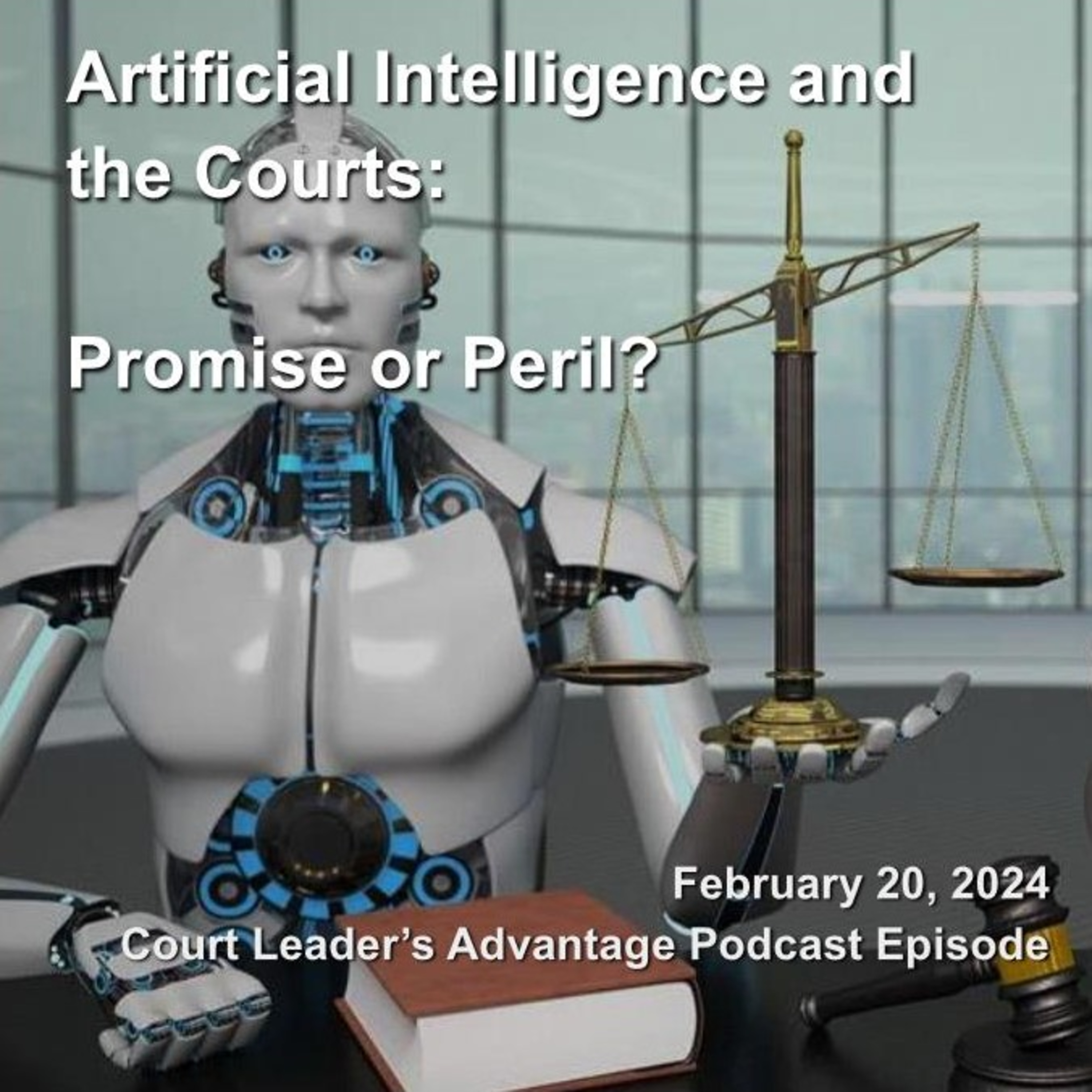
Artificial Intelligence and the Courts: Promise or Peril?
from Court Leader's Advantage · host Peter C. Kiefer
February 20, 2024, Court Leader’s Advantage Podcast Episode The advent of artificial intelligence (AI) has spawned numerous questions, both practical and ethical. These are questions that courts are going to have to grapple with in the near future, including: Given the complexity of AI algorithms and the tens of thousands of data points used for training, can we reasonably expect that a human reviewing AI results would actually uncover bias or uncover anything significant? Our court system is designed to move in a slow and deliberate fashion to render decisions; AI is evolving at breakneck speed. Can we afford to wait years for courts to answer questions about AI if it is changing by the month? AI uses data as training to make better decisions in the future. Since it does not publicly reveal sensitive or confidential information about individuals, are privacy concerns about AI irrelevant? Automated chatbots can save time, save money, and provide a sympathetic ear for litigants who want to talk about their case. But do folks who call into self-service centers really want to talk to an automated electronic voice even if that voice gives good sound answers? Will AI be a savior to rescue us from the drudgery of boring repetitive work or is it an existential threat to our way of life? Here to discuss these questions are: Kevin Bowling: retired Court Administrator for the Circuit Court in Ottawa County, Michigan Roger Rand: Information Technology Manager for the Multnomah County Circuit Court, in Portland, Oregon. Roger is also on the NACM Board of Directors Casey Kennedy: Director of Information Technology, for the State Office of Court Administration, Austin, Texas Alan Carlson: retired Court Administrator for the Superior Court in Orange County, California Stacey Marz: Administrative Director for the Alaska State Court System in Anchorage, Alaska
Embed this episode
NOW PLAYING
Artificial Intelligence and the Courts: Promise or Peril?
No transcript for this episode yet
Similar Episodes
No similar episodes found.