
EPISODE · Jul 13, 2026 · 11 MIN
As Ice Sheets Lighten, Seawater Moves Underground
from Waterlines: How Water Shapes Our World · host jaywen
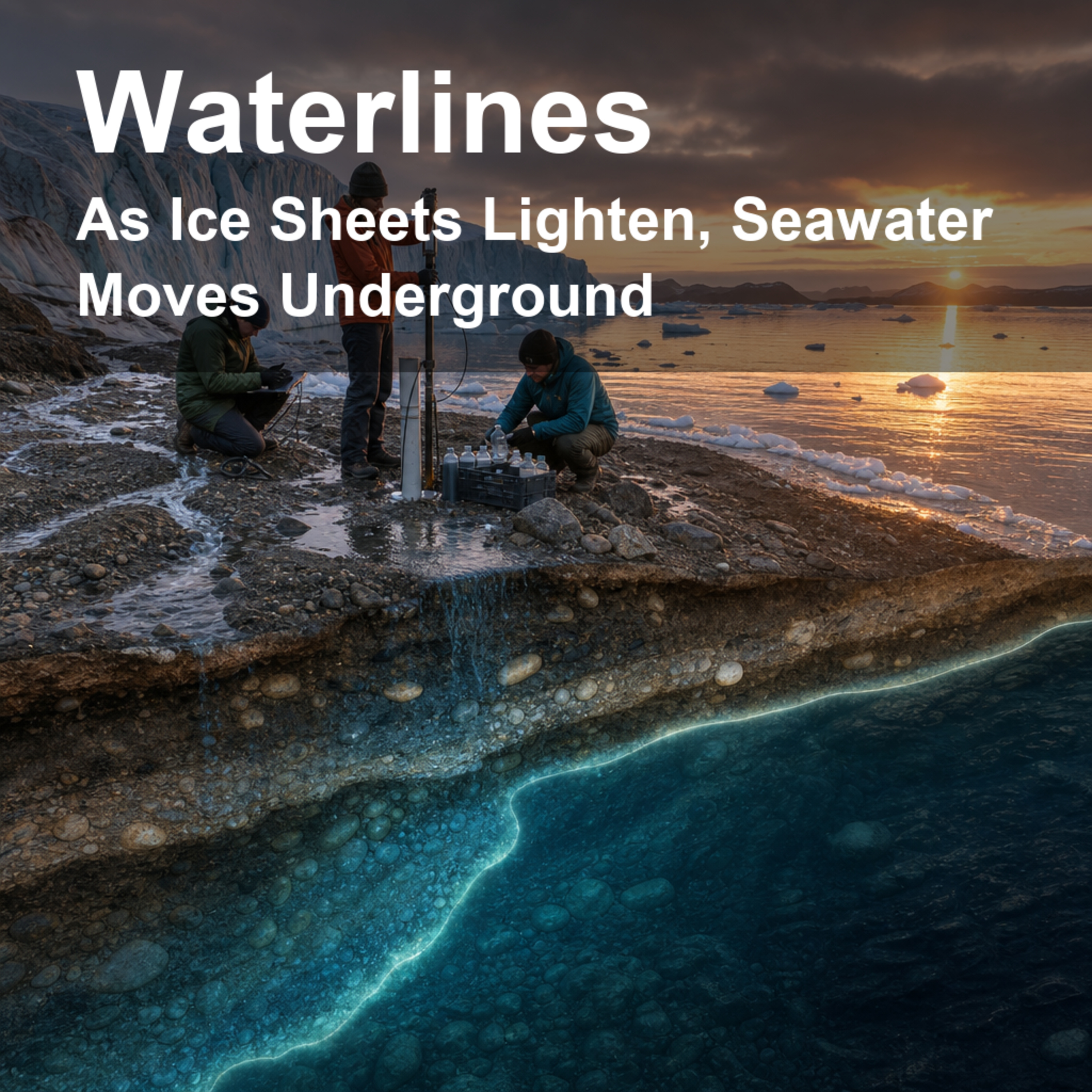
Takeaway: When an ice sheet loses weight, the hidden pressure drop underground can let seawater creep inland into aquifers that used to be fresh.Coastal water problems are often pictured at the surface: rising tides, eroding shorelines, flooded roads. This episode goes below the beach and under the ice, where the weight of Greenland- or Antarctica-scale ice sheets can help decide whether underground water stays fresh or turns salty. We explore a new modeling study showing that as an ice sheet thins and retreats, the pressure it once placed on the ground relaxes. That pressure change can shift the hidden boundary between freshwater and seawater, allowing saltwater to move inland through coastal aquifers. Hosts unpack why this matters for drinking-water quality, coastal ecosystems, ocean chemistry, and how we interpret ancient glacial landscapes still carrying the fingerprints of past ice. The study is not a site-specific prediction; it uses idealized numerical models to reveal a mechanism that field observations have hinted at but had not clearly explained. Citation: Guimond, J. A., Mohammed, A. A., Kurylyk, B. L., Walvoord, M. A., & Bense, V. F. (2026). Ice sheet dynamics drive pronounced changes in the subsurface freshwater‐saltwater interface. Geophysical Research Letters, 53, e2025GL120376. https://doi.org/10.1029/2025GL120376. Disclosure: this Waterlines episode package is written for public-science audio and uses AI-generated voices.
Embed this episode
NOW PLAYING
As Ice Sheets Lighten, Seawater Moves Underground
No transcript for this episode yet
Similar Episodes
No similar episodes found.
Similar Podcasts
No similar podcasts found.