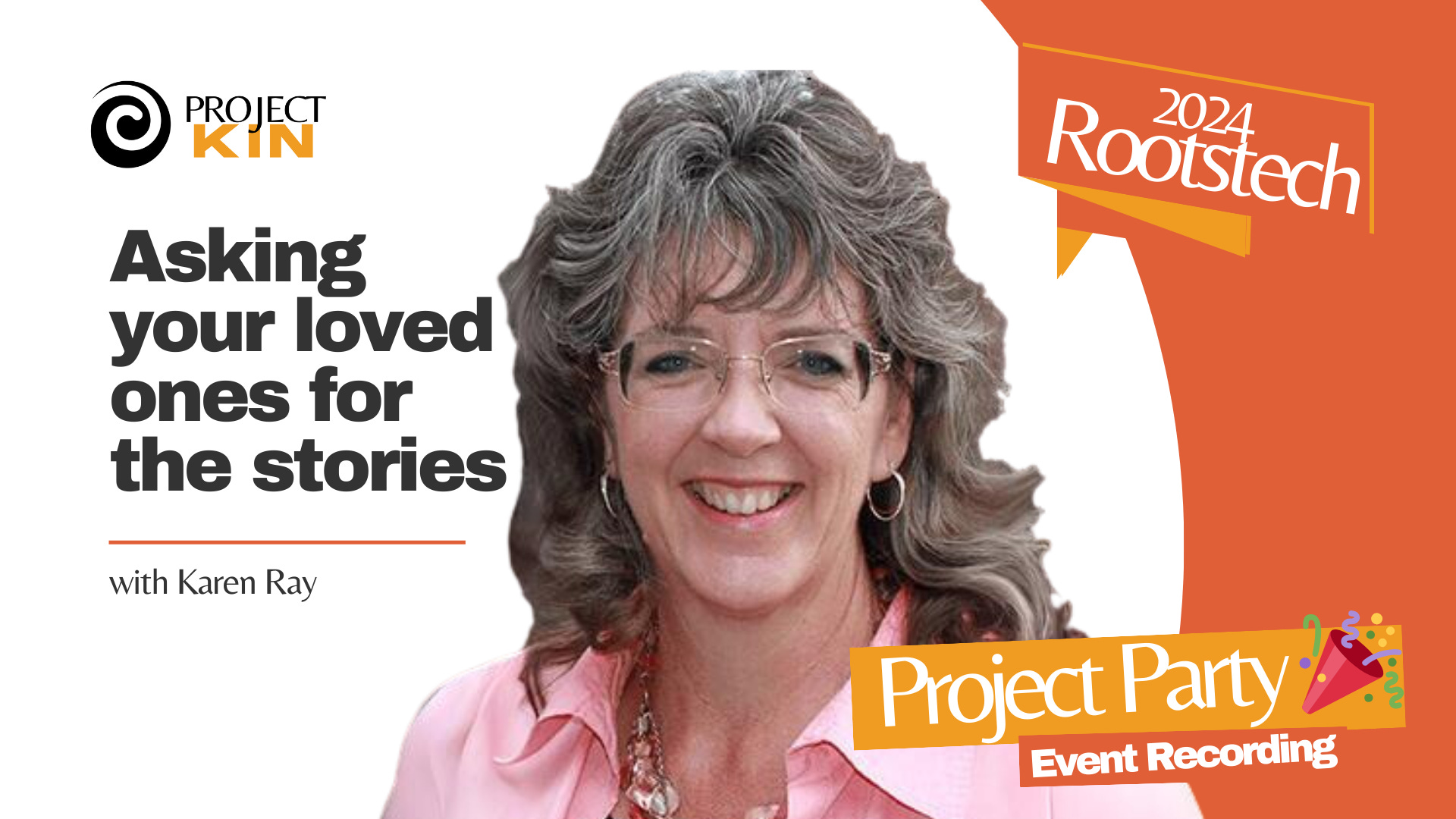
Asking your loved ones for the stories
from Specials at Projectkin Hosted by Karen Ray
Our two sessions yesterday “My journey to capture my family legacy” with Karla VF Staudt and “Getting Your Family Into Your Projects” with Victoria's Press got us excited about the story gems our family members had yet to share. Karen Ray of RememberingtheTime.net stepped in today share what she characterized as 8 tips for asking your loved ones for those interesting, important, and simply amusing stories. You can tap for the searchable transcript above ☝️, but I’ll get you started here with my notes… which curiously ran to a nice round 20 tips! * Give your interview subject time to plan. It can take time to think of the important stories worth telling. * Establish some common ground. Before actually starting your recording, take some social time to establish the occasion, what you have in common, a shared appreciation for a place, thing, or person. * Find a quiet space. Ideally, you’ll find some quiet room away from barking dogs and cafe noise where you can capture your subject’s voice without putting an intimidating a mic in front of them. * Check your batteries & be ready for the unexpected. Keeping pencil or pen and paper handy, tissues, batteries are important simply because you don’t want to waste the scheduled moment. * Take a few notes on what’s around you. These can be objects for prompts, they can also provide color and context for your descriptions later of what your subject said. [Think of these as capturing stage instructions.] * Actually ask for the story. Whether from modesty or distraction, your subject may well not know what story it is you’re exploring. It can be very helpful to actually ask for the story you want to hear about. * Make a commitment to your subject about your plan for the story. Your assurances, for example, that they will have a chance to read what you write before publication can go a long way to helping them feel comfortable about telling you their story. * Don’t censor yourself. This can be easy to do, especially with sensitive subjects. You may note that they’ve requested portions not be shared, but it’s important to fill out the story where your subject wants to go. * Don’t worry too much about rabbit trails. Your story won’t be built from a linear progression of the interview, so feel free to wander down a few irrelevant paths — as long as it doesn’t erase time available for important stories. * Don’t be afraid of silence. Sometimes you subject will need time to collect their thoughts. Jumping in on the silence can rush them away from the important story they were about to tell. * Use simple questions to probe, like “Tell me more.” Asking for sensory detail and other simple facts can tell your subject that you really are interested in hearing more. * Have fun! When you relax and listen quietly while staying engaged you’re giving your subject a gift of watching their story become transforming for you. * Recognize your subject’s humility for what it is. There’s a social context where they may not be comfortable talking about their acts of heroism or kindness, but by asking questions you can help them see that their story will inspire others. * If you will be interviewing multiple members of a family, separate them at first to create focus. You can later bring them together to build on different perspectives of the same story. * Watch for unexpected moments for stories — and be ready. Long car rides, waiting rooms, porch swings can all be contemplative moments where stories bubble out. * Avoid Yes/No questions. They might establish facts, but your storytelling will dig deeper than that. * Debriefing. Realize that active listening is exhausting, be good to yourself and give yourself time to debrief after each session. You’ll rest as well as review and collect your notes. * Ask other generations what they want to know. This is especially interesting when skipping generations. If you’re interviewing an elder generation, ask their grandchildren what they want to know. That can help you set up your questions. Look for “beautiful ordinary” questions about what tasks in daily life, for example. * Consider allowing grandchildren interview their grandparents on film — then flip the script and have grandparents interview the kids. This can create wonderful recordings for use later. * Don’t turn off your recorder too early. All too often, the really good stuff happens moments after you’ve ended the session and the recorder is turned off. The tight, 30-minute conversation today was purposeful yet fun, as was the dialogue that continued after our recording ended in our “after party.” Thank you for visiting our Projectkin Forum! Share your support by sharing this recording and joining us as a subscriber. This is was the third of six talks in our series of events and programs during RootsTech 2024. Join us for more of these events: And explore our new Members’ Corner launched in celebration of RootsTech: Get full access to Projectkin at projectkin.substack.com/subscribe
Embed this episode
No transcript yet.