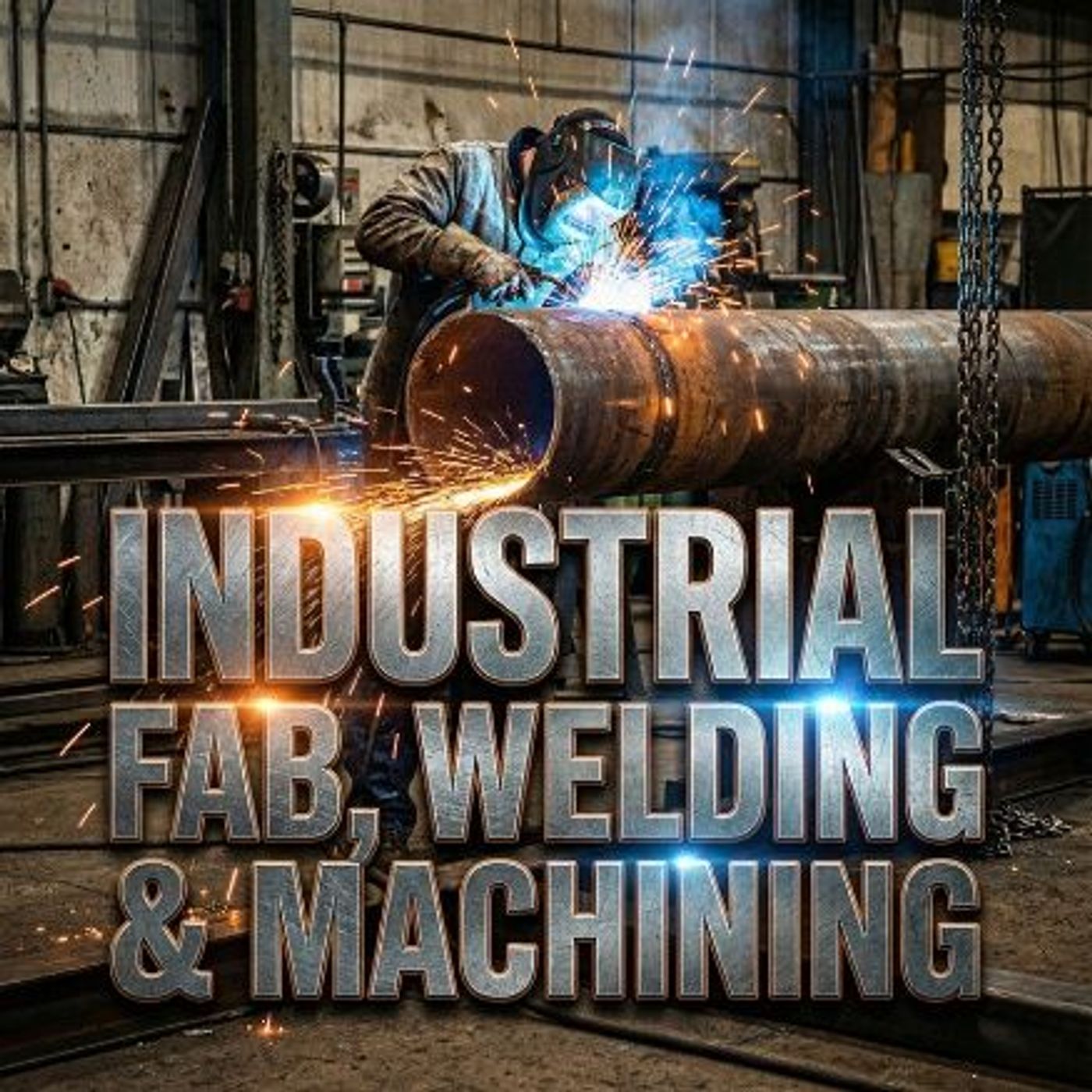
ASME Certified Welding: Standards & Compliance Guide
from Industrial Fab, Welding & Machining Hosted by Aaron Sova
Pressure vessel and industrial piping fabrication demands absolute structural integrity. Operating in high-pressure oil, gas, and aggregate environments requires compliance with the ASME Boiler and Pressure Vessel Code (BPVC) Section IX, establishing the gold standard for weld metallurgy, procedure qualification, and non-destructive examination (NDE).On this episode of Industrial Fab, Welding & Machining, the heavy equipment fabrication specialists at LTJ Industrial Services break down the mechanics of ASME code qualification, material P-Number groupings, and quality assurance protocols.Technical Comparison: Code Qualification vs. Full ASME Certification Procedure & Welder Qualification: Code Qualification: Proves process efficacy using a Welding Procedure Specification (WPS) verified by a Procedure Qualification Record (PQR) through destructive tensile, bend, and impact testing. ASME Certification: Integrates code qualifications with third-party ASME audits, comprehensive Quality Control Systems (QCS), and full material test report (MTR) traceability. Symbol Code Stamping & Authority: Code Qualification: Verifies welder proficiency per Section IX for internal quality management. ASME Certification: Grants official ASME Code Stamps (e.g., U-Stamp for pressure vessels, S-Stamp for power boilers), validating full regulatory compliance. Non-Destructive Examination (NDE) Protocols: Code Qualification: Applies standard visual inspection (VT) and surface testing. ASME Certification: Mandates volumetric NDE methods, including Radiographic Testing (RT) and Ultrasonic Testing (UT), to ensure zero internal flaws under extreme pressures. Actionable Execution Framework for Pressure Operations Verify WPS/PQR Parameters: Group parent metals by ASME P-Numbers to optimize preheat, interpass temperature, and post-weld heat treatment (PWHT) requirements. Enforce Welder Continuity: Maintain strict logbook documentation; welders unengaged in a specific qualified process for 6 months require formal requalification. Audit Full Material Traceability: Validate MTRs against physical heat numbers before strike-off to ensure complete compliance across heavy industrial components. Partner with LTJ Industrial ServicesUnplanned equipment downtime and uncertified weld failures jeopardize industrial safety and operational profit. Located in Rifle, Colorado, LTJ Industrial Services delivers ASME-compliant welding, heavy equipment repair, and precision CNC machining across Western Colorado.Protect your high-pressure assets today. Visit LTJindustrial.com or call our Rifle facility to request an engineering consultation. Click here Learn more about LTJ Industrial Services at www.ltjindustrial.com/
Embed this episode
No transcript yet.