Associate Professor Joan Steigerwald - Alexander Von Humboldt: views of nature episode artwork

EPISODE · May 3, 2017 · 1H

Associate Professor Joan Steigerwald - Alexander Von Humboldt: views of nature

from Sydney Ideas · host Sydney Ideas

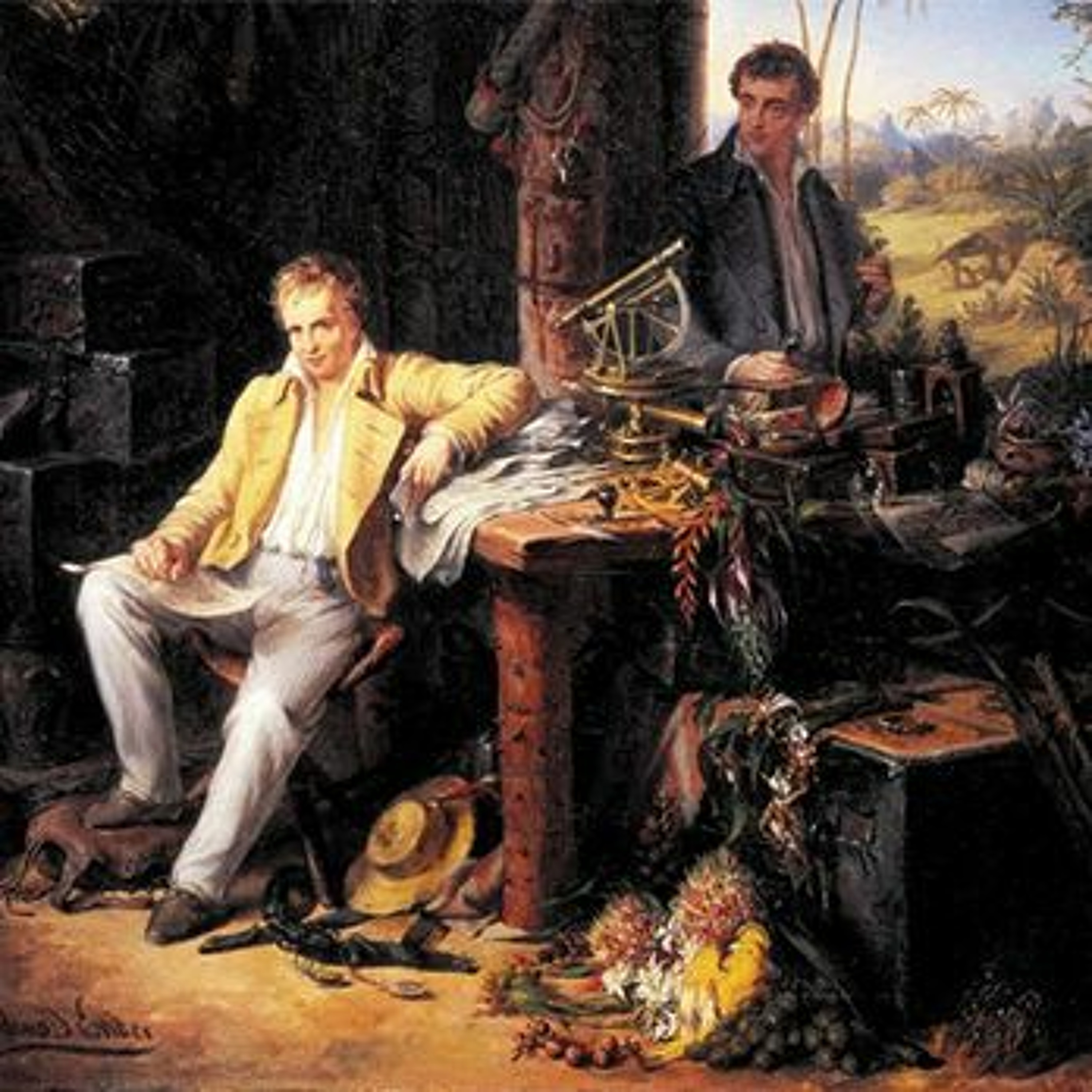
From 1799 to 1804 Alexander von Humboldt made an extraordinary trip through Spanish America, a trip that resulted in a scientific and an aesthetic vision of the terrestrial globe. Fascinated by the exuberant vegetation and wildlife he encountered in the tropics, he investigated how they varied with the specific physical conditions of different regions. Humboldt carried with him an impressive array of the latest scientific instruments that he used to measure the physical parameters of the environments through which he travelled. He also regarded his own body as an instrument through which to register these varying conditions, recording his own sensations alongside the readings of his physical apparatus. These corporeal perceptions were further tied to his aesthetic perceptions as a part of a cultivated sensibility. Physical instruments, bodily sensations and aesthetic perceptions together afforded total views of regions of the Earth, of the interplay of physical powers and landscapes, and of their characteristic vegetation and even peoples. Upon his return to Europe, Humboldt set out his views of nature in graphs, maps and illustrations as well as in written works. These visual representations can be regarded as figural instruments through which Humboldt depicted his views of nature. SPEAKER: Joan Steigerwald is Associate Professor in the Department of Humanities, and the Graduate Programs in Humanities, Science and Technology Studies, and Social and Political Thought, at York University. She has published numerous articles on Goethe, Humboldt, Kant, Schelling and the German life sciences. She has just completed a book entitled Experimenting at the Boundaries of Life: Organic Vitality in Germany around 1800. Her new project is Object Lessons of a Romantic Natural History. Presented by Sydney Ideas on 3 May 2017 http://sydney.edu.au/sydney_ideas/lectures/2017/assoc_professor_joan_steigerwald.shtml

From 1799 to 1804 Alexander von Humboldt made an extraordinary trip through Spanish America, a trip that resulted in a scientific and an aesthetic vision of the terrestrial globe. Fascinated by the exuberant vegetation and wildlife he encountered in the tropics, he investigated how they varied with the specific physical conditions of different regions. Humboldt carried with him an impressive array of the latest scientific instruments that he used to measure the physical parameters of the environments through which he travelled. He also regarded his own body as an instrument through which to register these varying conditions, recording his own sensations alongside the readings of his physical apparatus. These corporeal perceptions were further tied to his aesthetic perceptions as a part of a cultivated sensibility. Physical instruments, bodily sensations and aesthetic perceptions together afforded total views of regions of the Earth, of the interplay of physical powers and landscapes, and of their characteristic vegetation and even peoples. Upon his return to Europe, Humboldt set out his views of nature in graphs, maps and illustrations as well as in written works. These visual representations can be regarded as figural instruments through which Humboldt depicted his views of nature. SPEAKER: Joan Steigerwald is Associate Professor in the Department of Humanities, and the Graduate Programs in Humanities, Science and Technology Studies, and Social and Political Thought, at York University. She has published numerous articles on Goethe, Humboldt, Kant, Schelling and the German life sciences. She has just completed a book entitled Experimenting at the Boundaries of Life: Organic Vitality in Germany around 1800. Her new project is Object Lessons of a Romantic Natural History. Presented by Sydney Ideas on 3 May 2017 http://sydney.edu.au/sydney_ideas/lectures/2017/assoc_professor_joan_steigerwald.shtml

NOW PLAYING

Associate Professor Joan Steigerwald - Alexander Von Humboldt: views of nature

0:00 1:00:42

No transcript for this episode yet

We transcribe on demand. Request one and we'll notify you when it's ready — usually under 10 minutes.

No similar episodes found.

No similar podcasts found.

Frequently Asked Questions

How long is this episode of Sydney Ideas?

This episode is 1 hour and 0 minutes long.

When was this Sydney Ideas episode published?

This episode was published on May 3, 2017.

What is this episode about?

From 1799 to 1804 Alexander von Humboldt made an extraordinary trip through Spanish America, a trip that resulted in a scientific and an aesthetic vision of the terrestrial globe. Fascinated by the exuberant vegetation and wildlife he encountered in...

Can I download this Sydney Ideas episode?

Yes, you can download this episode by clicking the download button on the episode player, or subscribe to the podcast in your preferred podcast app for automatic downloads.
URL copied to clipboard!