
EPISODE · Jul 31, 2023 · 20 MIN
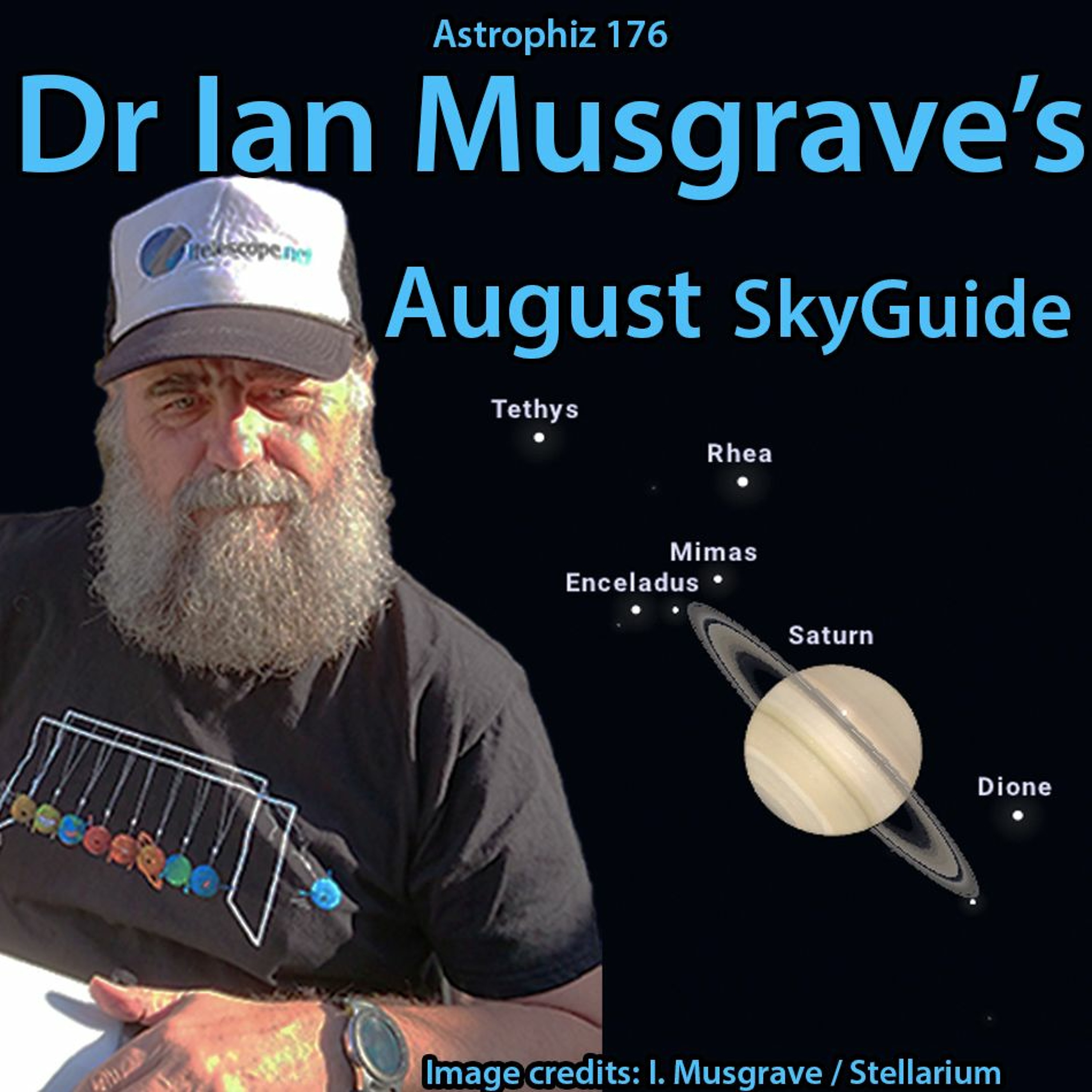
Astrophiz 176: August SkyGuide
from Astronomy Astrophiz Podcast · host Brendan O'Brien: Astronomers, Astrophysicists & Space Scientists
Highlights: Blue Moon Opposition Of Saturn We lose Venus from Evening skies Mercury is at its best this month Moon Phases August 2nd Perigee Full Moon August 8th Last Quarter Moon (ideal for observing galaxies and globular clusters in the early evening) August 16th New Moon is ideal for stargazing anytime August 24th First Quarter Moon August 31st Perigee Full (Blue) Moon ie the 2nd Full Moon for the month and the best perigee full moon of the year. Mercury is best seen at the start of the month rising higher and higher in the evening sky and passing above the sinking Venus, which will reappear in the east in the morning twilight at the end of the month as the ‘Morning Star’. Mars is getting further away from us and dimming Saturn is at its closest to earth (in opposition) on 27 August and will be excellent viewing in the northern/north east evening skies all of August and well into next month. Saturn is close to the moon on the 3rd and the 30th. Sagittarius and the centre of our Milky Way galaxy (look for the upside down Teapot) are directly overhead and M22 is a brilliant globular cluster galaxy of millions of stars often seen as a faint cotton ball in binocs and smaller telescopes. Also nearby are the lovely Triffid Nebula and the Lagoon Nebula. Highly recommended: Get out your telescope See when you local astronomical society or club is having an ‘open day’ or public viewing night, because seeing Saturn through a telescope is truly amazing! Morning Skies. Jupiter (and its moons) is easily seen in the north as the brightest object in morning skies and looks great even in binoculars. Ian’s Tangent Ian tells a tale about Solar System objects with tails, how they are formed and how they can be detected. Well comets of course … but that’s not all! Mercury has a sodium tail. The moon also has a very faint tail which has been detected. The asteroid Phaethon has a sodium tail, raising all sorts of questions for further research. Thanks Ian …. that’s a great tale!
Embed this episode
NOW PLAYING
Astrophiz 176: August SkyGuide
No transcript for this episode yet
Similar Episodes
No similar episodes found.
Similar Podcasts
No similar podcasts found.