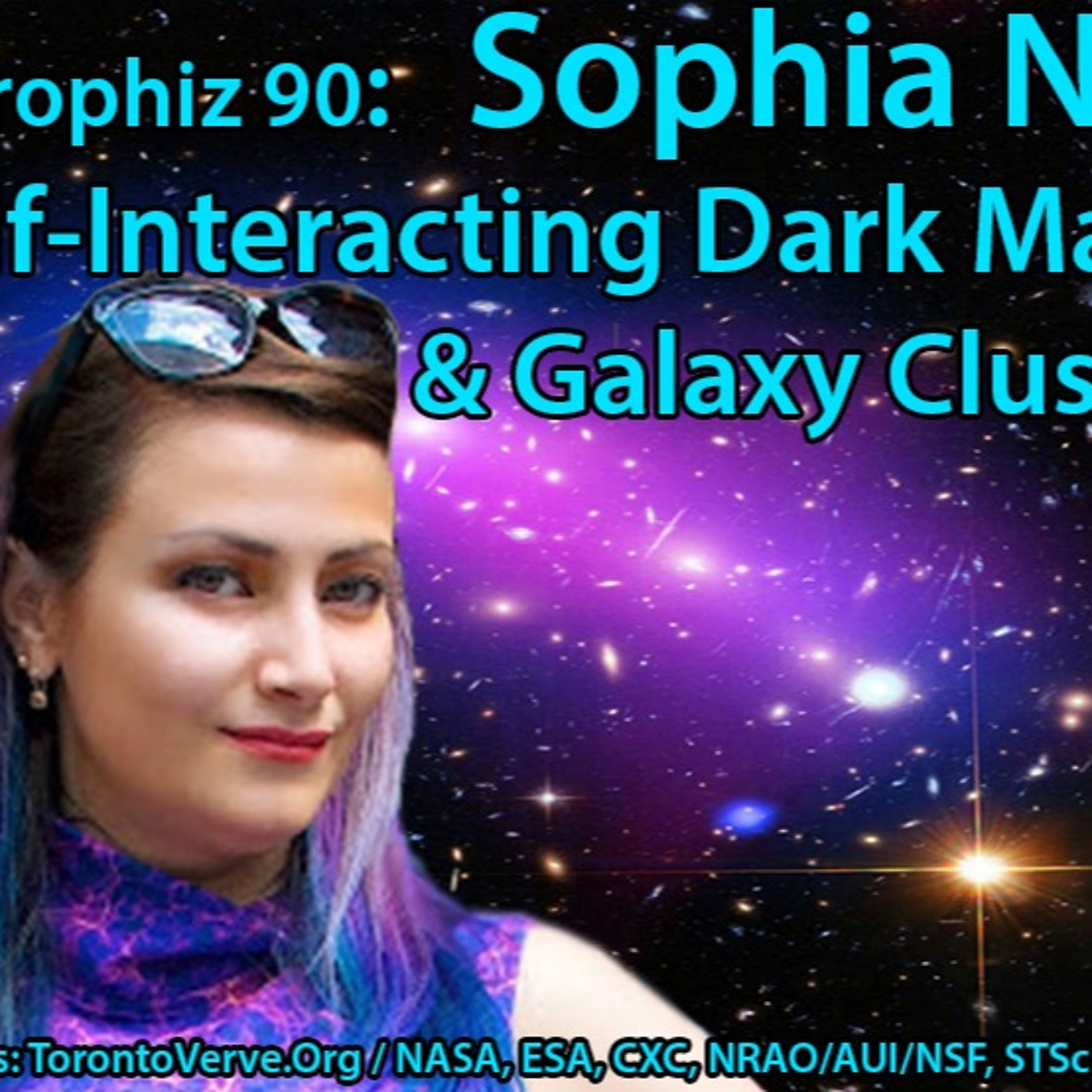
Astrophiz 90: Sophia Nasr - Self-Interacting Dark Matter episode artwork

EPISODE · Sep 12, 2019 · 36 MIN

Astrophiz 90: Sophia Nasr - Self-Interacting Dark Matter

from Astronomy Astrophiz Podcast · host Brendan O'Brien: Astronomers, Astrophysicists & Space Scientists

Astrophiz 90: Sophia Nasr – Self Interacting Dark Matter and Galaxy Clusters This episode’s featured guest is Sophia Nasr, who is a fabulous graduate physics student at University of California, Irvine who is working on her PhD in cosmology and astroparticle theory with a focus on researching Self-Interacting Dark Matter. She brilliantly explains all forms of dark matter research and her passion for cosmology, equity, diversity and outreach. In the sky: Observation notes for September include Saturn, Jupiter, the Moon and Uranus. For those who enjoy watching Live Rocket launches on the internet put September 25 at 1357GMT into your calendar to watch a Soyuz rocket at the Baikonur Cosmodrome in Kazakhstan launch to take the crewed Soyuz MS-15 spacecraft to the International Space Station with members of the next Expedition crew. The capsule will remain at the station for about six months, providing an escape pod for the residents. For citizen scientists there is a nice opportunity to participate in the Globe at Night dark sky project, which is concerned with light pollution. For those in the Northern hemisphere you’ll be asked to report on what you can observe in the constellation Cygnus between Sept 20 and 29 and for Southern Hemisphere citizen scientists you be asked to report on what you can observe in the constellation Sagittarius on the same date range. To contribute to this worthwhile project, Northern observers can go to tinyurl.comFORWARDSLASHdarkskynorth And Southern observers can go to tinyurl.comFORWARDSLASHdarkskysouth And they are both all lowercase, all one word. In the News. First up it looks like we have an amazing new interstellar visitor, Congratulations to Gennady Borisov, for his discovery of comet C/2019 Q4 (Borisov). The first interstellar comet ever found and a truly skybreaking discovery! The Minor Planet Center has published the official announcement. Reports have also just come in today that water has been detected on a distant exoplanet. The reporting on this discovery is all over the Internet and all over the place in terms of accuracy. No, it’s not an earth-like planet. It doesn’t have water ‘on’ it because it’s most likely a Neptune-like planet with no actual surface, and you wouldn’t survive long enough if you were there to develop any habits. it’s becoming clearer and clearer that terms like ‘habitable’ and ‘goldilocks zone’ aren’t really effective tools for accurately communicating science to the public audiences. If you want to get the lowdown on habitability and exoplanets, you couldn’t do better than to follow Prof Jonti Horner and Dr Elizabeth Tasker on Twitter, or hear from them directly by checking out their episodes at AstrophizDOTcom It was also sad to hear that ISROs moon landing has run into problems but our fingers are crossed for them and other news from the moon is that the Chinese Rover has detected some strange gel-like substance in a crater. Next from the Xinhua news agency in China a discovery that may help unravel the long standing mystery of FRBs Chinese astronomers have detected over 100 repeated fast radio bursts (FRB) – These particular FRBs are mysterious signals believed to be from a source about 3 billion light years from Earth

Astrophiz 90: Sophia Nasr – Self Interacting Dark Matter and Galaxy Clusters This episode’s featured guest is Sophia Nasr, who is a fabulous graduate physics student at University of California, Irvine who is working on her PhD in cosmology and astroparticle theory with a focus on researching Self-Interacting Dark Matter. She brilliantly explains all forms of dark matter research and her passion for cosmology, equity, diversity and outreach. In the sky: Observation notes for September include Saturn, Jupiter, the Moon and Uranus. For those who enjoy watching Live Rocket launches on the internet put September 25 at 1357GMT into your calendar to watch a Soyuz rocket at the Baikonur Cosmodrome in Kazakhstan launch to take the crewed Soyuz MS-15 spacecraft to the International Space Station with members of the next Expedition crew. The capsule will remain at the station for about six months, providing an escape pod for the residents. For citizen scientists there is a nice opportunity to participate in the Globe at Night dark sky project, which is concerned with light pollution. For those in the Northern hemisphere you’ll be asked to report on what you can observe in the constellation Cygnus between Sept 20 and 29 and for Southern Hemisphere citizen scientists you be asked to report on what you can observe in the constellation Sagittarius on the same date range. To contribute to this worthwhile project, Northern observers can go to tinyurl.comFORWARDSLASHdarkskynorth And Southern observers can go to tinyurl.comFORWARDSLASHdarkskysouth And they are both all lowercase, all one word. In the News. First up it looks like we have an amazing new interstellar visitor, Congratulations to Gennady Borisov, for his discovery of comet C/2019 Q4 (Borisov). The first interstellar comet ever found and a truly skybreaking discovery! The Minor Planet Center has published the official announcement. Reports have also just come in today that water has been detected on a distant exoplanet. The reporting on this discovery is all over the Internet and all over the place in terms of accuracy. No, it’s not an earth-like planet. It doesn’t have water ‘on’ it because it’s most likely a Neptune-like planet with no actual surface, and you wouldn’t survive long enough if you were there to develop any habits. it’s becoming clearer and clearer that terms like ‘habitable’ and ‘goldilocks zone’ aren’t really effective tools for accurately communicating science to the public audiences. If you want to get the lowdown on habitability and exoplanets, you couldn’t do better than to follow Prof Jonti Horner and Dr Elizabeth Tasker on Twitter, or hear from them directly by checking out their episodes at AstrophizDOTcom It was also sad to hear that ISROs moon landing has run into problems but our fingers are crossed for them and other news from the moon is that the Chinese Rover has detected some strange gel-like substance in a crater. Next from the Xinhua news agency in China a discovery that may help unravel the long standing mystery of FRBs Chinese astronomers have detected over 100 repeated fast radio bursts (FRB) – These particular FRBs are mysterious signals believed to be from a source about 3 billion light years from Earth

NOW PLAYING

Astrophiz 90: Sophia Nasr - Self-Interacting Dark Matter

0:00 36:39

No transcript for this episode yet

We transcribe on demand. Request one and we'll notify you when it's ready — usually under 10 minutes.

Ask A Spaceman Archives - 365 Days of Astronomy Ask A Spaceman Archives - 365 Days of Astronomy Podcasting Astronomy Every Day of the Year That Hoarder: Overcome Compulsive Hoarding That Hoarder Hoarding disorder is stigmatised and people who hoard feel vast amounts of shame. This podcast began life as an audio diary, an anonymous outlet for somebody with this weird condition. That Hoarder speaks about her experiences living with compulsive hoarding, she interviews therapists, academics, researchers, children of hoarders, professional organisers and influencers, and she shares insight and tips for others with the problem. Listened to by people who hoard as well as those who love them and those who work with them, Overcome Compulsive Hoarding with That Hoarder aims to shatter the stigma, share the truth and speak openly and honestly to improve lives. The Small Business Startup School – Business Notes | Financial Literacy | Retail Psychology – For Professionals & Entrepreneurs The Small Business Startup School Inc. Starting or buying a small business? While personal circumstances may vary, business patterns remain timeless. On The Small Business Startup School, we explore strategies, insights, and practical solutions to help entrepreneurs confidently navigate their journey.Hosted by Ola Williams—a retail entrepreneur, fintech founder, and financial coach with over two decades of experience—this podcast marries financial awareness and retail psychology with optimism to deliver actionable takeaways.Join us to learn, grow, and connect as we uncover the keys to business success.Let’s continue to learn together and be encouraged to keep on connecting! DIOSA. Carolina Sanper This podcast is a sacred space created by Carolina Sanper where you connect with your inner wisdom and embody your magnetic feminine power.It is the realization that the mystical realm is where you plant the seeds of your desired reality.It is a portal to your true essence: awareness, presence, and receiving with ease. Welcome home, DIOSA. 🖤

Frequently Asked Questions

How long is this episode of Astronomy Astrophiz Podcast?

This episode is 36 minutes long.

When was this Astronomy Astrophiz Podcast episode published?

This episode was published on September 12, 2019.

What is this episode about?

Astrophiz 90: Sophia Nasr – Self Interacting Dark Matter and Galaxy Clusters This episode’s featured guest is Sophia Nasr, who is a fabulous graduate physics student at University of California, Irvine who is working on her PhD in cosmology and...

Can I download this Astronomy Astrophiz Podcast episode?

Yes, you can download this episode by clicking the download button on the episode player, or subscribe to the podcast in your preferred podcast app for automatic downloads.
URL copied to clipboard!