
EPISODE · Jan 5, 2026 · 45 MIN
At Play in the Theater of Dionysus
from Have Toga, Will Travel: Exploring Greece and Rome, Ancient and Modern
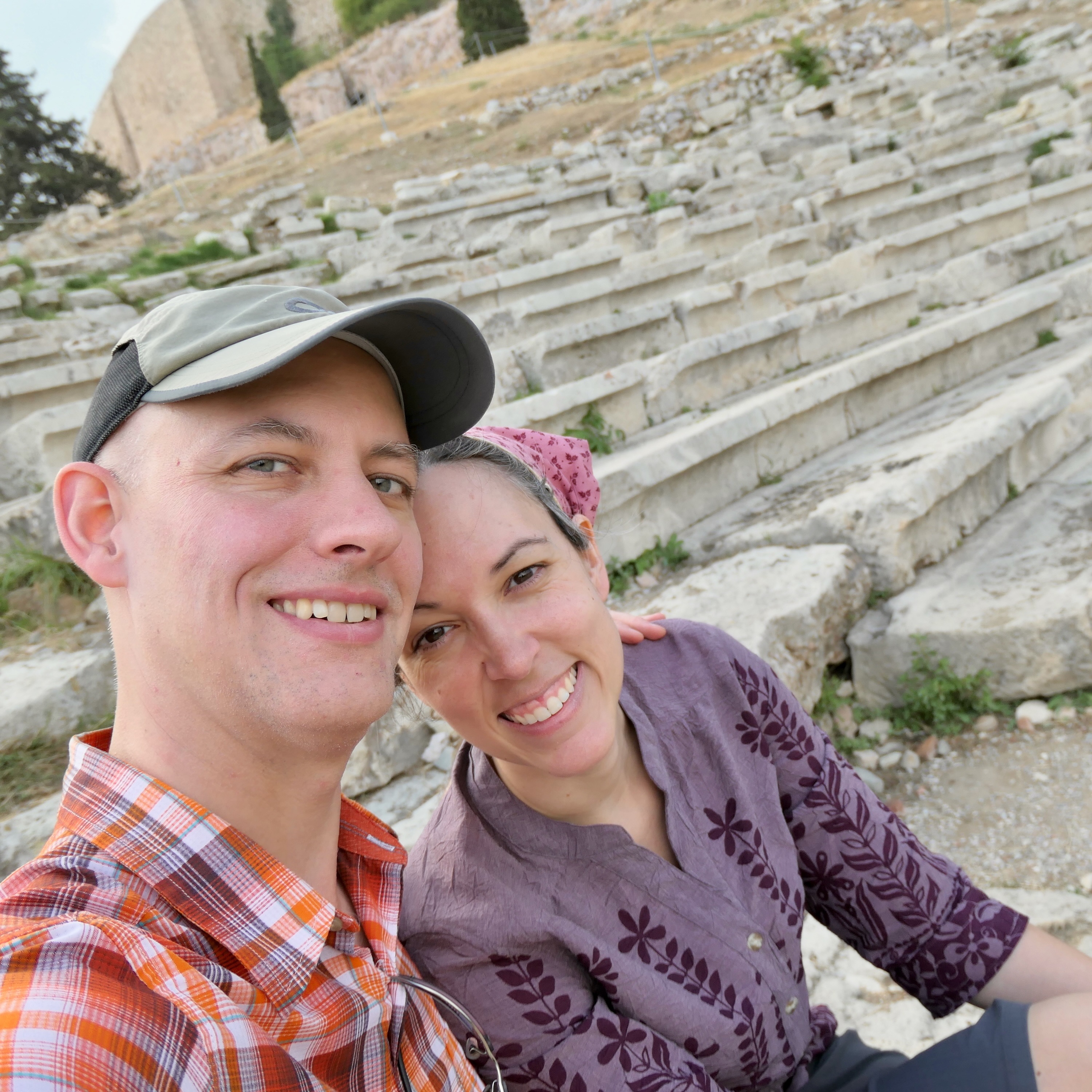
At Play in the Theater of DionysusThe Theater of Dionysus as Aeschylus, Sophocles, and Euripides knew it was very different than the theater whose remains you see today in Athens. Listen to Emily and Cam walk you through the development of the space, and through the creation of the genre associated most strongly with it: Greek tragedy.Visit our homepage to subscribe, to find us on social media, and to contact us by email:https://havetogawilltravel.comFor images of the Theater and Sanctuary of Dionysus, visit our blog:https://havetogawilltravel.com/blog/the-sanctuary-and-theater-of-dionysus----------00:10 - Introduction01:37 - Visiting the Theater and Sanctuary01:42 - Where to find the Theater and Sanctuary02:16 - Don’t confuse it with the Odeion of Herodes Atticus!03:26 - An overview of the physical remains04:01 - The Origins of the Sanctuary, the Theater, and the Festival04:02 - The Sanctuary, the Festival, and the Temples of Dionysus04:58 - The Theater through Time: The Fifth Century, the Lycurgan Theater, the Hellenistic Theater, and the Roman Theater07:59 - The Festivals of Dionysus: The Origins of the City Dionysia and celebrations for Dionysus in Ikaria and other demes11:44 - The Origins of Scripted Drama in Athens11:50 - The Dithyramb12:41 - The legend of Thespis, the first actor13:15 - The importance of the chorus in Greek drama14:10 - Masking and actors playing multiple characters14:30 - The Development of the Three-Actor Model in the Age of Aeschylus, Sophocles, and Euripides19:09 - The City Dionysia19:42 - The Schedule: The Procession and its Ithyphallic Floats; the Dithyrambic Competitions; the Dramatic Competitions22:50 - Dionysus, the most important spectator23:48 - The Organization of the Dramatic Competitions: Tragedies, Satyr Plays, Choruses, and Choregoi!30:09 - The Performance Space and its Evolution30:20 - The Fifth-Century Theater: the Orchestra, the Skēnē, and the Paradoi33:30 - Technical Innovations: the ekkyklēma and the mechanē36:36 - The Deus Ex Machina in ancient Drama37:34 - Changes over time in the layout of the theater and in the role of the Chorus41:01 - Final Thoughts on the Importance of Tragedy44:15 - Wrap-up
Embed this episode
NOW PLAYING
At Play in the Theater of Dionysus
No transcript for this episode yet
Similar Episodes
No similar episodes found.
Similar Podcasts
No similar podcasts found.