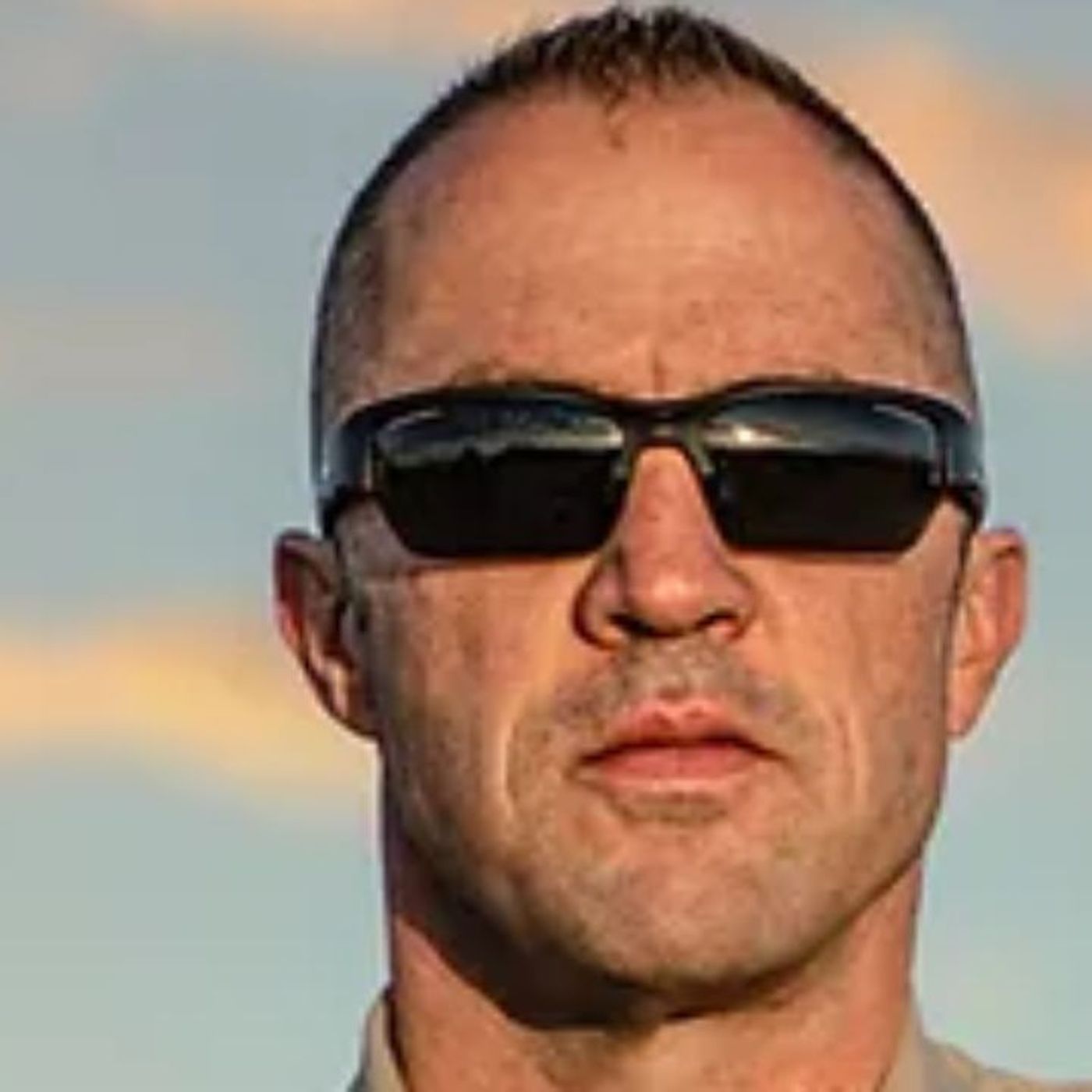
All right, everyone. Welcome back to another episode of Stew and the None. I hate that I have a little bit of lag there. I don't know if you can see me in real time, but I am with Deputy One Time.
Mr. Matt Thomas here back with us again. Another episode here. Thank you and author of the Just Release award winning book, Getting Critical a Claim Around the Globe, and that you can find every book outlet where you can find great books, interceptors.
Hey, Matt, welcome back to the show. Can you hear me? Are you frozen? You have a bad connection again issues?
Well, luckily you're not making that weird face. Just sitting there. I got you. I can hear you.
But you're frozen just looking very stoic and professional. I don't know what is going on with this because I'm full bars on my Wi-Fi. You're back on full. You're showing good here.
It keeps coming and going. Now you're back to one of you, it's from four to one, but I've lost your video again. But I can hear you. So even with our new format and new everything, we still the technical demons.
Yes. Maybe we said something the last time we talked and they're jamming your signal there. Yeah, the NSA and all those three other agencies are all over me here. They must have mistaken.
I said something bad about my orchestra. You didn't. But we got it's a black screen, but we have your name. So at least they can hear you.
This is weird. We just did a lot of we've had no problems before and I was having issues. Yeah. And you're out there in a beautiful open state of Arizona.
Great sky shot to the satellites overhead. And I okay now here we go. We're coming back. I think we're coming back.
I can still hear you. But yeah, it is a you got a contest spectrum files. I got some Cox cable going on here. Oh, that's it.
I didn't want to. Yeah. It's a cable company. We won't say the name, but they they rhyme with rooster.
Oh, man. All right. Well, we just got I got empty up there. So we got your initials.
Well, let's see if we can we'll keep going if we can bring your bring your ugly mug up there. We'll definitely keep working it. Okay. Is it's a get this out.
So hey, thank you again, Matt for coming back on and and joining us here on student and talking about a lot of important topics. You bring a great perspective as a Penau County sheriff in Arizona, our chief deputy sheriff actually to be there as a correct title. And like I said, now author and doing it for 30 years, even though most people would be about that because you look so young and everything. And but hey, we, you know, we've I call it a pandemic because I call anything that just happens that takes lives and hurts people and just can't seem to be solved and everything is not just it's not just a virus out of China made in the lab of China, but just anything that's sweeping our country and hurting our people as a pandemic.
And one thing we have is, you know, I remember back when Columbine happened and that was, you know, I really one of the first large scale school shootings, especially, you know, by youth, but just school shootings that happened in school in the long time. And that kind of serves, in my opinion, out of its correct or not, as the kind of the start of it all. And it's happened many times since. And now, you know, we've had a number and we had we had, you know, the one at the Yavaldi, we had Newtown, we had Parkland, you know, now we have this one in Nashville.
And and it's not just schools, right? We've had a number of churches and many others can be considered soft targets, right? Theaters, so and so forth. But this recent one definitely stands apart for a couple reasons.
One, it was a Christian school and I can't remember of a Christian school that's been attacked. And two, a transgender, because when it first came out, there was a woman that did the shooting of all the, all the pontificators, you know, got on the new shows and we're like, you know, rare, never happens. It's always dudes. And a little did we know at the time, no, it's a woman just wanting to be a dude.
So it was the first transgender, one in a Christian, I want to say the first transgender, there's been several four, three or four, five in the last couple of years. But the first one at Christian school, which leads a lot of people to think there were different, there were maybe motivations or reasons why this happened. But that that's what just happened. Three adults killed three nine year old innocent nine year old children killed.
And just another, you know, sign of just evil lives all around it. As a sheriff deputy, you've been for 30 years. I mean, obviously, this is again, another thing in active shooter in any business school, whatever you guys trained for. What is kind of your thoughts and as we as we learn more and more in the last couple of days with the releasing of the body cam footage and everything else about the shooting that just sticks with you, I guess, or I think one of the biggest things that sticks with me is just how heroic the officers were in this case, compared to somewhere we've seen some failures, right?
In the past. And I think, unfortunately, for the law enforcement world, this has become a thing for us and Columbine did kind of started off, but this has become a thing for us. And we have trained in different methodologies for active shooters, and it has kind of progressed over time. And I think that it shows well, in this case, that these officers, not only had they had some training for this type of incident, but they had mentally prepared themselves for this type of confrontation because you can critique anything, right?
So you look at their body cam and you could say, Oh, they should have done this year. They should have done that there. But ultimately, what they did is they pressed towards the problem. And when they found the problem, they eliminated the threat.
And that's what we want. That's what we want them to do. And we can look backwards at other shootings where that failed to happen in more lives and more lives. And that's the last thing that we want as police officers is for lives to be lost at any time we can intervene in that.
I think we all have, you don't necessarily swear an oath to lose your life, but you have an understanding that that's kind of the greatest sacrifice you could ever make is if I can forfeit my life and save somebody else's, especially children, then so be it. And that's what I signed up for. And I think these guys did a phenomenal job in doing just that savings of lives. Yeah, I mean, it's like you said, it's like those in the military, right?
They're signing up willing to give their life for the country for law enforcement officer, you're signed up willing to give your life for your community if it comes to it. But it's definitely not the first option. Not your first path in your career to do that, but you're willing to do it. And yeah, I mean, this, you know, you see, when you go back and I've watched the footage four or five times, you know, you see guys in various states, summer and full uniform, they were on duty, others look like they probably got called in, probably a swatter SRT member that got called in through their stuff on whatever it may be, maybe they were undercover and just you know, grab the stuff out of the vehicles.
Luckily, they had a great teacher outside. I mean, just when you look at, I was kind of breaking it down just looking at the way that things are people like me and you look at it like, wow, she had enough foresight. She was outside. She gave them clear concise direction.
She was very calm. She gave them the basic information they needed to know where to go. And then they got in there and, you know, started executing room clearing, which they had to do. They had no idea where the shooter was until they heard the shooter shoot from the second floor at some of the cop cars and they redirected, you know, they were they knew what they had to do.
And they moved right to the threat as soon as they were able to verify where it was noting. They didn't know how many there was, there could have been more than one, right? But they still, they didn't, they didn't take one room at a time and all that stuff. They went to where the first threat they knew of and expose themselves, you know, and I think some people may not realize that when they ran down those halls and ran, there could have been other shooters and they can be waiting on them, but they just, they had to get to the one that they knew about.
Right. And I think it did demonstrate a lot. Yeah. Yeah.
And that's again, that their training kicked in and I can guarantee you that if you look at that group of officers, and we all fear death, right? So in a situation like that, you're going to have different officers acting different ways. I think you had some good leadership in that crew of officers that went to eliminate that threat because I guarantee you, and I've had this happen to me, I guarantee you at some point, there was one or two of those officers that weren't sure. Like, I don't really know that I want to go down this hallway, but you had some good officers saying, let's go, let's go and keeping them focused on the task at hand and pushing that forward towards that problem.
And then ultimately they got there and handled business like they should have, you know, good for them for sending that person where they need to be. Yeah. I mean, it's you're right. There's sometimes they come up and they pat it down and back, let's go.
You know, they just, it's, you know, there's a, there's a, there's part of a human nature. You want to survive. There's an apprehension to poke your head out or go something without knowing where the threat is. And that's natural, right?
It's nothing to be, you know, it's not like the guy in Parkland who just sat outside the school the whole time or worst case that we were looking at you, all the way up in there, which is still, I think, baffles many of our minds of how that could have happened. But you know, they were just, they went down and as soon as they knew in a hallway and opening like a, like wherever that kind of big opening room, I'm sorry about entry of a library or something, they found the shooter in by the windows. I mean, as soon as they went in, the guy with the long gun, that officer, he went to that far side so he could clear that corner. And I wouldn't even say pied it.
He just blew right into that pie and took out the threat. And then, you know, they lived and shifted, they had great fire discipline and, and, and it's muzzle awareness. And that a second one came in with the other officer with his handgun and put the, you know, saw movement and did what he had to without, you know, without risking anything. And it was, and I would say it makes a great case because, you know, we've come a long ways in law enforcement with a weaponry that we're carrying to deal with problems and rifles being one of those weapons that is very commonly carried now to deal with stuff just like this.
But as we have those, those long guns, the LPBO is, is something that has, and you'll hear it on that tape that he's calling for the LPBO up LPBO up and so he's calling for not only that rifle, but the rifle with optics on it so that they can take that long shot under optics. That's something I know in here in Arizona that we've been training more and more on like our tactical teams and even down into the patrol level and obviously Tennessee is doing the same. And I think that's, you're going to see a big push for that type of stuff too, is getting, getting glass on those rifles and getting optics that allow them to, to magnify a little bit to get those longer shots because we are, we're having to take longer and longer shots in some of these engagements with bad guys. Right.
Right. It's not just the, the lone sniper and the SRT or SWAT team that can do it, right? And you've got to be ready to have those tactics. Yeah.
For those who don't know, the black box I'm talking to is a black guy. We're not Thomas that may be tuning in and we're just having some video problems, but it will, but we're still working on that. But anyways, yeah. So another group I want to highlight out of that is where as we've learned more is this the head, the head mistress or head president, or I'm not sure the title they used for her, but the one lady that was killed who was in charge of the school reports are coming out now that when she was on a, I read today, she was on a zoom call for a meeting.
She heard the shots ended the call, got up and ran right there and they found her in the hallway. She was charging at, at the shooter and, and went right there. And another thing I heard was that they, she was, you know, private Christian school. She had actually just reinforced or taken her, her staff and faculty through not just active shooter training recently, but advanced active shooter training and their initial crediting of that for why, as you saw the footage, it looks like there's no students in that school.
They lock that place down tight. I mean, and they're, they're crediting that training that she had them go through for securing and protecting the students they could. And, and for that and also the fact that like the report, now they think she was charging towards the shooter, like we would expect a law enforcement officer to do who's armed. Obviously, she was not armed and was just going to try to confront, which I think is, is quite heroic and awesome itself.
Yeah, absolutely. And to her credit, if the school has underwent training, the, the recent training that the training that is now out there, as a result of these past incidents, what is happening is they are realizing that the, the just hiding is, is not working, right? That that is giving these active shooters easy targets. And so I know we've had these discussions that if you can, if you can barricade yourself in some place, that's cool.
But as a homocyclomaniac tries to make their way into a room, if you cower in a corner, you're all dying in that corner. And I think these teachers are gaining an understanding of that. And God bless these teachers and these, these administrators, especially in this school, because they understood that if it comes down to it, and it's them or the kids, they're going to sacrifice. So those kids are saved.
And I think we saw it in this case, because we had, while we had loss of life, which is horrible, I think it was very much minimized in this case. Yes, yes. And, and, you know, the intestinal fortitude, as we would say in the Army of her, doing that and possibly, you know, with the other, with the other, I'm sure more reports will come out. But also, you know, the report of the one little girl, I don't remember, I think her name, last name is Dicouse, the reports are from her that she was reaching or had reached the fire alarm to alert her that when she was shot to alert all of her, the people in the school.
So this nine year old little girl was was either had triggered the fire alarm, but was going for it when she was murdered by the sicko. And just to think that a child like that probably shows demonstrating more courage and bravery and selflessness, then probably most people you and I know together collectively. Oh, yeah, absolutely. Absolutely.
And it just, I mean, it just breaks your heart when to lose life, but to think what an awesome person this young girl would have become or what I mean, I just my heart, believe my wife and I were talking tonight just cannot imagine as we are parents of, and now grandparents, the pain that these families must be going through to have it. You're nine year old, you know, or even though the family members of the adults, but still to have your nine year old ripped from you, so young and just, you know, so violently just stolen from you just I can't imagine how they're going to have it. And, you know, same with me as a parent and a grandparent. I mean, just when you see any of these reports, you just ripped your heart out of your chest because you know, you know, and especially those of us in law enforcement who have dealt with death on a daily basis, you know how bad this is and you know the pain and the anguish that is going to follow, especially when you're talking about kids.
And there was one report that I was watching as it was kind of breaking news and the buses were passing by. And one of the reporters commented that the buses are going by full of kids to a staging location where the parents are waiting to see if their kid is going to get off the bus or not. And I thought, how awful is that to have to sit there and wait to see if your kids alive or not, you know, as the buses arrived? Yeah, I mean, sadly, how many parents went through, you know, their own version of survivor skill as I mean, just try to imagine, right?
You're there and your kid gets off and you're so excited, but then you see a parent next to you, maybe a friend or whatever, probably as it was, it wasn't a huge school, it was only, you know, a couple hundred kids. They all had that pretty much know each other. They, you know, they saw each other at school events and whatever. Probably I went to the same church, but to see the ones next to you, not, you know, or have someone come up and give them news where you're celebrating.
I mean, it's just, it's kind of the ripple effect from this is going to be, is going to be far and wide and for a long, long time. But yeah, it's, it's when you see what's happened, I mean, you know, in your area, in all counties, a very big area, it's a lot of rural, a lot of small communities and stuff, same kind of people know each other. Do you guys, do you have a program that you do with your schools? Do you get the schools to ask you to come in?
Is it something mandated? How are you guys handling that, both in the county and where the state? Yeah, so we are, we're not mandated, but there are programs where we come into the schools and we, we partner with the schools. And actually, our state has started to fund over the past few years, started to fund more and more school resource officer positions.
So they're getting the cops back in the schools. And that's over the past two years or so, that's been a big push is let's get cops back in the schools because, you know, we know that that helps. And we know that these cowards usually pick softer targets rather than targets that they know are going to be hard and they're going to be resistance. And so that's one big thing.
We've also, just this year, we've got a new program where we got a grant throughout the state, a bunch of agencies got different grants to be able to link into the schools communication systems and their camera systems so that we can get, or decide our dispatch can actually tie into their video system to give us a blow by blow. So when our officers get there, they can give us exacts of the cameras or seeing bad guys or bad guy, they can tell us, hey, this is exactly where you need to go. And this is exactly where the problem is so we can get there faster and solve that problem. Wow, what a concept.
I mean, to be able to be tied into that and get that real time, you know, recon before you show up. I'd say, Grant, awesome, this school had this teacher who had to wear with all to be outside and give them clear orders. But, you know, that is not all the case, right? We can look at the school after.
I mean, look at the ones it's just a couple weeks ago, maybe it was just last week, right in Colorado and Denver, right? You had that one where, and that's you mentioned SROs, right? School Resource Officers, that's a good example where the City Council had voted down not to put them in the schools. Apparently, they were always having to frisk people at the school or they were frisking searching else, administrators.
We talked about it last week on the show. It was like, you know, were they trained? Were they school administrators trained? What are they to found to go?
What are they to found to go? What are they to found to kind of threat? Do they know how to position themselves and maneuver the person to secure that? And now, you know, so this happens, they have the shooting and now, you know, that the superintendent just immediately gives it without even going back through his board, just saying, no, putting SROs back in.
It makes me wonder, we see this ever since about 2000, you know, we went through the big defund the police movement within this country across many communities and people and, you know, everything about cops was not said bad. And now it's coming back full circle and swinging back. It's not something we wanted to say I told you so, but I think a lot of us knew this was going to happen. Oh, yeah, absolutely.
This is something that we discussed, you know, even at the local level with our county commissioners, which we refer to as Board of Supervisors, and we would discuss it with them, letting them know that what we were seeing in law enforcement exists. And those of us who have been doing it long enough to understand this because we've been through the history, we saw them start to take police out of schools and started to not necessarily defund those programs, but those essentially the monies for those programs did go away and were pushed into other programs. And so we started to lose having police officers in the schools. And as that started to happen, the DARE program went away as well.
So you started losing the DARE program and you started losing that personal interaction between law enforcement officers and the kids and the schools and their parents. And as that happened, you then had that generation of kids become adults. And if you notice, the timeline almost played out perfectly for 2020. So those kids that had been in school and had not had the law enforcement influence or presence where they had personal relationships, and they became adults, they were those adults that were screaming and yelling at us that were pigs and were racist and were this and were that because essentially it was much easier for them to dehumanize us because they didn't have those personal connections.
And I think what you're seeing now is the tight is turning and there's an understanding that that is a good thing to have is A, those cops in there have those personal connections and human connections with those kids and their parents and then B, to have those protectors also there. Right. It's interesting you say that because everyone's going to see something on the news and act like it's an anomaly, right? They'll show a cop, someone will get it on one of the good times, someone breaks out a cell phone camera and they'll show a cop pull over and play some basketball or kick a soccer ball around or something with kids in the street.
That crap happened all the time. That was not uncommon. You know that. I mean, I'm really talking to people watching the show.
That's community policing. And the reason why that works is why you have it is because the law enforcement officers are from the community and they have a connection and they may know and they maybe went to the same schools. And now in the last couple of years or something, it's almost like, oh, look, a unicorn. There's an officer been friendly and nice.
It's like that's what they do. You just, the media never portrays, the news never portrays him in that light, right? Yeah. And I can tell you, I worked in high school and it was essentially an off duty gig.
And it was early around in my career and working in that high school, you made those personal connections with those kids and you were, you were with them at PE, you would go play basketball with them or soccer with them or whatever, you get to know them. And the other thing that happened is when you had trouble kids, kids would talk to you. Yeah, kids all love talking, right? And so they would come tell you like, Hey, we're kind of worried about someone.
So he's acting weird, or he's doing weird stuff. And then it would give you the opportunity to kind of intervene and go check on that person and not necessarily that you were stopping mass shootings, but at least being able to check on that person and see like, are they a mental health crisis or, you know, something going on with them that we can intervene and maybe work with the parents on. So you had a much better read on what was going on. And as law enforcement, not only did you have a personal connection and a personal relationship, but it served the purpose of being able to also do your job more effectively as a protector and knowing kind of what's going on in the school.
Yeah, I mean, it's just amazing. The similarities between law enforcement and our military, I mean, we were, you know, in Iraq and Afghanistan, same thing, you get out in the street and walk and take off the helmet and sunglasses and talk to people. I mean, your community policing, essentially, you're out there getting to know them. And that may, you know, they're not necessarily going to drive up to your front gate and give you intel and something bad happening.
But you're out there walking through their shop and maybe buying an orange pop or something, you know, they may say, Hey, by the way, the guy next door does this and this is or whatever, you know, it just your establishment, like say that human connection, you're not you're not desensitized, you know, and I know for law enforcement, it's the same thing. You're out there talking to people, you know, everyone's not walking around like they're a SWAT team member. And they see you as a father, a husband, a member of the community, somebody goes to the church, someone they see in the grocery store. And you know, like say, even they just be saying, Hey, I'm worried about someone.
So I haven't heard from someone in a while. And it's not always necessarily bad kinetic stuff. Sometimes it's looking out for the benefit of the somebody else. Right.
Right. And I think to your point, with the military stuff, you know, having done this for 30 years now, I was doing this job before the Global War on terrorist started before 9 11 happened and pre 9 11, the military was different, right? The military operated in a different way, because it was more conventional warfare that they were dealing with. And once 9 11 happened, and once we jumped into it, what people that are not in the law enforcement world, what they fail to recognize or understand or know just because they were involved in that.
And what we saw is the military was coming to law enforcement, or they were activating law enforcement reserves. And they were activating them and bringing law enforcement in to train them, because they recognize that we were essentially doing the same job. You guys over there overseas were going around neighborhoods looking for bad guys. And kind of what we do going around, we're looking for bad guys, right?
And you're forming intelligence through your networking and your forming confidential informants. And you're like your point, you're interacting with the community to show them like, Hey, we are here to help you and you know, help us help you. And yeah, so it's been very similar over the past couple of decades as to how we do our jobs, both the military side and the law enforcement side of policing. And I would say on the world stage, that's what the military was doing was essentially being the world police.
Yeah, I mean, it was we talked about a lot, right, the military is trained to go in and find a conventional enemy and you know, find, fix, finish, you know, the enemy until they give up. And you know, when we got thrown into the counterinsurgency world, and you get put into a country both Iraq and Afghanistan that lacks any kind of military or especially civilian law enforcement, we had to act as that. And it was a lot to ask our soldiers to, you know, we would do things like whether it's building, you know, schools doing a med cap mission, establish a member get told when you got to establish a government and put a governance in place in this community. It was like, these people live in dirt and like you want me to put a government in place, I'm gonna put it in place, like you told me you tell me a target and I'll take care of it.
And it was a challenge, but it was much of that it was get to know the people what you need, what can I bring you so that you give me intel and don't put an idea under me, you know, what can I do for you because you recognize it, they're just people too. They just want to live a piece, right? They want to raise their kids and live in peace and that kind of stuff. And you know, it's like people in Arizona and Arizona and your county, they just people, they want to be able to send their kids to school and know that they're going to get homesafe.
They want to be able to go to church and know they can sit there and worship their faith and leave and be safe. And that's the beauty of this country, right? I know, you know, you've been overseas when you go overseas, you know, I made sure everyone of my kids went overseas that you come back and you realize how blessed and lucky and just, you know, spoiled we are in this country because we, I mean, as soon as we open our eyes, really, we're taking advantage. We have so many things afforded to us that we're already way above the poorest people in this country are better off than some of the best people in some, a lot of countries around this world.
You know, right, right? Absolutely. And I think one of the things we get out of Connecticut is Americans, right? Because we're used to what we're used to and we don't know.
But I think if you look across just the globe in general as human beings, we have those basic ones, we just we want to be with our loved ones, we want to be safe, we want to be able to do the things we enjoy doing. And that's it. Like just, you know, most people just leave me alone, let me be with the people I love and let me do the things I enjoy. And that's what they want, no matter their poverty level or what they have or don't have those are the basic desires of any human being.
And if I think if they see something that allows them like, you know, as we're talking about the American soldiers, if they see the American soldiers show up and that helps those, those ones and needs, they're naturally going to be drawn to that and help the cause. And so same, you know, for our kids in our schools, they see that, okay, I have the police officer here and that's going to help keep me safe and their parents know that, okay, that's going to help keep my kids safe and keep our ones and desires in place. As long as as long as our heads are being fiddled with like our enemies, or as long as our heads are being filled that cops are bad, they're just going to kill you. They're, you know, they hate you in the races, right?
And those are not raised that way. Because it really all does start in the home. And they see that, you know, there's good and bad and everybody, you know, all kind of there's no profession, it makes someone perfect, right? But you know, as long as they're not raised that way, because I'm sure you've seen, I'm sure you've interacted with, with people in your community that they've had this bad image cast and they don't know any better.
They've never met a law enforcement officer and they look at you already, a ton of skepticism in doubt, right? Oh, yeah, I can tell you, you know, myself, I was raised in a lower end neighborhood, we were section eight housing, which is government subsidized housing. My mom was a single mom, we were in a gang infested area. And we had, it was pumped into you, like the cops are the enemies because they take your family to jail.
They don't let us live our lives blah, blah, blah. But you were, you were basically coached to overlook all the bad shit that people were doing, right? Don't pay attention to the crimes being committed and all that by, by the people that the cops are messing with, just focus on the fact that the cops are coming into our neighborhood, messing with us and taking our family members away. That was the focus, but when you got down to it, you know, what was really going on was you had people committing crimes and praying on other people.
And that was being dealt with. And when I got out of that environment, it was very eye opening, because you, you realize that the world is so much more than that little neighborhood you're stuck in. Oh, yes, yeah, absolutely. And, and again, if you just got to, I don't know, be afforded the chance to make your own mind up and, and, you know, just see for your own self and hopefully you can do it before you get too far, you know, too far gone or make a bad decision in life, right?
That would be, that's, it just kind of leads up to that. But yeah, it's, it's, as you look at this and we talk about this, this terrible school shooting that just happened in Nashville right after the one just happened in Denver and stuff. What advice do you have for anyone listening or watching that, that as a parent or has a family or loved one or worked in a school themselves or anything? What, how could they best prepare themselves and just to make sure that their loved one child or whatever is, is as safe as possible in case something horrible like this ever shows up on their doorstep?
Well, I think that the best thing to do is to make sure that the school administrators are at the cutting edge of all this, right? Because with each incident that happens, we learn and we grow from that and we become better prepared. So making sure that their school administrators, their school boards are up to speed on this stuff that they are communicating with their local law enforcement, that they are partnering with their local law enforcement to provide the safest school possible. And, you know, if they are in a community where they don't have police officers coming back into their schools, I would absolutely demand that.
Because that is going to only help with the issue and it's going to help solve these problems before they start. Okay, okay, that's that's a so you're pretty much is you need to be talking to your school district and school system and making sure that they're taking this serious. Yeah, absolutely. And I think in today's world, what we have, I've seen this a lot in Arizona, I don't know, you know, the rest of the country, I'm going to assume this is going on as well in different places.
But parents have stopped being so apathetic to their children and their education and what goes on at school. And they've started to become more and more involved where we have parents getting on those school boards, where we have parents actively engaging the administrations of these schools and demanding, you know, that the schools protect their children and do certain things. And I think that's where we need to continue. We can be the parents have to be involved.
They they have to hold the administrators of these schools accountable to ensure that the safest environment possible is being provided for the children. Yeah, yeah. And, and I'm asking the questions about like what technology is the school using how often do they train? I mean, definitely is stuff that they need to find out, right?
Unfortunately, everything seems to be around school boards right now is about what kind of books are being put in the library. But man, I mean, that's important based on what some of the books are getting put in. But this seems like something that should be being asked a lot more and talked about. Yeah, absolutely.
And at same point though, I mean, right, just as much as you want to have some level of control of what is being taught to your kids is what is the environment that they're going to school in. And so involvement is the key to that. Yeah, you can't it's not just a run and daycare to drop them off. And I think a lot of a lot of parents had their eyes open during the 2020 and COVID, right?
That's where we started seeing a lot of the school board stuff happen because parents were now locked at homework and from home, their kids were there next to them. And they were starting to hear what their kids were being taught or what was being said. And I think that opened up a lot of eyes and ears. But yeah, well, hey, everyone, I want to thank so much.
If you are seeing the Matt Thomas is really there behind that screen. Matt is a 30 year veteran of the Penal County Arizona Sheriff's Department. He is also now an award winning author. You know, I think he's up for Pulitzer.
I'm not sure. I could be wrong. But it's a interceptors, the untold fight against the Mexican cartels. You can find that on Amazon and Barnes and Noble and all the, all the different bookstores out there.
Be sure and check. And what is your website, Matt, that they can find it at? It is one time nation.com. And that's where they could they could see my bio.
I have a little video bump piece there. That's just some cool guy stuff. And then they could find the book there if they want to sign copy. There you go.
So you get the signed copy and definitely definitely worth a read to learn about the cartels and really what's happening on there. So one time nation, Matt Thomas, Matt, I want to, oh, you got Katie Povitch doing a forward for the book too. So yeah, yeah, I forgot to mention I Katie did my forward Katie's a good friend of mine. And I asked her if she would do me the honor and she jumped all over.
So Katie did my forward for me. And people will enjoy that. Her and I have done some stuff out here together in Arizona. And I just wanted to apologize for Black Screen.
I feel bad, man, but the internet apparently thinks I'm too ugly. I mean, I guess we could have just given you a cool like nickname and people would have thought, you know, we're trying to keep your hydro identity or something. Oh, yeah. Yeah, there you go.
Next time we're gonna have you on, I'm gonna have to have like an emoji ready to just put there in your place. So if you don't send me one, I'm gonna come up with one and it's gonna be how you're represented to all. But yeah, well, hey, Matt, thank you so much. You've joined us for a couple episodes.
I really appreciate you giving us the time. I appreciate everyone else tuning in and watching and listening. Be sure and check out our sponsors Alpha Elite Performance where you can put in Elite 15 and get 15% off of your great order over there from both Matt and my friend Travis. Great, great supplements.
Also check out Gear for Grunts, Red Room Sports Fishing, BooHimmer.com, all of our great sponsors. One thing, Matt again, for coming on and giving us some of your time. Love you that you stay in touch and your perspective on the ground or in the desert. Everyone will call it on just what's happening out there.
What's happening from your perspective of 30 years of law enforcement. So thank you, Matt. Thank you for tuning in. Thank you.
And yeah, be sure and keep checking out and following us on the social space book, YouTube, Twitter. We'll keep doing episodes and putting them up. Thank you, Matt, and you and everyone else have a good night. Well, that wraps up another episode of the Student in the Show and we hope you had as much fun listening to it as we did hosting a video.
Don't forget to like our Facebook page and follow us on Twitter. You can find all these links at studentland.com. We will talk to you again next Thursday at 8 p.m. Eastern, 7 p.m.
Central. Also, we'd like to thank our sponsors, Komodia Adorez, Better Nowadorez, and Listen9 FightCon, Warrior Media Solutions, and BooHimmer. Thank you again and have a good night.