
EPISODE · Jun 22, 2026 · 30 MIN
Athanasius, On the Incarnation - 3 - Chapters 7-9
from Discipleship for the Present Podcast · host Kanu Emeruwa
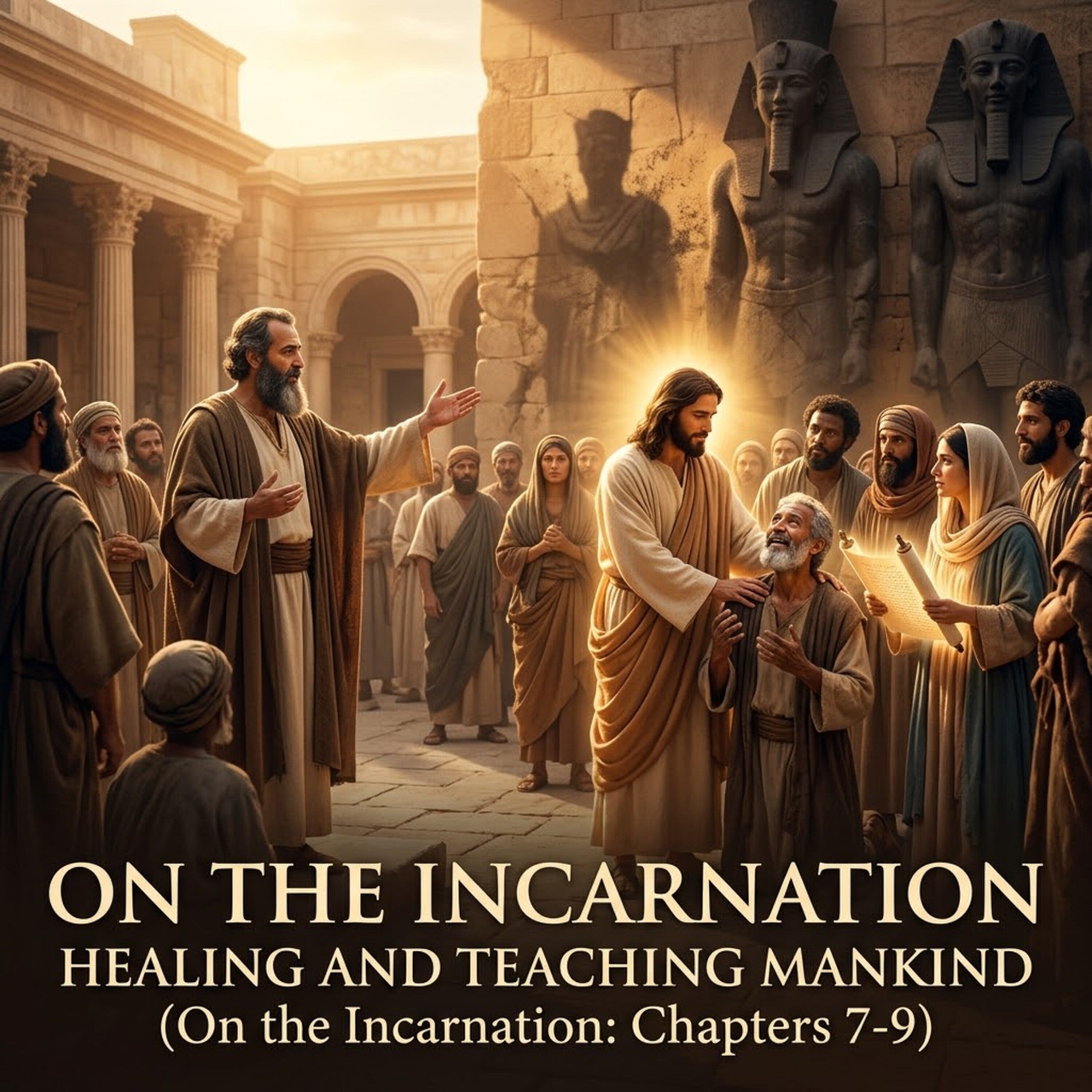
Most of us remember ancient theology as a collection of dusty arguments entirely disconnected from the reality of daily life. But Athanasius’s On the Incarnation was forged in the middle of a hostile, mocking culture.The episode opens by stepping directly onto Greek philosophical turf. To the Stoic and Platonic minds of the fourth century, the supreme God was entirely detached from the messy, decaying material world. The idea of the divine Word entering a human body, submitting to hunger, fatigue, and public execution, was not just ridiculous. It was deeply offensive. God, in their view, was supposed to manage the cosmos from a pristine, dignified distance.Athanasius dismantles this assumption from the inside out. If the divine Word can govern the entire physical universe without being degraded, why is it shameful for that same Word to govern one specific human body? The hosts capture this with a modern parallel: a CEO who leaves the boardroom to fix a catastrophic failure on the factory floor. We wouldn’t call that degrading; we would call it incredible, hands-on leadership. God did not come to merely “dazzle the beholders” with a terrifying show of force. He accommodated Himself to the capacity of the patient.At the center of this rescue mission is one of the text’s most vivid images: humanity as highly flammable stubble, and the divine life as fireproof asbestos. Because humanity’s disease of corruption was structural and internal, an external set of moral rules would have been entirely useless. The Word had to interweave His indestructible life into our mortal substance, fundamentally altering human nature and permanently changing our relationship to the fire.From there, the episode turns from philosophical theory to historical proof. Athanasius points to the undeniable societal shifts sweeping the Roman Empire: the sudden collapse of deeply entrenched pagan oracles and the cessation of warfare among brutal, nomadic tribes like the Scythians. By refusing to retaliate and making peace with their enemies, these early believers dismantled warfare-based economies and shifted the battleground entirely. They exposed the demonic realm’s strategy of keeping humanity fractured, bleeding, and warring out of strategic fear.But the episode does not merely celebrate this history; it wrestles honestly with the text’s rough edges. The discussion evaluates the author’s intellectual triumphalism, the ancient cultural elevation of physical asceticism, and the challenge of understanding a supernatural cosmology in a modern age. The hosts remind us that the core instruction of Jesus regarding self-denial is not merely about physical deprivation—it requires the total dethronement of the ego.Finally, the episode shifts to the text’s profound epistemological warning. You cannot understand the mind of God merely by assenting to philosophical propositions. Athanasius insists that to receive the pure light of the sun, you must first “wipe your eye clear.” Spiritual sight requires secret obedience. Intellectual study, divorced from a pure life and genuine repentance, leaves us hopelessly blind to the very reality we are trying to grasp.In This EpisodeWhy the Greek philosophical mind found the Incarnation deeply offensiveThe tactical brilliance of Athanasius stepping onto Greek intellectual turfThe CEO on the factory floor: why divine micro-management is not degradingThe structural disease of internal corruption and why moral rules could not cure itThe vivid ancient analogy of humanity as highly flammable stubble and the Word as asbestosHow early Christians dismantled powerful pagan oracles through fearless presenceThe Scythians and the radical economic shift from warfare to peaceEvaluating the tensions of the text: intellectual triumphalism and ancient asceticismWhy taking up your cross requires the total dethronement of the egoThe “clear eye”: why secret obedience is the absolute prerequisite for spiritual sightPractical ReflectionWhere in your life are you trying to dazzle people with your competence and success, rather than stepping into messy, vulnerable spaces to bring genuine healing?What modern “swords”—hair-trigger anger, vicious online arguments, or cutthroat workplace rivalries—do you need to beat into plowshares for the peace of the people around you?And where might hidden resentment, private compromise, or unconfessed pride be clouding your “spiritual eye” and preventing you from seeing the reality of God clearly?Suggested Substack ExcerptBefore it was a classic theological text, On the Incarnation was a fearless defense of the Christian faith in the face of a hostile, mocking culture. Chapters 7 through 9 reveal a God who refused to shout moral instructions from the heavens, choosing instead to interweave His indestructible life into our fragile humanity. In this episode, we explore Athanasius’s brilliant arguments, the ancient analogy of the stubble and the asbestos, the sociological miracles of the early church, and the sobering reality that spiritual sight requires secret obedience.AI DisclosureThis episode was created using Google NotebookLM Audio Overview, based on human-curated source material, structured guidance, and editorial review. AI is used as a tool for clarity and delivery, not as a replacement for thoughtful study or engagement with the original texts.Copyright© 2026 Discipleship for the Present / Kamashcu Production Studios. All rights reserved. This is a public episode. If you would like to discuss this with other subscribers or get access to bonus episodes, visit discipleshipforthepresent.substack.com
Embed this episode
Ready to play
Athanasius, On the Incarnation - 3 - Chapters 7-9
No transcript for this episode yet
Similar Episodes
No similar episodes found.
Similar Podcasts
No similar podcasts found.