
EPISODE · Feb 2, 2026 · 31 MIN
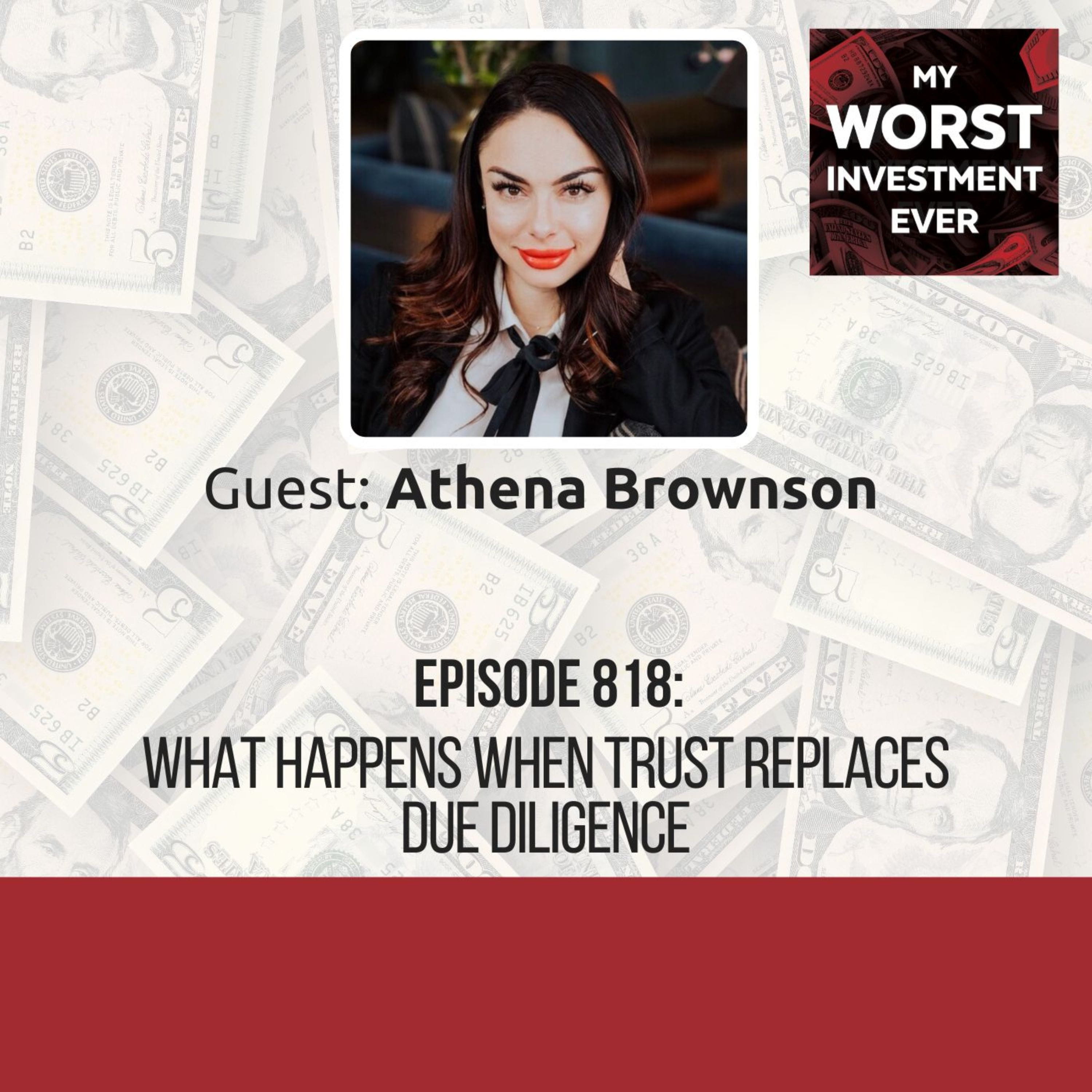
Athena Brownson – What Happens When Trust Replaces Due Diligence
from My Worst Investment Ever Podcast
BIO: Athena Brownson is a Denver realtor, investor, developer, and former professional skier whose resilience through chronic illness fuels her refined, strategic, and client-focused approach to real estate.STORY: Athena lost $130,000 in her first development project when a builder she considered a friend vanished with the upfront funds. Her trust and incomplete due diligence led to a total loss, teaching her that personal relationships can create dangerous blind spots in business.LEARNING: Due diligence is non-negotiable. Trust is a liability. “A simple conversation with someone that we know, like, and trust is invaluable, because they can point out to us the blind spots that we may have missed in our excitement.”Athena Brownson Guest profileAthena Brownson is a Denver realtor, investor, developer, and former professional skier whose resilience through chronic illness fuels her refined, strategic, and client-focused approach to real estate.Worst investment everAthena Brownson entered her first development project with confidence and a seemingly dream team. With a 45-year veteran developer—her father—by her side, she felt prepared. She had saved diligently, owned the land, and chose a builder she’d known for three years, a dear friend’s business partner.After multiple interviews where her father asked all the right questions, they felt secure. They signed a contract and paid $130,000 upfront for site clearing, asbestos abatement, and foundation work.Initial excitement turned to unease as progress was glacial. A blue fence went up, and some abatement started, but then communication stopped. Phone lines went dead. Subcontractors began calling Athena directly, asking why they hadn’t been paid.The devastating truth emerged: the builder had vanished with the funds. Athena later discovered she was one of eight victims of the same scam. Despite her real estate expertise and her father’s decades of experience, they had been outmaneuvered by a trusted contact.Lessons learnedDue diligence is non-negotiable: Trust is not a replacement for verification. Athena’s key takeaway was the need for exhaustive due diligence: calling not just a few references, but a comprehensive list of past and current clients to hear the unfiltered story of their experiences.Friendship clouds judgment: A personal connection created a dangerous blind spot. It made her and her experienced team less likely to probe aggressively or assume the worst, a bias scammers often exploit.Assume the worst, hope for the best: The mindset must shift from “I trust you until you prove me wrong” to “Show me consistent, verifiable proof that you are trustworthy.” In business, healthy skepticism is a necessary form of self-defense.Measure twice, cut once: This adage applies to money and contracts. Double and triple-check every detail, every claim, and every line item before funds change hands.Andrew’s takeawaysMoney is life energy: Andrew referenced the classic book Your Money or Your Life, emphasizing that money represents hours of your life traded for it. Guarding it fiercely is an act of self-preservation.Trust is a liability: Stories like Athena’s and others show that misplaced trust is a common thread in catastrophic losses. Systems and verification must replace blind faith.Seek counsel, not confirmation: When making big decisions, actively seek advisors who will challenge you and point out blind spots, not just those who will validate your excitement.Actionable adviceAthena advises investors to do these three things when vetting any partner:Demand a list of 10 past and current clients/vendors and call them all. Don’t settle for 2-3 curated references. Ask specific questions about communication, budgeting, and problem-solving.Before major investments, formally run the deal by a small group of mentors or experienced peers whose explicit role is to find flaws and ask the tough questions you might be avoiding.Impose a mandatory 48-72 hour “cooling-off” period between agreeing to a deal and signing or funding. Use that time to conduct the extra due diligence that your initial excitement may have skipped.Athena’s recommendationsAthena’s number one recommendation is to invest in mentorship and continuous education. Whether through formal coaching, podcasts, masterclasses, or peer groups, constantly feed your knowledge.She advocates for finding a community that provides both accountability and the ability to see your own blind spots, which are invisible to you alone. For her, this approach, ingrained from her athletic career, is pivotal for professional growth and risk mitigation.No. 1 goal for the next 12 monthsAthena’s number one goal for the next 12 months is to deepen her impact by building a powerful, trusted referral network. She aims to serve more clients in building long-term wealth through strategic real estate and to expand her team. A core part of this mission is to pay forward the mentorship she received by guiding younger agents, helping them avoid the costly pitfalls she endured.Parting words “Don’t make rash decisions. Take your time and know that the right thing is going to come into place at the right time.”Athena Brownson [spp-transcript] Connect with Athena BrownsonLinkedInInstagramYouTubeAndrew’s booksHow to Start Building Your Wealth Investing in the Stock MarketMy Worst Investment Ever9 Valuation Mistakes and How to Avoid ThemTransform Your Business with Dr.Deming’s 14 PointsAndrew’s online programsValuation Master ClassThe Become a Better Investor CommunityHow to Start Building Your Wealth Investing in the Stock MarketFinance Made Ridiculously SimpleFVMR Investing: Quantamental Investing Across the WorldBecome a Great Presenter and Increase Your Influence<a...
Embed this episode
Ready to play
Athena Brownson – What Happens When Trust Replaces Due Diligence
No transcript for this episode yet
Similar Episodes
No similar episodes found.