Augmented Reality Is Just Getting Going - Imvizar CEO
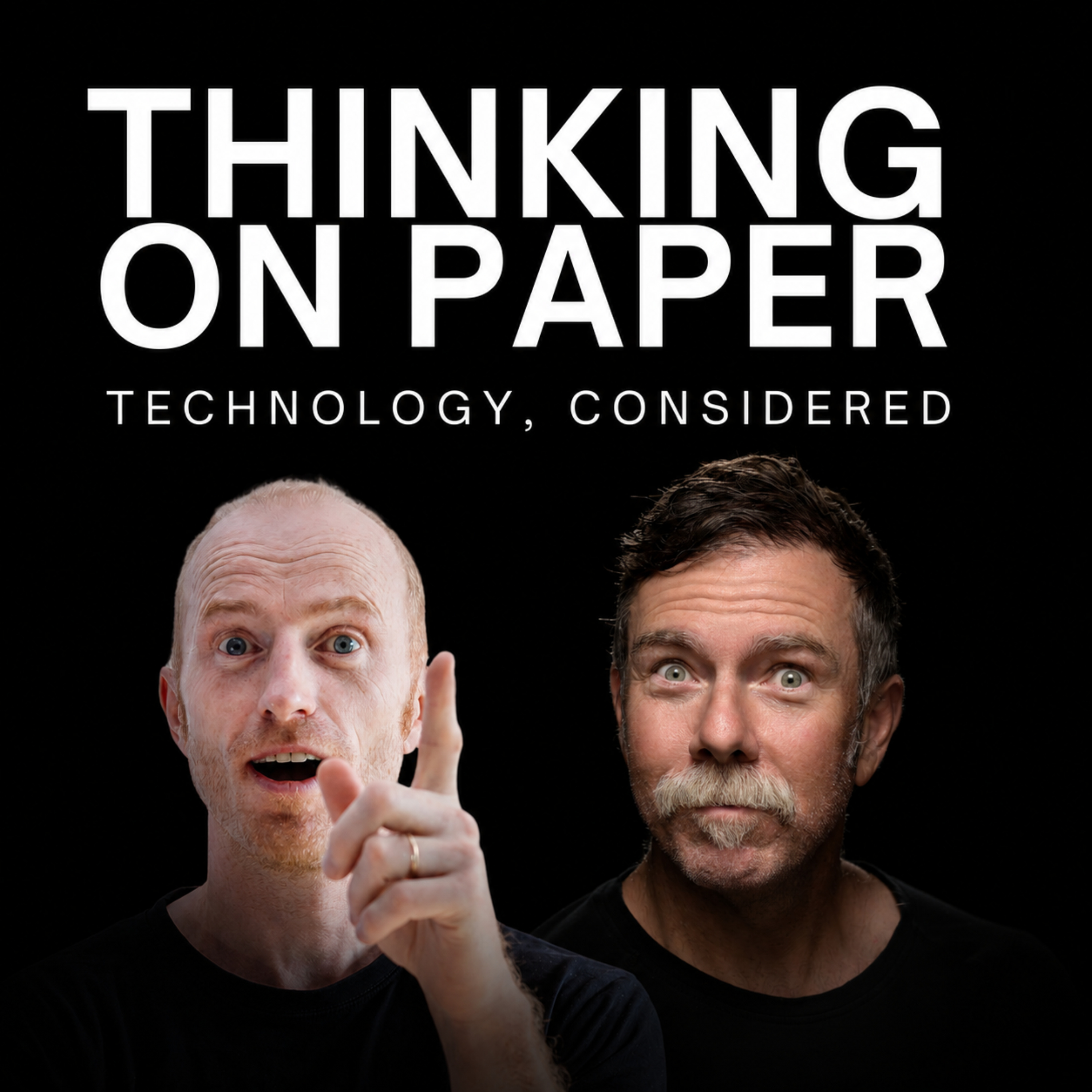
An episode of the Thinking On Paper podcast, hosted by Mark Fielding and Jeremy Gilbertson, titled "Augmented Reality Is Just Getting Going - Imvizar CEO" was published on January 8, 2026 and runs 35 minutes.
January 8, 2026 ·35m · Thinking On Paper
Summary
Eight billion augmented reality experiences happen on Snapchat every day. You've probably used AR dozens of times this week—you just didn't call it that.Michael Guerin, CEO of Imvizar, explains why the most successful AR never announces itself. It hides inside behavior people already have: taking photos, exploring museums, starting new jobs.This isn't about Pokémon Go or headsets. It's about spatial storytelling—experiences that use physical space to create emotional connections screens can't deliver.We explore how AR works in three contexts:Snapchat: 8 billion daily uses through lenses and filters. Users don't think "I'm using AR"—they just use it. Success comes from integration, not novelty.Salesforce: New employee onboarding without slideshows. Instead of sitting through presentations, new hires scan QR codes and explore the building. They learn culture through movement and space, retaining more than any deck could teach.Tourism & Museums: Spike Island (Ireland's Alcatraz) uses AR to place visitors inside prison scenes from the 1800s. When you see a prisoner chained to the wall in the punishment cell—in the actual cell—the emotional response is immediate. Two visitors cried on the first day.Guerin's process reverses traditional storytelling:1. Survey the physical space first2. Design user movement through it3. Place visuals that respond to location4. Plan interaction points5. Write narrative last (not first)AR fails when it acts like static video. It succeeds when movement and place carry the experience. The technology disappears; the story remains.If you think AR is future tech, this episode proves you're already living in it—you just haven't noticed.---Guest: Michael Guerin, CEO, ImvizarTopics: Augmented reality, spatial storytelling, Snapchat, Salesforce, museum technology, tourism, employee onboarding, AR designLocations mentioned: Spike Island (Ireland), Salesforce offices (East Coast, West Coast)Please enjoy the show.Stay curious.Keep Thinking on Paper.Mark and JeremyPS: Please subscribe. It’s the best way you can help other curious minds find our channel.Other ways to connect with us:Listen to every podcastFollow us on InstagramFollow us on XFollow Mark on LinkedInFollow Jeremy on LinkedInRead our SubstackEmail: [email protected](00:00) The Story of Augmented Reality(03:46) Snapchat & AR Post-Pokemon Go(06:24) Snoop Dogg In A Wine Bottle(08:12) Salesforce AR(13:13) What Is Digital Storytelling?(17:07) AR In Tourism(18:25) Designing The Spike Island AR Experience(22:49) How To Do AR Well(26:26) Meta, AI And AR Glasses (29:40) Privacy(32:33) Mark's Terrible Thought Experiment(33:58) What do we want humans to be?
Episode Description
Eight billion augmented reality experiences happen on Snapchat every day. You've probably used AR dozens of times this week—you just didn't call it that.
Michael Guerin, CEO of Imvizar, explains why the most successful AR never announces itself. It hides inside behavior people already have: taking photos, exploring museums, starting new jobs.
This isn't about Pokémon Go or headsets. It's about spatial storytelling—experiences that use physical space to create emotional connections screens can't deliver.
We explore how AR works in three contexts:
Snapchat: 8 billion daily uses through lenses and filters. Users don't think "I'm using AR"—they just use it. Success comes from integration, not novelty.
Salesforce: New employee onboarding without slideshows. Instead of sitting through presentations, new hires scan QR codes and explore the building. They learn culture through movement and space, retaining more than any deck could teach.
Tourism & Museums: Spike Island (Ireland's Alcatraz) uses AR to place visitors inside prison scenes from the 1800s. When you see a prisoner chained to the wall in the punishment cell—in the actual cell—the emotional response is immediate. Two visitors cried on the first day.
Guerin's process reverses traditional storytelling:
1. Survey the physical space first
2. Design user movement through it
3. Place visuals that respond to location
4. Plan interaction points
5. Write narrative last (not first)
AR fails when it acts like static video. It succeeds when movement and place carry the experience. The technology disappears; the story remains.
If you think AR is future tech, this episode proves you're already living in it—you just haven't noticed.
---
Guest: Michael Guerin, CEO, Imvizar
Topics: Augmented reality, spatial storytelling, Snapchat, Salesforce, museum technology, tourism, employee onboarding, AR design
Locations mentioned: Spike Island (Ireland), Salesforce offices (East Coast, West Coast)
Please enjoy the show.
Stay curious.
Keep Thinking on Paper.
Mark and Jeremy
PS: Please subscribe. It’s the best way you can help other curious minds find our channel.
Other ways to connect with us:
Follow us on Instagram
Follow us on X
Follow Mark on LinkedIn
Follow Jeremy on LinkedIn
Read our Substack
Email: [email protected]
--
TIMESTAMPS
(00:00) The Story of Augmented Reality
(03:46) Snapchat & AR Post-Pokemon Go
(06:24) Snoop Dogg In A Wine Bottle
(08:12) Salesforce AR
(13:13) What Is Digital Storytelling?
(17:07) AR In Tourism
(18:25) Designing The Spike Island AR Experience
(22:49) How To Do AR Well
(26:26) Meta, AI And AR Glasses
(29:40) Privacy
(32:33) Mark's Terrible Thought Experiment
(33:58) What do we want humans to be?
Similar Episodes
Mar 5, 2026 ·31m
Feb 24, 2026 ·1m
Nov 24, 2025 ·60m
Nov 24, 2025 ·62m
Nov 24, 2025 ·28m
Nov 24, 2025 ·41m