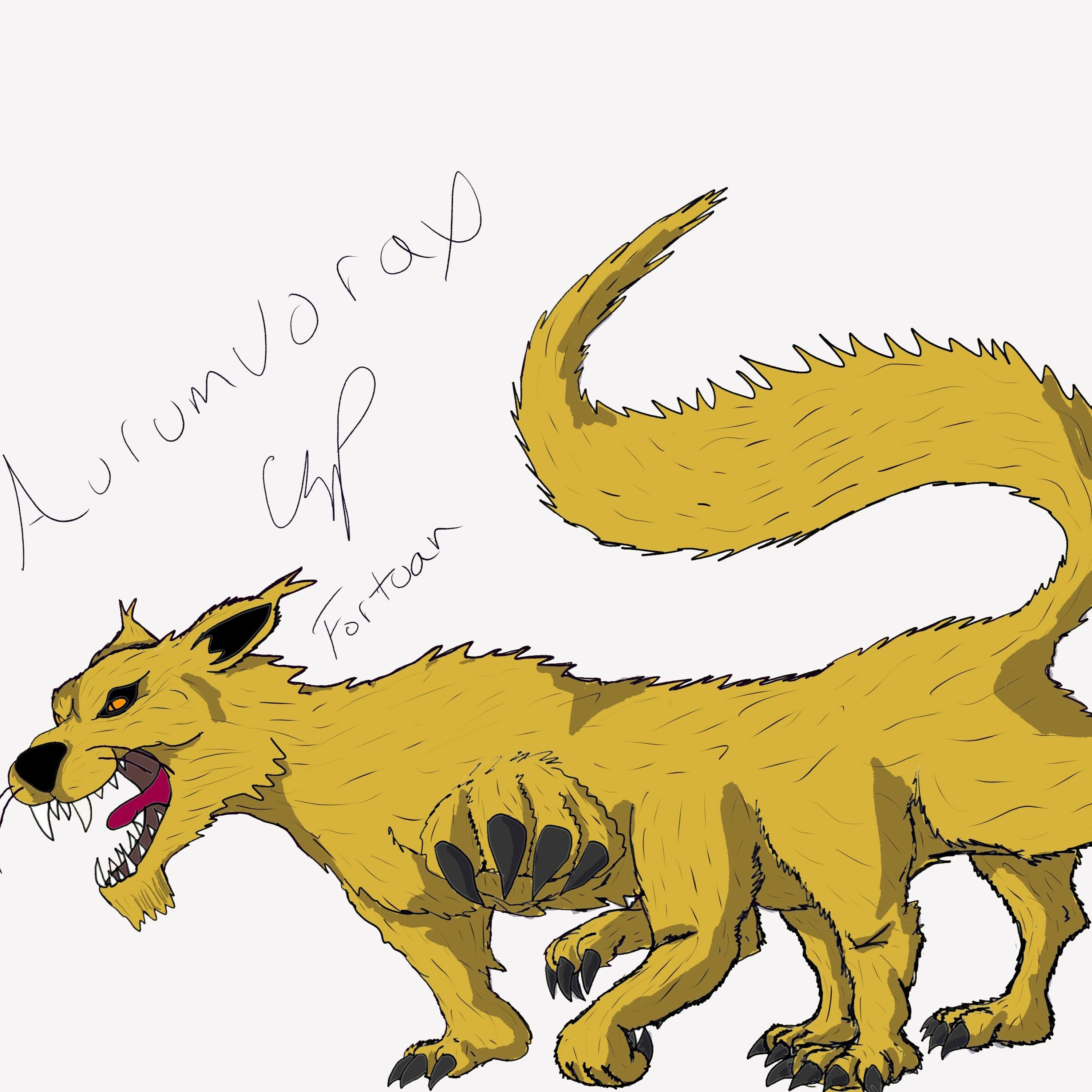
Ecology of the Arunvore Axe. In general, I wouldn't call them dangerous or vicious, however they are still wild animals. This new trend of taking a cub for a pet is going to spell disaster. Mark my words.
Lalendal, Elven druid. Introduction. Arunvore axes have for a long time been rare and obscure monsters. While it is known they eat gold, the recent discovery from a merchant who managed to cage one sword them into the public eye.
Now everyone who seems to be... paying to find one is a pet under some misguided pretense that they'll strike at rich who can afford the high price to capture a cub. The issue here lies in bringing an animal that few know much about into the homes and villages so suddenly will cause unforeseen and possibly possibly only because they didn't care to look circumstances. So in an effort not to quell this frenzy but at least to keep the public aware I am conducting a subsequent study into the gold-eating creature known as the Arunvore Axe.
Not only for my fellow humanoid sakes but also for the rapidly perishing Arunvore Axe population. Origins. While it's evident that the creature resembles something close to that of a badger or the Weasel family, it should have been obvious that they were also Arunvore's. Being a such rare creature it's hard to pin down when we started seeing them in history, but it appears to be after the arrival of coin and mining that these creatures were able to survive.
They used to be found exclusively underground but more and more they were found in forest trails and even well-traveled roads. Sure some could be found around gold veins as some dwarven communities have professed, but only with the innovations of coin and commerce have the creatures been able to thrive. Thus their numbers are growing and with many wealthy nobles newfound interests in keeping them as pets, their numbers seem less likely to fail although in the wild diminishing. Physical characteristics.
Identifying the Arunvore Axe. Badgers and Weasels are common enough animals that describing how they look isn't exactly necessary. However there are ways to identify the Arunvore Axe which is closely related. First and foremost is their golden coats which shines like a metallic luster.
Their fur is also longer year round due to living primarily in cooler temperate climates. They also possess eight legs instead of four making a peculiar adaptation. They are usually about three to four feet long making them slightly larger than the average wild bangers. Their sounds can also identify them as they often growl for what seems to be no reason at times and bark when agitated.
Barks may be hard to identify but they will sound deeper than the average dog or even wolves. Gold Eaters. Easily the most identifiable thing about Arunvore Axe is their diet of gold. Their consumption of gold isn't purely for nutrition though as they are indeed omnivores eating fruits, berries and other animals sustain themselves.
However they do need to consume gold or in the case of some adaptations other minerals to be able to digest their food. Most animals can create their own means of digesting food mostly but have aid from bacteria and their stomachs. Please don't question me, Wizards found this out long ago. Arunvore Axe can't produce their own and thus use gold in a chemical reaction to aid in the digestive process.
This consumption of gold also means that they excrete small amounts of gold in various ways. The most lucrative ways are their pelts which have their first seemingly laced with a precious metal. Hides can go for tens of thousands of gold as a result. Secondly, and the more significant reason to the adoption rates is that their feces can contain gold.
They can produce anywhere between 10 and 15 gold pieces worth in one extraction. However, refining it isn't exactly perfect and the coins made from are often less than desirable in quality. Only when starving for gold will the Arunvore Axe resort to re-digesting gold. Bacterialess.
As previously mentioned they don't have their own bacteria. Arunvore Axe is a result or highly susceptible to bacterial diseases as their bodies don't often encounter them. They can die quite quickly from something like a untreated small cut with no means to fight the infection or disease. They have two defenses against the bacteria to keep them safe.
The first defense is that of Ursulaiba is a stinging antibacterial solution. This makes Arunvore Axe's bite one of the cleanest ones a creature can suffer. This helps kill any bacteria found in the food or water they consume like other creatures. Their saliva can be used in medicine to clean wounds.
However, this goes against their second defense. Arunvore Axe's second defense is a solitary lifestyle. Cubs instinctually don't like a lot of attention but are often too curious for their own good. They are loners by nature.
Thus the influx of people handling them and being around them caused them to become irritable and dangerous, especially older ones. With proper handling and care it's extremely easy to accidentally infect and kill a cub. Bodies meant for digging. Arunvore Axe have solid and large claws meant for burrowing and digging like badgers.
Their nails are powerful and dangerous. Thus I believe they stayed mostly underground. Previously. With more on the surface looking for easier waves to obtain gold, they can be encountered out in the open.
While longer than other badgers, they are lower to the ground with their legs a little shorter in proportion. This specific flexibility makes it harder for them to be smashed with blunt weapons or trampling them with a horse. Their skeletons can also easily squish, making it easy for them to squeeze themselves into small places. Environments and homes.
These golden badger light creatures tend to stay in colder climates and environments due to their thick coats. Unsurprisingly, they will hibernate in the coldest months like other animals related to them. Their burrows are relatively simple with only a sleeping chamber and two narrow tunnels to enter and exit. Inside piles of pine needles and dry leaves make up their beds in which they curl up in.
The sleeping chamber itself is far enough underground in most cases that it's primarily unaffected by the temperatures on the surface. Mental and social observations. Surprising intelligence. Many humanoids and sentient beings alike vastly underestimate animal intelligence.
However, armed war access will still exceed even what Druids expect at times. While they are not fully mentally cognizant, they have long memories and have been able to identify people and creatures that have wronged them many years afterwards. One such case is a trapper who caught one's young, two winters before, quickly found himself ambushed by the mother, losing an arm in the process. I suggest that no one should underestimate such a potentially dangerous animal.
Communication. Unable to speak, armed war access communicates similar to many other animals in the forest and rivers around them. Most of their communication is body language, growls, barks, and other noises common to animals. Although rare contact with each other is almost exclusively via body language outside of mating season, which is particularly partially done by smell.
When two and a lot of others find each other. These golden badgers are not fond of company, even from their kin. When a room for acts sees another one immediately, they are on their guard. They respond by hissing, spitting, scratching at the air, and even urinating to intimidate the other badger way.
Nothing about the encounters and friendly. The sole exception is the careful dance of mating while a female is in heat. When in heat, the female sprays a musk around her territory that is a terrible thing to smell. It's something between a rotten and a metal smell.
The smell can carry for long distances attracting males. If a male finds the female, he will stalk her for a while, ensuring no other males are present. If they are, they will fight each other on sight as the male starts urinating on the sprays, making, masking the female with his scent. Once the male's feel secure, he will often obtain a large amount of gold for the female as a gift.
The instinct can lead to a male going to burrow into an even a dragon's cave regardless of the danger. If the female accepts the gifts, she will allow the male to approach and mate. They will mate quickly and only for a few times before the female grows tired of the male's presence. The pile of gold is then taken to her den where she will guard it until her younger birth.
After mating, it takes about four months until the cubs are born, usually seven are born with only six teats to feed. The runt usually perishes. Young don't need the gold right away, but their survival depends on it. After two months, the young start to devour the gold themselves and leave the den soon after in search of their own food.
Once they cub, about half the adult size leaves a shelter. The mother no longer has any attachment and will chase the smaller golden badgers away. Interactions with other creatures. Dragons.
Dragons are not fond of a room for axes, we're greedily feasting on their hordes. It's significant reason why dragons never allow their gold to stack up on the underground cave walls. Like a mouse and a human's home, they can steal the gold with the dragon being somewhat unaware. Often a dragon will kill one on sight, usually with their breath weapons.
Going claw to claw at a claw, suddenly in favor of the dragon, especially with their massive size difference. However, the talons of the golden badgers are still sharp enough to harm the dragon. Dwarves. Dwarves are the most familiar with the room for axes.
As they encounter them in their mining accidentions, they are considered a good sign that a gold vein could be near. Although not as close pets, some communities use them as gold sniffers because of their sour attitude. Most often, they are muzzled and on a long leash. That's the extent of their relationships usually.
With a new fad, dwarves have been known to be the best trappers for pelts and cubs. Goblins and cobolds. Our room for axes are usually just shorter than some of the taller specimens of goblins and cobolds. That's how they consider bad omens and highly dangerous to both cultures.
Goblins even go as far as to press that the creatures are outright evil. One cobalt hero, known as the King of Gold, rode a tamed or room for axes into battle and often fed enemies and his spoils to it. Gricks. Our room for axes despise gricks and often attack and kill them on sight.
This may be a survival instinct from when they may encounter them underground. Since gricks can't burrow well themselves, they may use the convenient tunnels dug by a room for axes to hunt and live for prey in their subterranean homes. Gold thieves. As they don't enjoy other animals comfortably, they usually attempt to steal gold rather than outright fight for it.
They will quietly stalk and crawl closer to countervans like a tiger hunting prey. Once they make it to the most considerable amount of gold, they can grab, pull, bite, or even drag the container. Caring it out as quietly as they can manage. While not precisely nocturnal animals, they can smell the gold well enough to operate clums in the dark.
The easiest way to avoid a fight is to let the creature have the gold and stay away, or even better pretend not to notice it. You may lose all your gold, but you'll not have to fight for your life either. Battle tactics. When fighting, a room for axes are anything but quiet.
Like many animals, they will display various means of intimidation before attacking. Unless however, you are carrying enough gold for them to smell. Often they will rather avoid a fight and stay away from other creatures if it can be helped. Once fighting is the only option though, a room for axes tend to circle opponents like a ring fighter.
Spitting, hissing, and barking the whole time, they never entirely give up the intimidation game. They often prefer to use the front forearms to swipe and keep footing with their back fore for balance when going in for a strike. They can and will bite, but their claws are much more effective. If they are harmed too much or feel outmatched entirely, they will spray a foul order similar to the mating's right and attempt to flee.
At this point, they aren't too willing to fight, but they are trapped. They will hunker down and strike if something gets too close. Our room for axes as pets. Unfortunately, as many have found out, the fragile pups grow up to be very poor pets.
Extremely high death rates of catcher cubs also make for very expensive and sometimes short-lived companions. If a pup does manage to survive, it takes hundreds of gold a year to keep them around. Not only that, they are poor-tempered and often swipe at or even kill their owners or they can get away with it. They are also not house-trained and will dig, tear up, and dispense waste in the house freely.
This is how this became popular must involve a level of discretion on this matter. A minimal amount of individual abroom-vore axes have displayed affection and loyalty. With a long process of keeping these traits, Druids have found a way to make this safe and a mutual relationship, like dogs, cats, and horses. Recent breakthroughs and how to raise them in extremely selective breeding by some derivative organizations have led to the hope for their domestication.
Variations. Gold eaters. Most of the common room vore axes rely on gold for the digestive tracts. They are also the sole variant of the recent pet fads.
The golden pet pelts can fetch a high price, making a failed pet recoup the cost plus even more. Growing up to 3.5 feet long at their full size, for the larger individuals, it makes for a dangerous animal to keep around for something so unruly. Cormanthaur or room vore axes. Also known as iron eaters, they are an adaptation of the creature that eats iron instead of gold.
They are usually identified by their dark red fur and with blue stripes. There is a light that is also antibacterial but also extremely dangerously acidic, close to that of a gray ew's. Instead of a population of the creature ended up being trapped in an area devoid of gold and thus adapted to eating iron instead. And all other ways, they are similar as gold eaters.
Jade arm vore axes. Another adaptation is a population that eats precious stones, usually jade. They are much smaller in population but adapt to whatever large amount of precious gems they consume. Jade is just the most common.
It seems to be rubies, sapphires and everything except for diamonds can occur. Once again, it seems to be a process that requires the mineral to digest where iron or gold isn't available. Their hides take on the shade of whatever precious gem they eat, but usually only with black stripes. Equipment.
Armors. Armors made from the hides of a room vore axes are sturdier but a little less flexible than your average hide armor. However, they do grant near immunity to weapons or things made of gold or iron depending on the pelt variation. This is only a small portion of the reason the cost of hides are so hard as fashion is leading cause, not practicality.
Claws for weapons or tools. While the calls are formidable, they often make for high quality weapons. With the ability to grow and strengthen while living, they can be useful tools. However, when removed or dead, they become much more brittle and will break easily.
DMs notes. Like rust monsters, these creatures help threaten the party stuff rather than the party themselves. You can see how materialistic your party is. These creatures are relatively obscure in D&D and they don't have to get printed in books, but I find them to be fun monsters.
Thank you for listening. This is my 72nd ecology. I don't do the audio stuff as often, but they're all out there to read on my Reddit page. And also if you're listening, please do tune into Hunter's Up Podcast, which I do weekly, and then also Bickering Bucks, which is the monthly show.
You can listen to SoundCloud, Spotify or iTunes or just enjoy the call of ecologies. But either way, thank you for listening.