Author Andrew Marantz on the hijacking of the American conversation episode artwork

EPISODE · Nov 1, 2019 · 1H 10M

Author Andrew Marantz on the hijacking of the American conversation

from Berkeley Talks

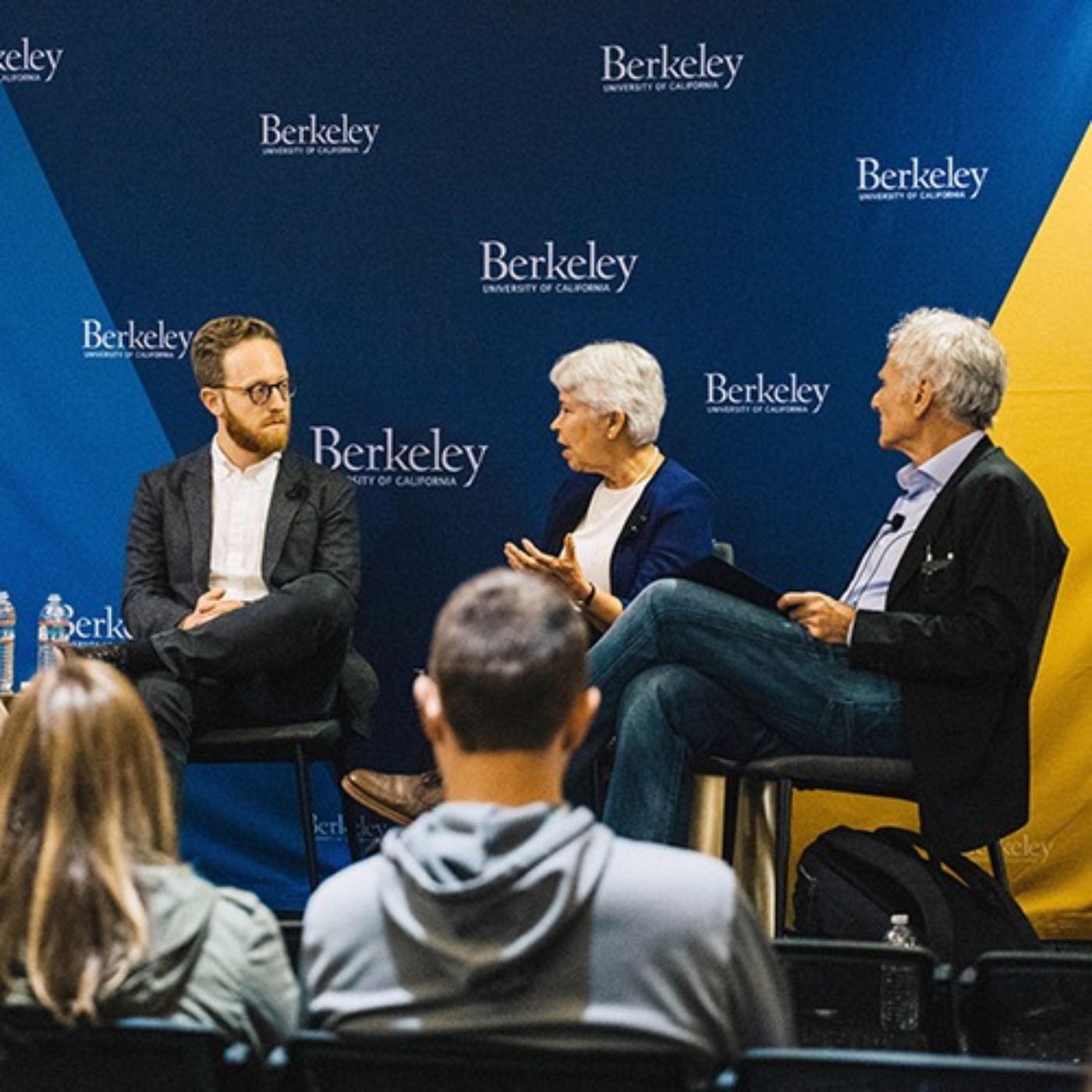
To write his new book, ANTISOCIAL: Online Extremists, Techno-Utopians and the Hijacking of the American Conversation, New Yorker reporter Andrew Marantz spent three years embedded with alt-right trolls to better understand how they had become powerful enough to influence our politics, our media — our society as a whole.“I suppose I could have sat around and simply had an opinion, but I really wanted to know where these toxic ideas were coming from, what motivates people to do this and how they were promoting these ideas,” Marantz told Berkeley News earlier this month.Marantz joined Chancellor Carol Christ, Ed Wasserman, dean of the Graduate School of Journalism, and moderator Dan Mogulof, at UC Berkeley’s Alumni House on Oct. 16 to discuss the trends and discoveries described in his book.“The thing that surprised me about the book is how nihilistic and punk and really without convictions … a lot of these people were,” said Chancellor Christ said to Marantz during the discussion. “They were really basically driven by a desire for followers and notoriety rather than the horrible convictions that they said. Was that your take on it? Because that’s certainly what I took from the book. And that was actually as troubling to me as the virus of these hate sites.”“Yeah, I think you’re right,” said Marantz. “There’s a spectrum in the book from sincere ideologues to, as you say, nihilists, who don’t really seem to have any ideological agenda, but seem to have just a pure self-interest. Or, even self-interest is maybe generous, because all they want is attention. But it can be negative attention. It doesn’t really seem to matter to them. So, both of those areas existed within the taxonomy. And I agree, it’s hard to see which one is worse. Because, say what you will about the tenets of National Socialism — at least it’s an ethos. You can work with an ideology, it’s hard to know how to work with a nihilist.”Christ first met Marantz in 2017, when he was working on a New Yorker story about free speech issues on campus, after the cancellation of an event with then-Breitbart editor Milo Yiannopoulos led to a wave of criticism that Berkeley — home of the Free Speech Movement — had tried to shut down free speech.“When I was here covering the Milo circus,” said Marantz, “the underlying premise was, ‘This is a public university, therefore, the First Amendment applies, therefore, he has to be able to speak.’ …What I’m questioning is whether that should be the interpretation of First Amendment law for time immemorial, or whether we can change our interpretations of laws just like we’ve always changed our interpretations of laws.”Listen and read a transcript on Berkeley News. Hosted on Acast. See acast.com/privacy for more information.

To write his new book, ANTISOCIAL: Online Extremists, Techno-Utopians and the Hijacking of the American Conversation, New Yorker reporter Andrew Marantz spent three years embedded with alt-right trolls to better understand how they had become powerful enough to influence our politics, our media — our society as a whole.“I suppose I could have sat around and simply had an opinion, but I really wanted to know where these toxic ideas were coming from, what motivates people to do this and how they were promoting these ideas,” Marantz told Berkeley News earlier this month.Marantz joined Chancellor Carol Christ, Ed Wasserman, dean of the Graduate School of Journalism, and moderator Dan Mogulof, at UC Berkeley’s Alumni House on Oct. 16 to discuss the trends and discoveries described in his book.“The thing that surprised me about the book is how nihilistic and punk and really without convictions … a lot of these people were,” said Chancellor Christ said to Marantz during the discussion. “They were really basically driven by a desire for followers and notoriety rather than the horrible convictions that they said. Was that your take on it? Because that’s certainly what I took from the book. And that was actually as troubling to me as the virus of these hate sites.”“Yeah, I think you’re right,” said Marantz. “There’s a spectrum in the book from sincere ideologues to, as you say, nihilists, who don’t really seem to have any ideological agenda, but seem to have just a pure self-interest. Or, even self-interest is maybe generous, because all they want is attention. But it can be negative attention. It doesn’t really seem to matter to them. So, both of those areas existed within the taxonomy. And I agree, it’s hard to see which one is worse. Because, say what you will about the tenets of National Socialism — at least it’s an ethos. You can work with an ideology, it’s hard to know how to work with a nihilist.”Christ first met Marantz in 2017, when he was working on a New Yorker story about free speech issues on campus, after the cancellation of an event with then-Breitbart editor Milo Yiannopoulos led to a wave of criticism that Berkeley — home of the Free Speech Movement — had tried to shut down free speech.“When I was here covering the Milo circus,” said Marantz, “the underlying premise was, ‘This is a public university, therefore, the First Amendment applies, therefore, he has to be able to speak.’ …What I’m questioning is whether that should be the interpretation of First Amendment law for time immemorial, or whether we can change our interpretations of laws just like we’ve always changed our interpretations of laws.”Listen and read a transcript on Berkeley News. Hosted on Acast. See acast.com/privacy for more information.

NOW PLAYING

Author Andrew Marantz on the hijacking of the American conversation

0:00 1:10:42

No transcript for this episode yet

We transcribe on demand. Request one and we'll notify you when it's ready — usually under 10 minutes.

Carnivores Don't Get Sunburn - Carnivore Diet Talks Carnivores Don't Get Sunburn - Carnivore Diet Talks Welcome to “Carnivores Don’t Get Sunburn,” where we have fun and explore the carnivore diet and its transformative power. Join us as we uncover real stories from individuals who have thrived on this diet, defying convention and embracing optimal health. Plus, stay tuned for our upcoming documentary featuring diverse carnivores overcoming health challenges. Learn more at www.carnivoredietdocumentary.com.Excitingly, we’re working on an upcoming documentary where we’ll feature carnivores from various walks of life, conquering diverse health challenges. Join us on this journey and learn more at www.carnivoredietdocumentary.com.Join us in uncovering the power of the carnivore diet. Prepare to be inspired, informed, and empowered to embrace optimal health and well-being.Welcome to “Carnivores Don’t Get Sunburn: Unveiling Real Stories of the Carnivore Diet.” Stay tuned for our upcoming documentary. Discover how this lifestyle can transform lives. Learn more at www.carnivoredietdocumentary.com IT IS WHAT IT IS with SHALLZ - SHALLY ZOMORODI Shally Zomorodi What?  "It is what it is" with ShallZ – Shally ZomorodiWhen? WeeklyHow long? 35 minutesEvery week, Mother of 4, wife, morning TV news anchor and ultimate hostess, Shally Zomorodi talks about life - its up's and downs and how to stay on track in her weekly podcast, ‘It is what it is.’  Known for her high energy, infectious smile and ability to see the cup as half full Shally talks about all things in life and how to work through its challenges. From parenting, marriage, friendships, current events to how to smile when it just seems impossible ‘It is what it is’ is the perfect podcast to help inspire you to dance through the rain. Tracking Nuclear Weapons Programs Center for Strategic and International Studies The CSIS Proliferation Prevention Program talks to experts about transparency and nuclear weapons. Cover Stories with Chess Life US Chess Chess Life Editor John Hartmann talks to the authors of each month's Chess Life cover story.

Frequently Asked Questions

How long is this episode of Berkeley Talks?

This episode is 1 hour and 10 minutes long.

When was this Berkeley Talks episode published?

This episode was published on November 1, 2019.

What is this episode about?

To write his new book, ANTISOCIAL: Online Extremists, Techno-Utopians and the Hijacking of the American Conversation, New Yorker reporter Andrew Marantz spent three years embedded with alt-right trolls to better understand how they had become...

Can I download this Berkeley Talks episode?

Yes, you can download this episode by clicking the download button on the episode player, or subscribe to the podcast in your preferred podcast app for automatic downloads.
URL copied to clipboard!