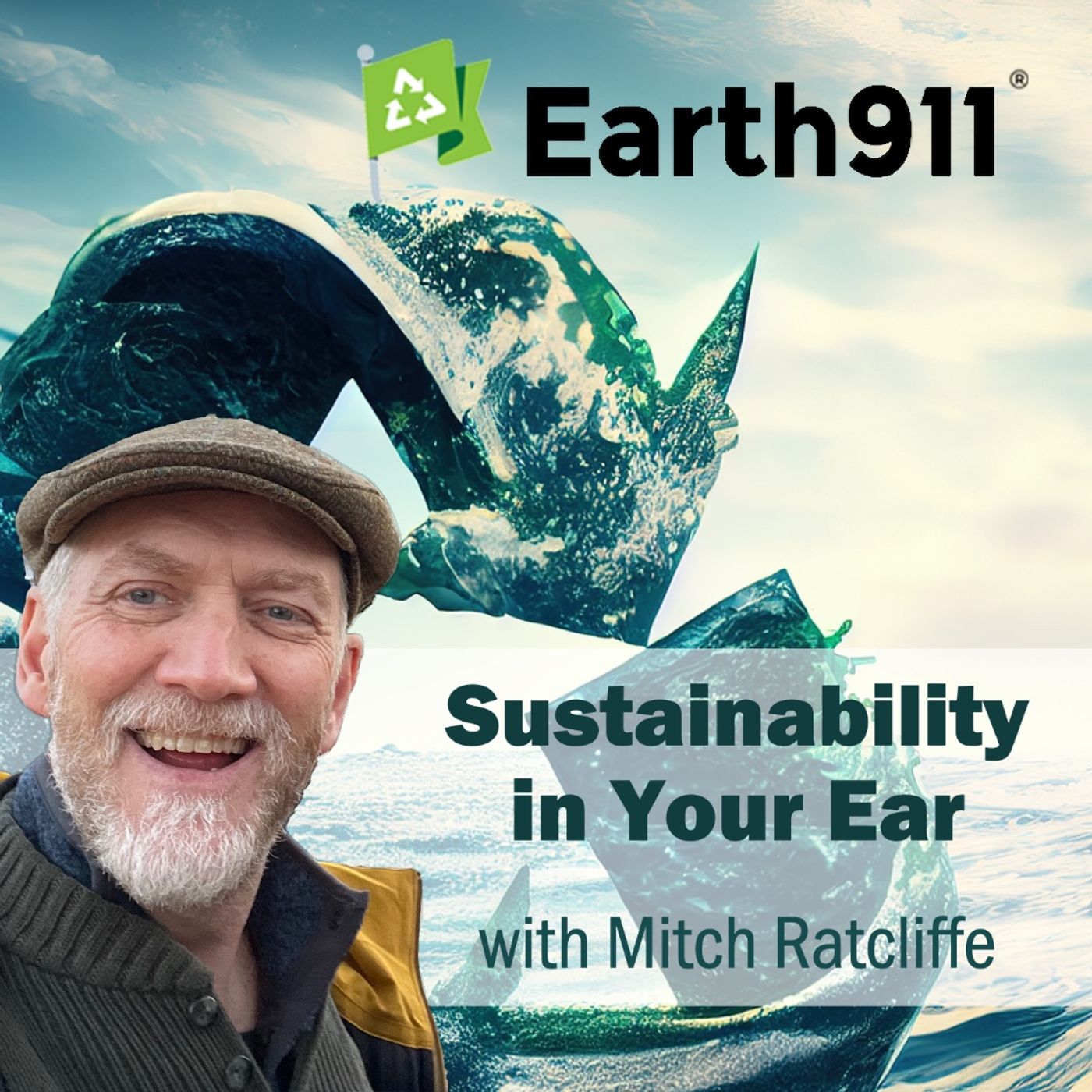
Author Michael Maniates on Why Green Shopping Isn't Enough episode artwork

EPISODE · Apr 13, 2026 · 1H 3M

Author Michael Maniates on Why Green Shopping Isn't Enough

from Sustainability In Your Ear · host Mitch Ratcliffe

In 2024, the global market for eco-labeled products crossed $500 billion. Electric vehicles, bamboo toothbrushes, compostable packaging — the shelves are full of ways to shop your way to a better planet. And yet global carbon emissions hit another record high that same year, and atmospheric CO₂ now stands above 429 parts per million. Decades of research have produced a finding that the sustainability industry doesn't want to talk about: buying green products doesn't drive the systemic change we need. It might not even be moving the needle. That's the core argument of Michael Maniates, an environmental social scientist and author of The Living Green Myth: The Promise and Limits of Lifestyle Environmentalism. Michael has spent more than 30 years studying why well-intentioned environmental choices at the checkout line fail to add up to real-world emissions reductions, and what kinds of action actually do. In this episode of Sustainability In Your Ear, he makes the case that the most powerful thing an eco-conscious person can do isn't swap their products. It's to become an active citizen.The resulting cycle has a name in Michael's framework: the trinity of despair. Earnest effort. Negligible impact. Creeping anxiety that we can't turn the corner. People try hard, see little result, feel guilty when they can't maintain perfection, and eventually burn out — or conclude that meaningful change requires getting every single person on board first. He is a sharp critic of what sociologist Elizabeth Shove has called the ABC model of social change: shift Attitudes, change Behavior, and better Choices will follow. It's the backbone of most sustainability communications — and, he argues, it's empirically fragile. Pro-environmental attitudes don't reliably produce pro-environmental behavior. Yet the model persists in education, marketing, and environmental organizing alike. Why does it keep coming back? Maniates identifies two reasons. First, it's deeply embedded in the educational system. Second, it sanitizes a genuinely gnarly problem of power and politics into a communication challenge: if we just get more information out there, people will make better choices. That framing shifts blame onto consumers, hides the structural drivers of high-carbon living, and makes life easier for politicians who don't want to touch the structural stuff.Find Michael Maniates' work, including his email to ask your direct questions, at michaelmaniates.com. His book, Consumption Corridors: Living a Good Life Within Sustainable Limits is available as a free download. The Living Green Myth: The Promise and Limits of Lifestyle Environmentalism was published in November 2025 by Polity Press.Subscribe to Sustainability In Your Ear on iTunesFollow Sustainability In Your Ear on Spreaker, iHeartRadio, or YouTube

In 2024, the global market for eco-labeled products crossed $500 billion. Electric vehicles, bamboo toothbrushes, compostable packaging — the shelves are full of ways to shop your way to a better planet. And yet global carbon emissions hit another record high that same year, and atmospheric CO₂ now stands above 429 parts per million. Decades of research have produced a finding that the sustainability industry doesn't want to talk about: buying green products doesn't drive the systemic change we need. It might not even be moving the needle. That's the core argument of Michael Maniates, an environmental social scientist and author of The Living Green Myth: The Promise and Limits of Lifestyle Environmentalism. Michael has spent more than 30 years studying why well-intentioned environmental choices at the checkout line fail to add up to real-world emissions reductions, and what kinds of action actually do. In this episode of Sustainability In Your Ear, he makes the case that the most powerful thing an eco-conscious person can do isn't swap their products. It's to become an active citizen.The resulting cycle has a name in Michael's framework: the trinity of despair. Earnest effort. Negligible impact. Creeping anxiety that we can't turn the corner. People try hard, see little result, feel guilty when they can't maintain perfection, and eventually burn out — or conclude that meaningful change requires getting every single person on board first. He is a sharp critic of what sociologist Elizabeth Shove has called the ABC model of social change: shift Attitudes, change Behavior, and better Choices will follow. It's the backbone of most sustainability communications — and, he argues, it's empirically fragile. Pro-environmental attitudes don't reliably produce pro-environmental behavior. Yet the model persists in education, marketing, and environmental organizing alike. Why does it keep coming back? Maniates identifies two reasons. First, it's deeply embedded in the educational system. Second, it sanitizes a genuinely gnarly problem of power and politics into a communication challenge: if we just get more information out there, people will make better choices. That framing shifts blame onto consumers, hides the structural drivers of high-carbon living, and makes life easier for politicians who don't want to touch the structural stuff.Find Michael Maniates' work, including his email to ask your direct questions, at michaelmaniates.com. His book, Consumption Corridors: Living a Good Life Within Sustainable Limits is available as a free download. The Living Green Myth: The Promise and Limits of Lifestyle Environmentalism was published in November 2025 by Polity Press.Subscribe to Sustainability In Your Ear on iTunesFollow Sustainability In Your Ear on Spreaker, iHeartRadio, or YouTube

NOW PLAYING

Author Michael Maniates on Why Green Shopping Isn't Enough

0:00 1:03:29

No transcript for this episode yet

We transcribe on demand. Request one and we'll notify you when it's ready — usually under 10 minutes.

MG Show MG Show The MG Show, hosted by Jeffrey Pedersen and Shannon Townsend, is a leading alternative media platform dedicated to uncovering the truth behind today’s most pressing political issues. Launched in 2019, the show has grown exponentially, offering unfiltered insights, comprehensive research, and real-time analysis. With a commitment to independent journalism and factual integrity, the MG Show empowers its audience with knowledge and encourages active participation in the political discourse. Eat to Live Jenna Fuhrman, Dr. Fuhrman Our health is our most precious gift and smart nutrition can change your life. Each month, join Dr. Fuhrman and his daughter, Jenna Fuhrman as they discuss important topics in the world of nutrition. Eat to Live will change the way you eat and think about food. French Your Way Jessica: Native French teacher founder of French Your Way Boost your French listening skills and test your comprehension with this one of a kind series of podcasts. Get the chance to listen to a real conversation between native speakers talking at normal speed AND customise your learning experience through carefully designed sets of questions (2 levels of difficulty) available for download at www.frenchvoicespodcast.com. All interviews also come with the transcript. French teacher Jessica interviews native speakers of French from around the world who share a bit of their life and passion. Where else would you meet in one same place a French yoga teacher based in Melbourne, a soap manufacturer from Provence, or a couple cycling around the world? Destiny Architecture® Meditations Heather Larson Bring your mediation practice into the Valueverse.

Frequently Asked Questions

How long is this episode of Sustainability In Your Ear?

This episode is 1 hour and 3 minutes long.

When was this Sustainability In Your Ear episode published?

This episode was published on April 13, 2026.

What is this episode about?

In 2024, the global market for eco-labeled products crossed $500 billion. Electric vehicles, bamboo toothbrushes, compostable packaging — the shelves are full of ways to shop your way to a better planet. And yet global carbon emissions hit another...

Is there a transcript available for this episode?

Yes, a full transcript is available for this episode. You can read the complete transcript on the episode page.

Can I download this Sustainability In Your Ear episode?

Yes, you can download this episode by clicking the download button on the episode player, or subscribe to the podcast in your preferred podcast app for automatic downloads.
URL copied to clipboard!