
EPISODE · Jul 10, 2026 · 1H 17M
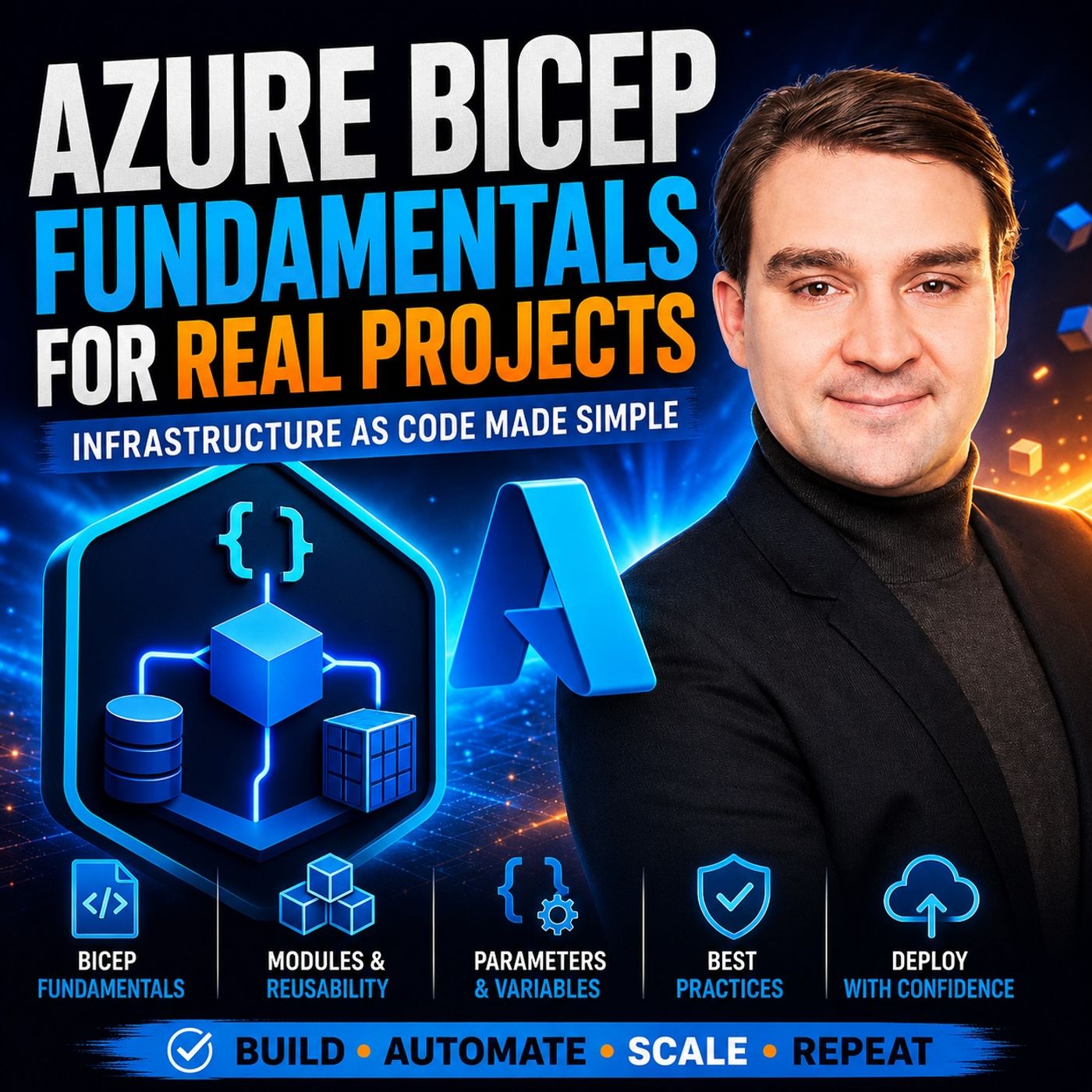
Azure Bicep Fundamentals for Real Projects
from M365.FM - Modern work, security, and productivity with Microsoft 365 · host Mirko Peters - Founder of m365.fm, m365.show and m365con.net
Learning Azure Bicep is easy. Building infrastructure that survives real-world enterprise environments is something entirely different. In this episode of the M365 FM Podcast, host Mirko Peters explores what separates hobbyist Infrastructure as Code from production-ready cloud architecture. Rather than focusing on syntax alone, this episode dives into the architectural thinking behind Azure Bicep, showing how modern organizations design scalable, secure, and governable Azure environments using Infrastructure as Code, Azure Policy, Deployment Stacks, Azure Verified Modules, Management Groups, and enterprise governance. You'll learn why Bicep is far more than a replacement for ARM Templates. It has become Microsoft's strategic language for defining Azure infrastructure, enforcing governance, automating deployments, and enabling cloud platforms that remain maintainable as organizations grow. Whether you're deploying your first storage account or designing enterprise landing zones across hundreds of Azure subscriptions, this episode provides the principles needed to build infrastructure that lasts.WHY BICEP IS MORE THAN BETTER SYNTAX Many developers view Bicep simply as an easier way to write ARM Templates. While the cleaner syntax, reusable modules, and improved readability are significant improvements, Microsoft's long-term vision goes much further. Bicep has evolved into the language that defines Azure governance, policy, security baselines, and infrastructure lifecycle management. Modern Infrastructure as Code is no longer about automating deployments—it's about codifying architectural decisions that remain consistent across teams, subscriptions, and cloud environments. THINKING LIKE A CLOUD ARCHITECT One of the central themes throughout the episode is the difference between automation and architecture. Real-world Bicep projects are built around organizational standards rather than individual deployments. Topics include:Infrastructure as CodeEnterprise architectureGovernance as CodeManagement GroupsAzure Landing ZonesResource ownershipOrganizational standardsPlatform engineeringCloud operating modelsInfrastructure lifecycleYou'll discover why enterprise Bicep templates become long-term blueprints that survive team changes, organizational growth, and evolving business requirements.BUILDING REUSABLE BICEP MODULES As Azure environments become larger, reusable modules become the foundation of maintainable infrastructure. The episode explains how well-designed modules encapsulate organizational decisions including security baselines, naming conventions, monitoring requirements, compliance standards, and networking patterns. Rather than copying infrastructure between projects, organizations build internal module libraries that allow development teams to deploy secure infrastructure while automatically following corporate standards. The discussion covers:Azure Verified Modules (AVM)Resource modulesPattern modulesPlatform modulesModule registriesVersioningParameter validationVariablesOutputsSemantic versioningDEPLOYMENT STACKS AND INFRASTRUCTURE LIFECYCLE One of Microsoft's biggest Infrastructure as Code innovations is Deployment Stacks. Unlike traditional ARM deployments, Deployment Stacks introduce state awareness, allowing Azure to understand which resources belong together throughout their lifecycle. The episode explores how Deployment Stacks simplify environment management, resource cleanup, brownfield migrations, and governance while reducing orphaned resources and configuration drift. You'll also learn how Deployment Stacks compare with Terraform's state management model and why this represents a major architectural shift for Azure-native deployments. MANAGEMENT GROUPS, POLICY, AND GOVERNANCE Enterprise Azure environments cannot be managed one subscription at a time. This episode explains why Management Groups form the true control plane for Azure governance. Topics include:Azure PolicyPolicy InitiativesRBACLeast PrivilegeManagement Group hierarchySubscription governanceComplianceSecurity baselinesGovernance as CodePlatform engineeringBy defining governance at the Management Group level, organizations can automatically enforce consistent security, compliance, and operational standards across hundreds of subscriptions.BUILDING ENTERPRISE LANDING ZONES Azure Landing Zones are much more than preconfigured subscriptions. They provide complete enterprise-ready cloud environments including networking, monitoring, identity integration, governance, security controls, and operational best practices. The discussion explores how organizations compose Landing Zones using reusable Bicep modules, allowing application teams to deploy workloads into standardized cloud environments without sacrificing flexibility. BICEP VS TERRAFORM One of the most common questions facing cloud architects is whether to standardize on Azure Bicep or Terraform. Rather than declaring a winner, this episode explains the strengths of both platforms. Bicep provides immediate support for new Azure services, seamless Azure integration, and simplified Azure-native deployments. Terraform remains an excellent choice for organizations operating across Azure, AWS, Google Cloud, and hybrid environments. The right decision depends on business requirements, governance strategy, and long-term platform goals—not simply personal preference. WHO SHOULD LISTEN? This episode is perfect for:Azure ArchitectsCloud EngineersDevOps EngineersPlatform EngineersInfrastructure EngineersAzure AdministratorsEnterprise ArchitectsCloud ConsultantsIT Decision MakersMicrosoft MVPsAnyone learning Azure BicepWhether you're writing your very first Bicep file, migrating from ARM Templates, implementing Azure Landing Zones, designing enterprise governance, or building reusable Infrastructure as Code libraries, this episode provides practical guidance drawn from real-world cloud architecture. If you want to move beyond simple deployments and start building Azure environments that are secure, scalable, reusable, and maintainable for years to come, this episode offers a comprehensive foundation for mastering Azure Bicep in real enterprise projects.Become a supporter of this podcast: https://www.spreaker.com/podcast/m365-fm-modern-work-security-and-productivity-with-microsoft-365--6704921/support.
Embed this episode
What this episode covers
Learning Azure Bicep is easy. Building infrastructure that survives real-world enterprise environments is something entirely different. In this episode of the M365 FM Podcast, host Mirko Peters explores what separates hobbyist Infrastructure as Code from production-ready cloud architecture. Rather than focusing on syntax alone, this episode dives into the architectural thinking behind Azure Bicep, showing how modern organizations design scalable, secure, and governable Azure environments using Infrastructure as Code, Azure Policy, Deployment Stacks, Azure Verified Modules, Management Groups, and enterprise governance. You'll learn why Bicep is far more than a replacement for ARM Templates. It has become Microsoft's strategic language for defining Azure infrastructure, enforcing governance, automating deployments, and enabling cloud platforms that remain maintainable as organizations grow. Whether you're deploying your first storage account or designing enterprise landing zones across hundreds of Azure subscriptions, this episode provides the principles needed to build infrastructure that lasts. WHY BICEP IS MORE THAN BETTER SYNTAX Many developers view Bicep simply as an easier way to write ARM Templates. While the cleaner syntax, reusable modules, and improved readability are significant improvements, Microsoft's long-term vision goes much further. Bicep has evolved into the language that defines Azure governance, policy, security baselines, and infrastructure lifecycle management. Modern Infrastructure as Code is no longer about automating deployments—it's about codifying architectural decisions that remain consistent across teams, subscriptions, and cloud environments. THINKING LIKE A CLOUD ARCHITECT One of the central themes throughout the episode is the difference between automation and architecture. Real-world Bicep projects are built around organizational standards rather than individual deployments. Topics include: Infrastructure as Code Enterprise architecture Governance as Code Management Groups Azure Landing Zones Resource ownership Organizational standards Platform engineering Cloud operating models Infrastructure lifecycle You'll discover why enterprise Bicep templates become long-term blueprints that survive team changes, organizational growth, and evolving business requirements. BUILDING REUSABLE BICEP MODULES As Azure environments become larger, reusable modules become the foundation of maintainable infrastructure. The episode explains how well-designed modules encapsulate organizational decisions including security baselines, naming conventions, monitoring requirements, compliance standards, and networking patterns. Rather than copying infrastructure between projects, organizations build internal module libraries that allow development teams to deploy secure infrastructure while automatically following corporate standards. The discussion covers: Azure Verified Modules (AVM) Resource modules Pattern modules Platform modules Module registries Versioning Parameter validation Variables Outputs Semantic versioning DEPLOYMENT STACKS AND INFRASTRUCTURE LIFECYCLE One of Microsoft's biggest Infrastructure as Code innovations is Deployment Stacks. Unlike traditional ARM deployments, Deployment Stacks introduce state awareness, allowing Azure to understand which resources belong together throughout their lifecycle. The episode explores how Deployment Stacks simplify environment management, resource cleanup, brownfield migrations, and governance while reducing orphaned resources and configuration drift. You'll also learn how Deployment Stacks compare with Terraform's state management model and why this represents a major architectural shift for...
NOW PLAYING
Azure Bicep Fundamentals for Real Projects
No transcript for this episode yet
Similar Episodes
No similar episodes found.
Similar Podcasts
No similar podcasts found.