
EPISODE · Mar 1, 2026 · 1H 20M
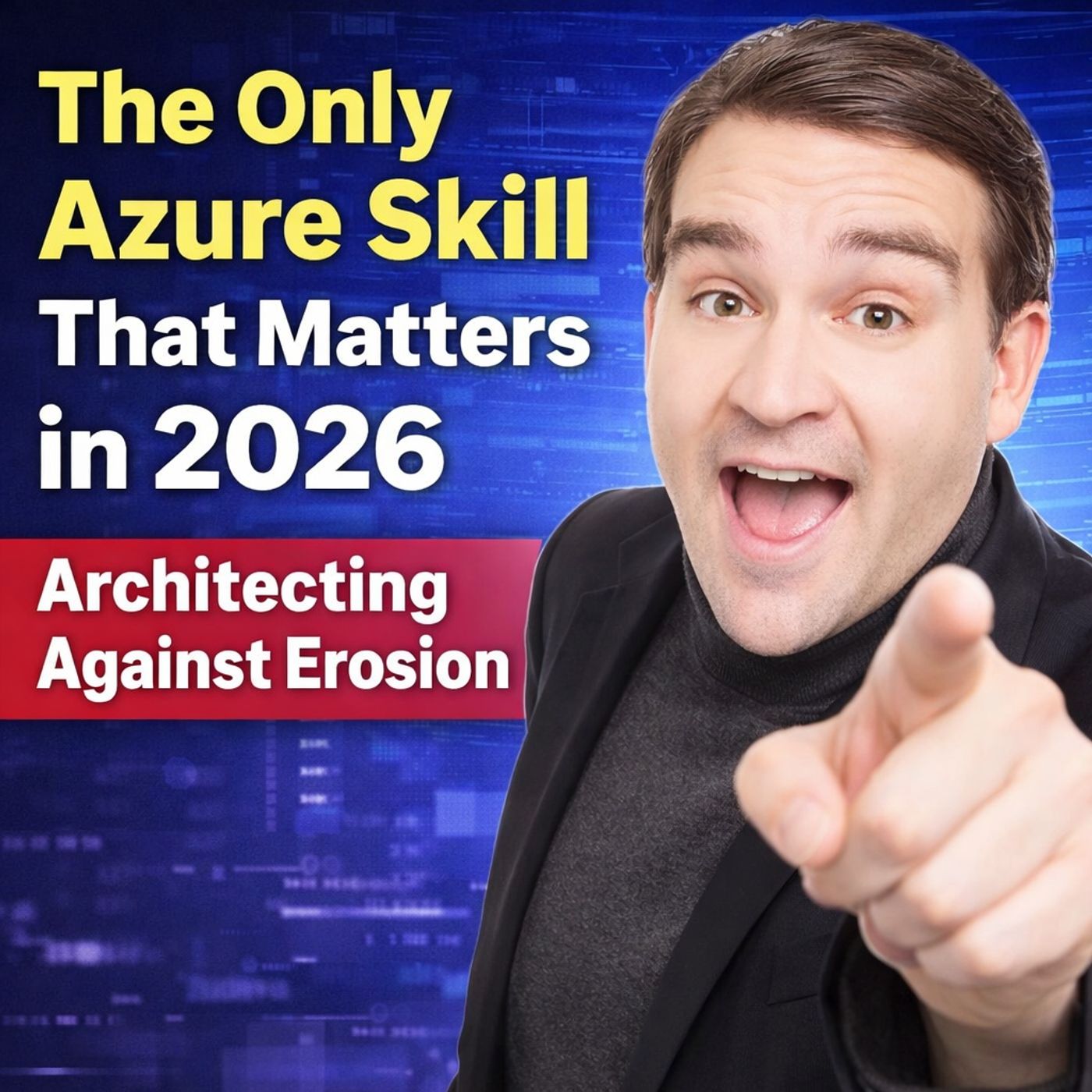
Azure Governance: The Only Skill That Matters in 2026 (Architecting Against Cloud Erosion)
from M365.FM - Modern work, security, and productivity with Microsoft 365 · host Mirko Peters - Founder of m365.fm, m365.show and m365con.net
In this episode, you’ll learn why traditional Azure skills are losing value and why governance architecture is becoming the most critical capability in modern cloud environments. You’ll understand how cloud systems do not fail suddenly but slowly drift away from their intended design through what is called “cloud erosion”.why Azure environments don’t fail loudly but degrade over timehow governance architecture prevents drift, cost explosion, and security gapswhy the highest-value skill in 2026 is designing enforcement systemsThis episode is ideal for architects, consultants, and IT professionals working with Azure, Microsoft 365, and cloud governance.WHY AZURE DOES NOT FAIL — IT ERODESMost professionals think of failure as something visible. Systems go down, alerts fire, incidents happen. But Azure environments rarely fail like this. They degrade slowly. Over time, the gap between intended architecture and actual implementation grows. This is what is described as cloud erosion — a gradual drift caused by exceptions, manual changes, and uncontrolled growth. This process is quiet, but it compounds. At some point, the system no longer resembles the original design.THE ROOT CAUSES OF CLOUD EROSIONCloud erosion is not a single issue. It is the result of multiple forces acting together. The most important ones are:velocity – teams deploy faster than governance can keep upcomplexity – more services create more failure pointsmisaligned incentives – builders optimize for speed, not controlWith AI, this effect becomes even stronger. Machine-speed decisions amplify small mistakes. Retry loops increase cost. Overprivileged identities expand risk exponentially. What used to be a small misconfiguration can now become a system-wide problem.WHY TRADITIONAL AZURE SKILLS ARE NOT ENOUGHMost Azure professionals focus on:certificationsindividual servicesportal expertiseThese skills are useful, but they do not scale. The market is shifting toward something else entirely. High-value professionals are not the ones deploying infrastructure.They are the ones preventing the wrong infrastructure from being deployed in the first place. This is the shift from execution to control.THE SHIFT TO GOVERNANCE ARCHITECTUREGovernance is no longer documentation or review processes. It is a system that continuously enforces how your environment behaves. Modern Azure architecture requires:enforcement instead of guidelinesautomation instead of manual checksprevention instead of remediationIf governance depends on human behavior, it will fail at scale.THE THREE CONTROL LAYERSTo prevent erosion, Azure needs structured control across three core layers. Identity and access define who can do what and under which conditions. If identity breaks, everything else follows. Policy and compliance define what is allowed and what is blocked. Audit creates visibility, but only enforcement creates control. Operational enforcement ensures that every deployment follows the rules through CI/CD pipelines, validation, and automated remediation. These layers together create a system that resists drift.WHY AUTOMATION IS NON-NEGOTIABLEManual governance does not scale. Azure operates at machine speed. Every deployment, permission change, and configuration update happens continuously. Without automation:policies are bypasseddrift accumulatescompliance becomes theoreticalThis is why governance must be embedded into pipelines, policies, and system behavior itself. THE ROLE OF GOVERNANCE-AS-CODEThe evolution of Azure follows a clear path:ClickOps → manual configurationInfrastructure as Code → reproducibilityGovernance as Code → enforcementGovernance as Code ensures that every deployment is validated automatically before it happens. The system decides what is allowed. Not the individual.WHY THIS MATTERS FOR AI AND THE FUTUREAI changes the scale of everything. Agents operate faster than humans.They make decisions continuously.They interact with multiple systems at once. Without strong governance, this leads to:cost explosionsuncontrolled accessunpredictable system behaviorThis is why governance is becoming the most valuable skill in cloud architecture.FROM ENGINEER TO SYSTEM DESIGNERIf you are working with Azure or Microsoft 365, this episode helps you rethink your role. The goal is no longer to understand more services. The goal is to design systems that cannot drift. This means building environments that:enforce policy automaticallydetect and correct driftoperate consistently at scaleThis is the shift from engineer to governance architect.KEY TAKEAWAYSAzure environments fail through erosion, not incidentsgovernance architecture prevents drift and complexityautomation is required for control at scaleAI amplifies governance mistakes exponentiallythe highest-value skill is designing enforcement systemsQUOTES FROM THIS EPISODE"Azure doesn’t fail loudly. It erodes.""Governance that isn’t automated doesn’t exist.""You are not deploying infrastructure. You are controlling behavior.""Drift is a signal, not an exception.""The system must enforce what should happen."TOOLS AND TOPICSGovernance Architecture - system-wide control designCloud Erosion - drift between intent and realityPolicy-as-Code - automated enforcementIdentity Governance - access control at scaleCI/CD Enforcement - pre-deployment validationDrift Detection - continuous compliance monitoringABOUT THE EXPERTMirko Peters is a Microsoft 365 and Azure expert, architect, and host of m365.fm. He works with organizations from small businesses to enterprise environments, focusing on governance, security, and system architecture. His work focuses on designing environments that resist drift and operate predictably at scale. He helps organizations move from reactive operations to automated governance systems.Become a supporter of this podcast: https://www.spreaker.com/podcast/m365-fm-modern-work-security-and-productivity-with-microsoft-365--6704921/support.
Embed this episode
NOW PLAYING
Azure Governance: The Only Skill That Matters in 2026 (Architecting Against Cloud Erosion)
No transcript for this episode yet
Similar Episodes
Jan 27, 2024 ·12m
Jan 19, 2024 ·9m
Jan 18, 2024 ·5m
Jan 14, 2024 ·6m
Jan 5, 2024 ·7m
Similar Podcasts
No similar podcasts found.