
EPISODE · Oct 23, 2025 · 20 MIN
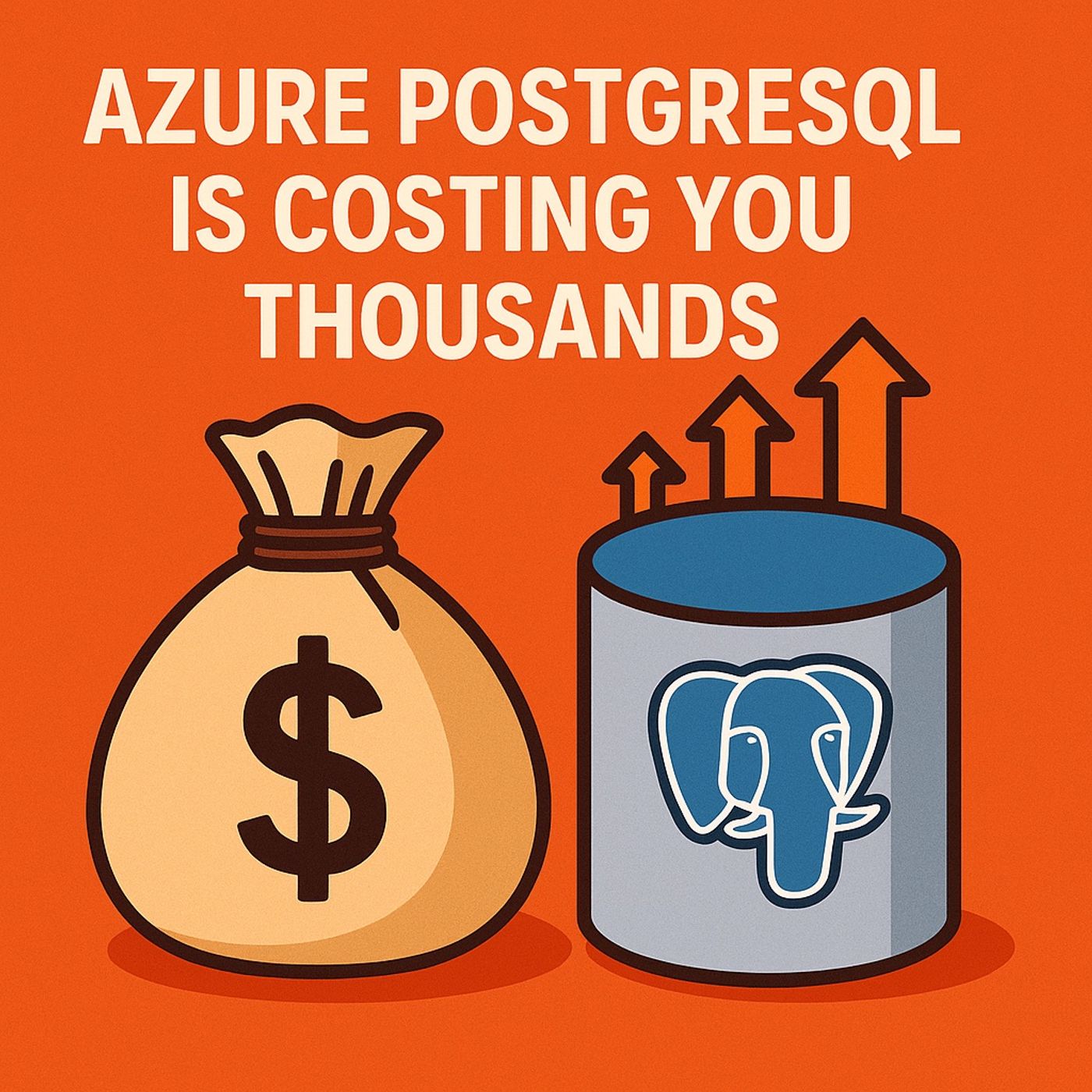
Azure PostgreSQL cost optimization: stop overpaying for Flexible Server compute, storage, and HA
from M365.FM - Modern work, security, and productivity with Microsoft 365 · host Mirko Peters - Founder of m365.fm, m365.show and m365con.net
Azure PostgreSQL cost optimization: in this episode of M365.fm, Mirko Peters walks through why your Flexible Server invoice is so high—and how Azure’s “managed” defaults quietly turn into a full‑time tax on idle capacity, storage creep, and high availability you do not actually need. He starts with the illusion of managed services, showing how most admins treat Flexible Server like a set‑and‑forget appliance while, under the hood, they are paying for a dedicated VM that sits at 10–30% CPU while the meter charges for 100%.Mirko breaks down the compute traps first. Fixed vCores behave like permanently running virtual machines, so low‑utilization workloads burn money simply by existing, and burstable SKUs look cheap until sustained load drains CPU credits and throttles performance. He explains why “stop” only pauses compute while storage keeps billing, why you must treat Flexible Server sizing like on‑prem capacity planning, and how to right‑size cores using real utilization instead of wishful thinking.Then he dives into storage as the silent bill multiplier. Auto‑grow only moves in one direction, so one panic spike permanently inflates your provisioned size, and premium SSD tiers charge you for performance you often never use. Mirko walks through the pitfalls of cloning production storage into dev and test, the cost of forgotten “temporary” servers, and how backup retention, redundancy, and premium tiers compound into four‑figure surprises. He outlines a practical routine of capping auto‑grow, auditing disk sizes monthly, and basing IOPS/bandwidth on observed metrics rather than fear.High availability gets its own brutal assessment. Enabling zone‑redundant HA duplicates compute and storage one‑for‑one, effectively doubling the bill for an idle standby replica you cannot even read from. Mirko explains when synchronous HA is actually justified (customer‑facing, transactional systems) and when cheaper patterns like read replicas, backups, or slower recovery windows are more than enough. He gives you language to push back on “HA everywhere” habits and align durability with real business impact instead of checkbox paranoia.Throughout the episode, you get concrete patterns to fix your Azure PostgreSQL bill without breaking reliability. From scheduling stop/start windows for non‑24x7 workloads, to separating performance tiers by environment, to scripting regular clean‑up of zombie instances, Mirko translates cloud pricing into operational habits you can actually implement. The core message: Flexible Server is not expensive by nature; it is expensive when you let defaults and fear drive configuration instead of data.WHAT YOU WILL LEARNHow Azure PostgreSQL Flexible Server pricing really works across compute, storage, and HA.Why “managed” does not mean optimized and how VM‑style billing punishes idle workloads.How auto‑grow, premium SSD tiers, and forgotten clones quietly inflate storage costs.When HA is worth paying for and when you are just funding an idle replica.Practical steps to right‑size, schedule, and clean up PostgreSQL instances to cut the bill.THE CORE INSIGHTYour Azure PostgreSQL bill is not high because the database is slow; it is high because the defaults assume you will never right‑size, never clean up, and always pay for worst‑case scenarios. The moment you treat Flexible Server like a VM you own—measuring, scheduling, and trimming—you stop funding Azure’s minibar pricing model and start buying only the capacity you actually use.WHO THIS EPISODE IS FORThis episode is ideal for cloud architects, FinOps practitioners, and admins running PostgreSQL on Azure who suspect their bill is bloated but lack a concrete playbook to fix it. It is especially valuable if your organization has embraced “managed services” as a magic savings button and now needs a clear, technical narrative for optimizing cost without sacrificing uptime or compliance.ABOUT THE HOSTMirko Peters is a Microsoft 365 and cloud consultant focused on building governed, cost‑aware platforms on Azure, Entra ID, and the Power Platform. Through M365.fm, he shares practical cost‑optimization stories, architecture patterns, and governance models that help teams stop blindly accepting cloud defaults and start aligning spend with real workload needs.Become a supporter of this podcast: https://www.spreaker.com/podcast/m365-fm-modern-work-security-and-productivity-with-microsoft-365--6704921/support.
Embed this episode
NOW PLAYING
Azure PostgreSQL cost optimization: stop overpaying for Flexible Server compute, storage, and HA
No transcript for this episode yet
Similar Episodes
No similar episodes found.
Similar Podcasts
No similar podcasts found.