
EPISODE · Sep 27, 2025 · 1H 10M
B-Cell Activation, Differentiation, and Memory Generation( immunology part 11)
from Cellular and Molecular Biology for Research · host Ahmadreza Gharaeian
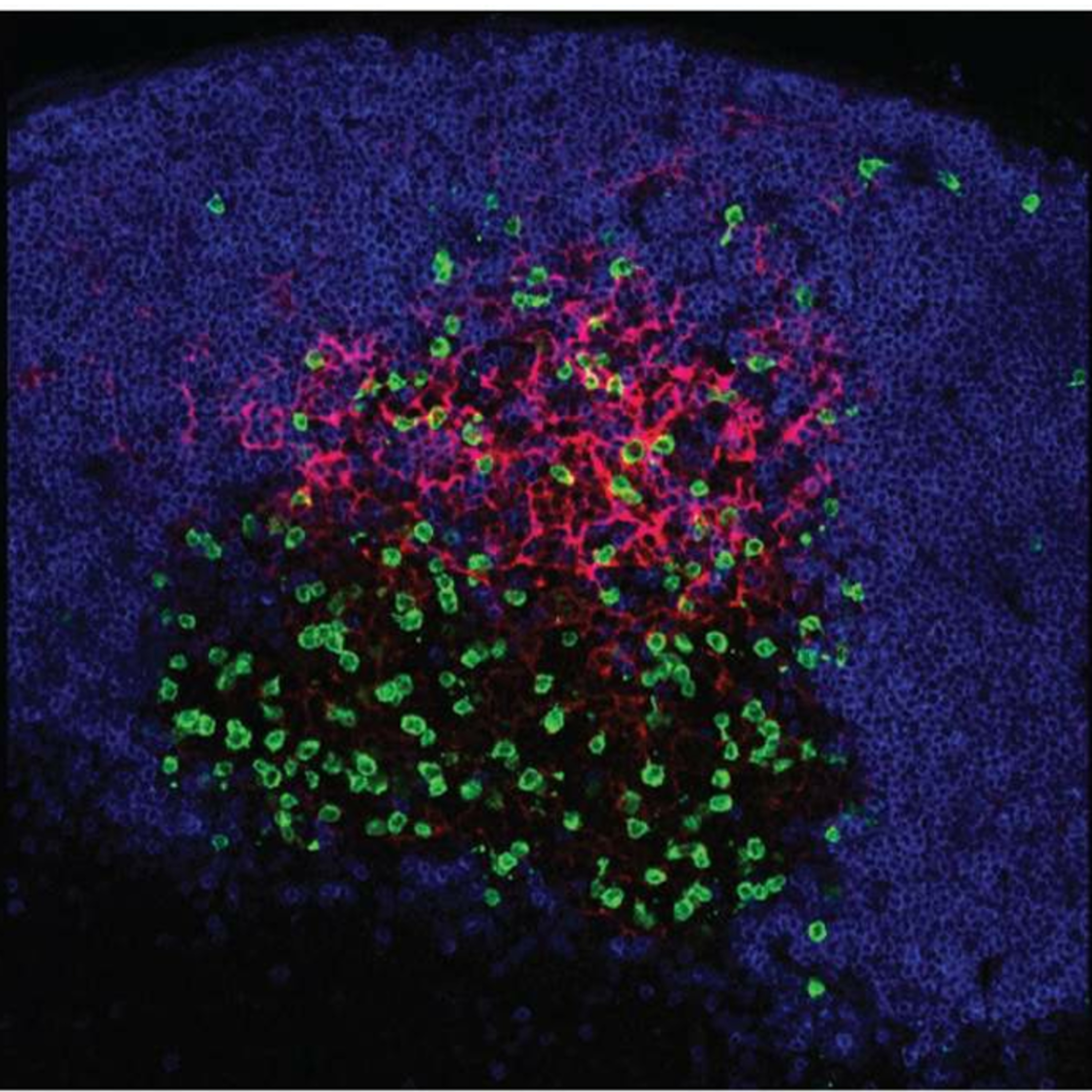
B cells are defined by the presence of a membrane-bound immunoglobulin receptor, which binds antigens. Upon antigen binding and receiving auxiliary signals, B cells are directed to secrete soluble antibody molecules. There are four main subsets of B cells—B-1a, B-1b, B-2 (follicular), and marginal zone (MZ) B cells—distinguished by their anatomical locations, the antigens they recognize, and their dependence on T-cell help. B-1 B cells predominantly protect body cavities, especially the peritoneal cavity. They can produce antibodies upon antigen stimulation without requiring T-cell help, though T-cell-derived signals can enhance their responses. B-1 B cells are self-renewing in the periphery and primarily secrete IgM antibodies, many of which target carbohydrate antigens. B-1a and B-1b cells are differentiated by the expression of CD5 molecules on B-1a cells. Marginal zone B cells reside in the spleen's marginal zones and are particularly adept at responding to TI-2 antigens. The strategic positioning of B-1 and MZ B-cell subpopulations at antigen entry sites, along with their oligoclonality and cross-reactivity to various microbes, situates them at the interface of innate and adaptive immunity.B-2 (follicular) B cells are the most prevalent B-cell subset and require assistance from CD4 T cells to respond to antigens. Early in an immune response, B-2 B cells can differentiate into IgM-secreting plasma cells and IgM-bearing memory cells. They also undergo class switch recombination, a process that depends on CD4 T-cell help. Some B-2 B cells migrate into follicles and develop into germinal center B cells, where they collaborate with T cells to undergo somatic hypermutation and antigen-driven selection. These processes result in the production of high-affinity antibodies.
Embed this episode
Ready to play
B-Cell Activation, Differentiation, and Memory Generation( immunology part 11)
No transcript for this episode yet
Similar Episodes
No similar episodes found.
Similar Podcasts
No similar podcasts found.