
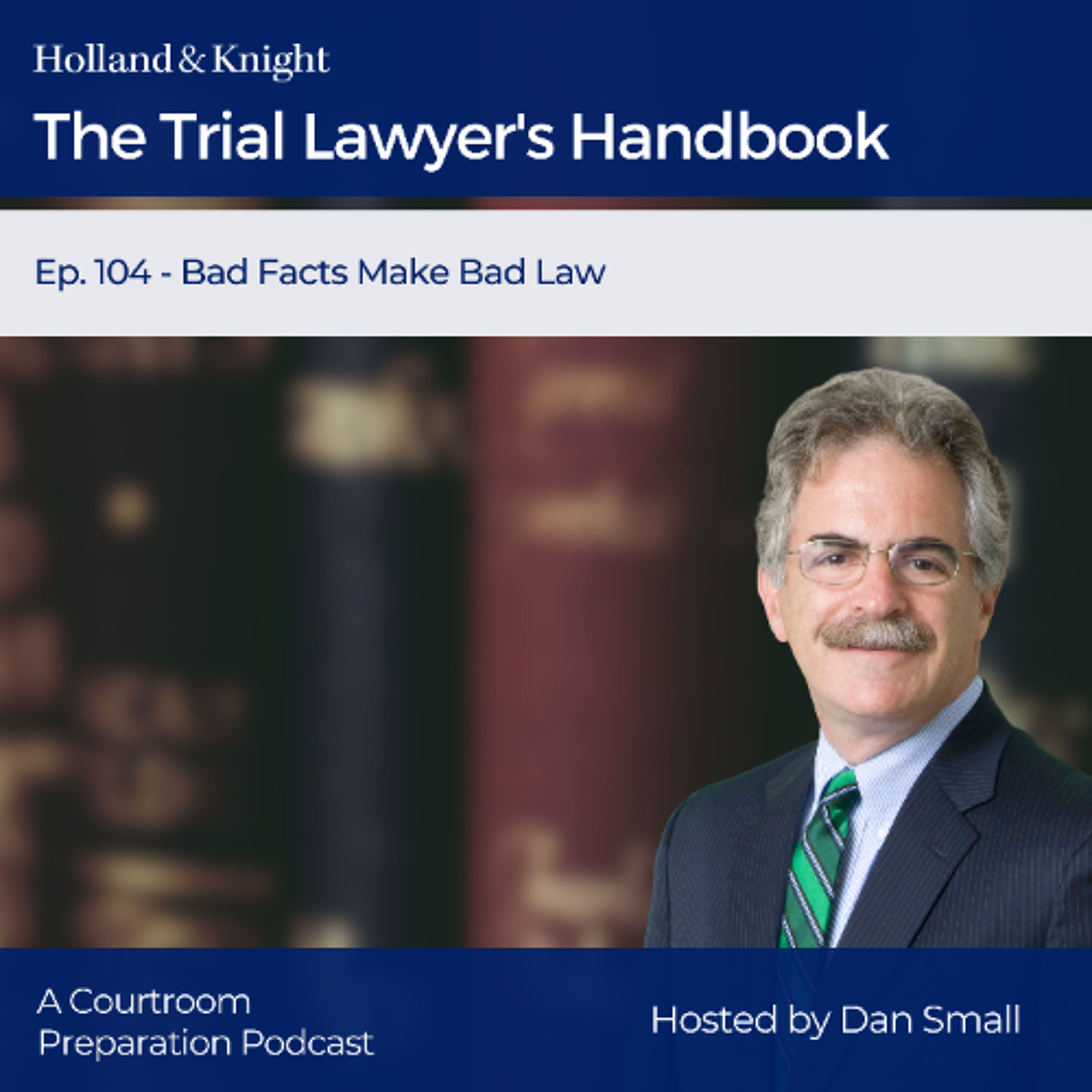
EPISODE · Sep 15, 2025 · 6 MIN
Bad Facts Make Bad Law
from Holland & Knight Legal Podcast · host Holland & Knight Legal Podcast
In this episode of "The Trial Lawyer's Handbook" podcast series, litigation attorney Dan Small explains the exclusionary rule, which states that evidence obtained by illegal methods must be excluded at trial. In the Cammarata drugs-and-murder Racketeering Influenced and Corrupt Organizations Act (RICO) case, a voluntary eight-page confession was initially suppressed under the exclusionary rule because the Texas Rangers did not include the arrested individual's last name on the warrant. Mr. Small appealed the decision, and the U.S. Court of Appeals for the Fifth Circuit ruled in his favor, making the confession admissible at trial. The ruling helped establish the "good-faith exception" to the exclusionary rule, which was soon officially adopted by the U.S. Supreme Court.
Embed this episode
NOW PLAYING
Bad Facts Make Bad Law
No transcript for this episode yet
Similar Episodes
No similar episodes found.
Similar Podcasts
No similar podcasts found.