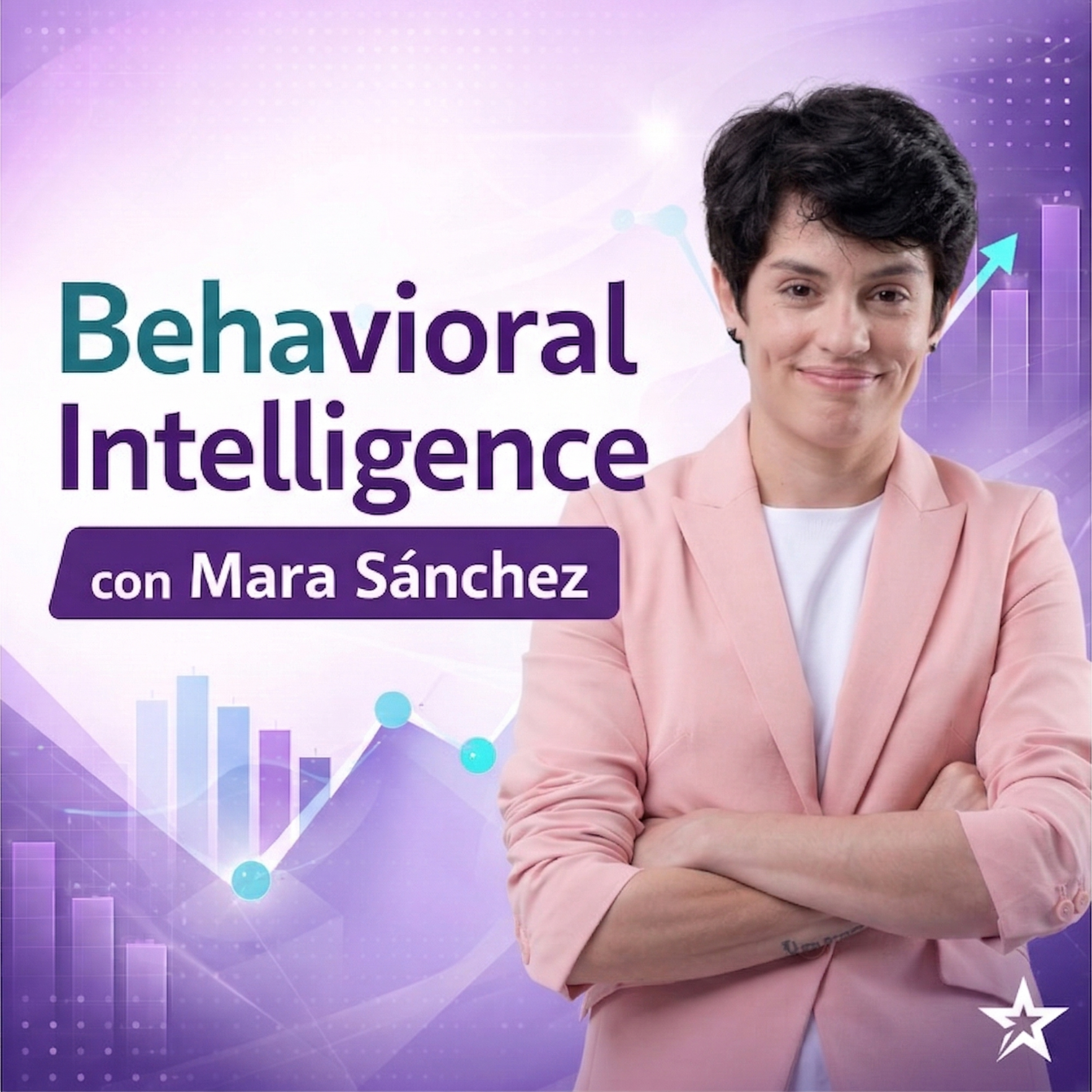
BCBA Foundations G.19 | Emergent Relations & Generative Performance episode artwork

EPISODE · Apr 15, 2026 · 21 MIN

BCBA Foundations G.19 | Emergent Relations & Generative Performance

from Behavioral Intelligence con Mara Sanchez · host Mara Karla Sánchez

In this episode of Behavioral Intelligence con Mara Sánchez, we break down G.19: Designing and evaluating procedures to promote emergent relations and generative performance, one of the most advanced and powerful concepts in behavior analysis.This is where learning becomes exponential. Instead of teaching every response directly, clinicians design instruction so that new behaviors emerge without direct training—a hallmark of efficient, high-level programming.At Amethyst Therapy Services Inc. (www.amethysttherapyservices.com), we train clinicians to build instructional systems that produce generativity, allowing learners to derive new skills, relations, and responses across contexts.🎯 In this episode, you will learn:• What are emergent relations (e.g., untrained stimulus-stimulus or stimulus-response relations)• The role of stimulus equivalence (reflexivity, symmetry, transitivity)• How to design instruction using multiple exemplar training (MET)• How to promote generative language and flexible responding• How to evaluate emergence using probe data for untrained relations⚠️ Common Exam Traps:• Teaching every relation directly instead of programming for emergence• Failing to probe for untrained relations• Ignoring prerequisite repertoires (e.g., discrimination skills)• Confusing generalization with emergence💡 Exam Strategy:Correct answers will ALWAYS include:✔ Programming for derived responding (not just direct teaching)✔ Use of multiple exemplars and relational training✔ Evaluation through probes of untrained behavior🔥 Clinical Insight:Emergent learning occurs when instruction is designed so that the learner derives new relations without direct reinforcement.For example, if A = B and B = C are taught, the learner may demonstrate A = C without direct training—this is generativity.This is the difference between teaching a child to memorize…and teaching a child to learn how to learn.🎧 Learn deeper concepts: Behavioral Intelligence con Mara Sánchez🌐 www.amethysttherapyservices.com📩 [email protected]

In this episode of Behavioral Intelligence con Mara Sánchez, we break down G.19: Designing and evaluating procedures to promote emergent relations and generative performance, one of the most advanced and powerful concepts in behavior analysis.This is where learning becomes exponential. Instead of teaching every response directly, clinicians design instruction so that new behaviors emerge without direct training—a hallmark of efficient, high-level programming.At Amethyst Therapy Services Inc. (www.amethysttherapyservices.com), we train clinicians to build instructional systems that produce generativity, allowing learners to derive new skills, relations, and responses across contexts.🎯 In this episode, you will learn:• What are emergent relations (e.g., untrained stimulus-stimulus or stimulus-response relations)• The role of stimulus equivalence (reflexivity, symmetry, transitivity)• How to design instruction using multiple exemplar training (MET)• How to promote generative language and flexible responding• How to evaluate emergence using probe data for untrained relations⚠️ Common Exam Traps:• Teaching every relation directly instead of programming for emergence• Failing to probe for untrained relations• Ignoring prerequisite repertoires (e.g., discrimination skills)• Confusing generalization with emergence💡 Exam Strategy:Correct answers will ALWAYS include:✔ Programming for derived responding (not just direct teaching)✔ Use of multiple exemplars and relational training✔ Evaluation through probes of untrained behavior🔥 Clinical Insight:Emergent learning occurs when instruction is designed so that the learner derives new relations without direct reinforcement.For example, if A = B and B = C are taught, the learner may demonstrate A = C without direct training—this is generativity.This is the difference between teaching a child to memorize…and teaching a child to learn how to learn.🎧 Learn deeper concepts: Behavioral Intelligence con Mara Sánchez🌐 www.amethysttherapyservices.com📩 [email protected]

NOW PLAYING

BCBA Foundations G.19 | Emergent Relations & Generative Performance

0:00 21:46

No transcript for this episode yet

We transcribe on demand. Request one and we'll notify you when it's ready — usually under 10 minutes.

No similar episodes found.

No similar podcasts found.

Frequently Asked Questions

How long is this episode of Behavioral Intelligence con Mara Sanchez?

This episode is 21 minutes long.

When was this Behavioral Intelligence con Mara Sanchez episode published?

This episode was published on April 15, 2026.

What is this episode about?

In this episode of Behavioral Intelligence con Mara Sánchez, we break down G.19: Designing and evaluating procedures to promote emergent relations and generative performance, one of the most advanced and powerful concepts in behavior analysis.This...

Can I download this Behavioral Intelligence con Mara Sanchez episode?

Yes, you can download this episode by clicking the download button on the episode player, or subscribe to the podcast in your preferred podcast app for automatic downloads.
URL copied to clipboard!