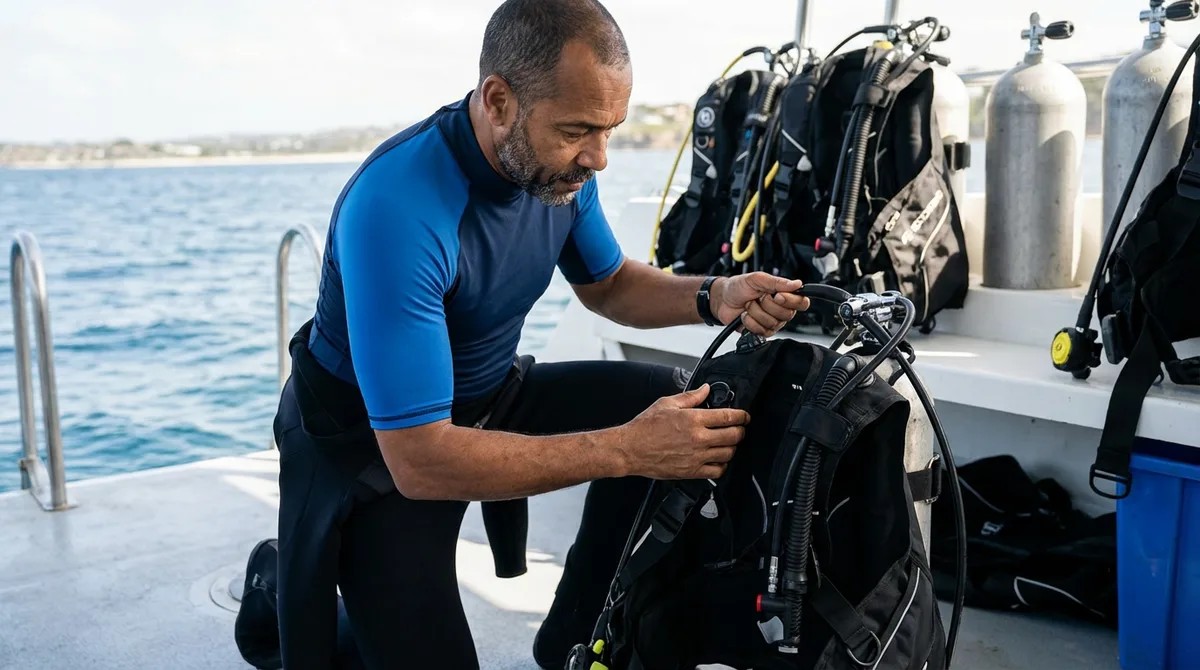
BCD Pre-Dive Safety Checklist: Complete Buoyancy Compensator Inspection Guide
from The Scuba Gear Lab
A stuck inflator button at 60 feet or a dump valve that won't reseal can turn a routine dive into an emergency in seconds. In this episode, Marcus Okafor—with over 3,000 dives logged—walks through the complete BCD pre-dive safety checklist he runs before every single descent. Whether you're a new diver learning good habits or an experienced one who's gotten a little casual with gear checks, this systematic approach catches hidden failures while you're still on the surface where they're easy to fix. Visual inspections should focus on high-stress zones like weight pocket attachment points, D-ring mounting seams, and the back panel where your cylinder creates pinch points—these areas develop slow leaks that only reveal themselves underwater. UV-damaged nylon webbing develops a chalky, stiff texture that signals compromised strength; if you can't easily flex a strap, it could fail under load during your dive. The inflator button should return to neutral instantly with zero continued airflow—even a split-second delay means salt or sand has fouled the mechanism and could cause an uncontrolled ascent. Testing your oral inflation backup is critical: blow firmly into the mouthpiece and listen for backflow, because a stuck check valve eliminates your backup system exactly when you'd need it most. After partially inflating your BCD, observe it for 30–60 seconds; any noticeable deflation indicates a bladder leak or valve issue that will worsen at depth when differential pressure increases. Familiarize yourself with all dump valve locations on every BCD you use—rental gear varies significantly, and struggling to find a rear dump pull at depth wastes precious time in an emergency. Read the full article: https://thescubagearlab.com/bcd-pre-dive-safety-checklist
Embed this episode
No transcript yet.