
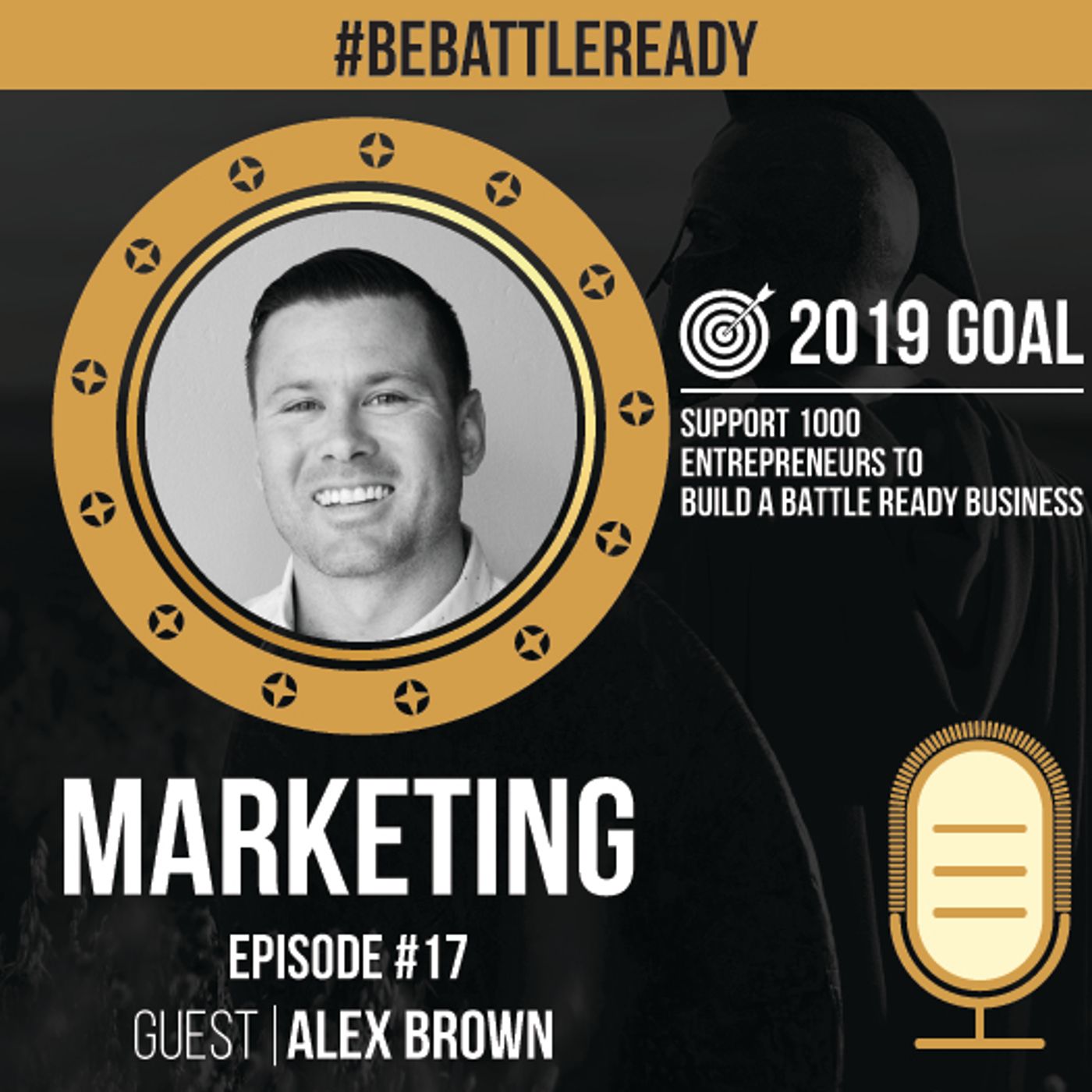
All right, welcome to the Be Got Already podcast. Today, I have Alex Brown, Chief Marketing Officer, or CMO, whatever you want to call him, at DFO Global, and I'll let him introduce himself, do himself the justice, and tell us a little about himself. So go ahead. Welcome, Alex.
Well, thank you so much for having me. It's great to be with you. Yeah, I mean, DFO Global, we are a global e-commerce solution, and that's, you know, kind of like a really fancy way of saying that we help businesses sell products online. You know, that's really what we do in a nutshell.
You know, we kind of pride ourselves on being an end-to-end, one-stop shop for really any business, any business's e-commerce needs, whether that's, you know, product sourcing and ideation, manufacturing, website developments, logistics and fulfillment, you know, customer service or marketing. We really, you know, are kind of like an, you know, all-you-can-eat buffet of services that help businesses really scale their e-commerce efforts with a pretty strong, you know, support structure for getting businesses to scale outside of the United States and internationally. So really helping take companies, you know, maybe they have a really good product or marketing strategy that's working well in the United States, but really working and helping them expand that strategy and take it globally. So, you know, not only do we serve, you know, a number of different clients from, you know, clients from, you know, SMBs to, you know, Fortune 500 companies, but we're also our own clients.
So we practice what we preach. We have a number of our own brands and stores that we operate ourselves that we ultimately profit off of and make money on. So, you know, I joke where we kind of consider ourselves to be the, like, SkyMall of the Internet because we touch so many different categories, you know, ranging from tech, beauty, outdoors, health and wellness, home security, travel, like, just to name a few. So we really have a presence in kind of all these different categories.
We have 300 employees globally and 10 offices around the world. I'm based here in San Diego, kind of the core of our, you know, marketing hub, our nucleus. But, you know, we obviously have, you know, our, you know, we have people all over the globe who, you know, help us, you know, touch each of those different cultures and get a better understanding for what's working, you know, really at a local level when it comes to marketing and selling products globally. Awesome.
Awesome. Well, how long have you been with the company? I've been with DFO for about two years. Prior to that, I led up a marketing team for a very well-known information product called Instant Checkmate, which is a subscription-based background check service, you know, which I really helped take from, you know, a company of about, like, eight employees to well over 100 and about nine figures of revenue over the course of five years.
So I've been heavily involved in digital marketing and basically helping businesses grow for, you know, going on, like, eight or nine years now. But, you know, DFO, I've been here for about two years and really helped us establish our internal marketing team and, you know, build out our marketing efforts slowly. Yeah. What got you into digital marketing?
Like, what was your first starting? Yeah. Well, so interestingly enough, like, when I first got out of college, I really wanted to be, I wanted to be an agent. I wanted to be a sports agent like Jerry Maguire.
And so my first job out of college was working at a sports marketing agency. And, you know, it was fun. It was interesting. But it just, number one, like, the money wasn't really that great.
And, you know, it's a long and arduous process to get to that, you know, Jerry Maguire level. But what I really got, you know, to see was kind of how companies, how the digital strategy was really playing a part to, you know, really growing these, you know, these athletes and these other influencers' performance. I mean, this is, like, the early days. Like, Facebook was still just, like, a blip on the radar at this point.
But I saw kind of, like, the potential and, you know, how powerful the digital strategy could be. And it was in about, I think, gosh, what was it, like, 2011, 2010, that, you know, a few of my friends got really into performance marketing, affiliate marketing. And I saw just, you know, the potential that they had to, you know, scale and sell products all over the world and make a huge, huge profit. And so that's what really piqued my interest and my curiosity.
And those are the guys who ended up starting the background check company. And I jumped for them in about 2011. And, you know, that's what took off from there. Yeah, it's interesting.
I have, you know, you're a chief marketing officer, you know, head of the marketing department, right? And, you know, what does it take nowadays in this digital environment, like, to be that person, you know? Yeah. Well, it takes a lot of trial and error, I'd say, to start.
You know, you have to be, you can't be afraid of taking risks. I think that's the big thing. And especially when you start talking about performance marketing, which is really what we pride ourselves on. So, I mean, just to backtrack a little bit, I mean, what separates DFO from a lot of the other marketing companies in the space is that we, you know, you basically pay us for results.
So clients come to us, you know, with their, you know, with their business idea, with their store, with their, you know, whatever product they're selling. And we'll basically, like, chop it up and come back to them with a proposal. But basically, that proposal will entail us, you know, running their media for them and basically paying them only for sales or leads or whatever action, you know, is their key performance indicator. And so in order to do that, obviously, you have to have, you know, a pretty robust strategy and really believe in yourself.
Otherwise, you know, you'll be losing money, you know, hand over to fist. So, you know, I think having a really clear strategy, having a solid team in place is very critical, but ultimately, you know, being willing to take that risk and put yourself in a position to, you know, either sink or swim. Awesome. And how many people are on your team?
Yeah, so I have about 20 people on my team, range from, you know, digital media buyers. So the actual, you know, campaign managers who are building and executing, you know, the Facebook campaigns, the Google campaigns, what have you. We have a team of about, like, four or five front-end web developers who are there to help us, you know, optimize and, you know, make necessary changes to websites as needed. We have a team of analytics folks who really chop through the data, look at the numbers, and help us really craft our overall strategy to ensure that we're targeting, you know, the right people and really getting that return on.
That's something that we need. And then we have, you know, some other creative folks. We have copywriters. We have graphic designers.
We have video staff on hand. But we've really started to expand globally. And so we just recently opened an office in Brisbane, Australia, where we have five media buyers who are now helping us with that market in the Asia-Pacific region. And we're looking at expanding into Israel as well.
So really trying to make sure we have a localized talent. I think that's a really critical component that a lot of people overlook, especially when you start talking about marketing globally. Because, you know, I can sit here all day, you know, try and, you know, come up with ideas or, you know, write copy that I think will resonate well with an audience in Japan. But if I don't know that culture, if I don't have boots on the ground there, if I don't have people who, you know, intimately know that culture, you're going to fail.
Like, you will fail. Because, you know, it's just an effort and futility to try otherwise. Yeah, absolutely. I mean, a few years ago, I was running the marketing for a mall in San Jose.
And, you know, generally when you have these big malls, they're owned by these REITs, right, publicly traded REITs. And everything is standardized across. It doesn't matter from New York to whatever. But, you know, our vice president, CMO Marketing, was very adamant about mobilizing the actual marketing.
So I had an opportunity to develop a marketing plan for a very diverse area of San Jose, which was Eastside San Jose. And you had Filipinos, you had Vietnamese, you had all these different things. And it was actually kind of fun because we got to do so many different events from a moon festival to a festival to, they call it Baya Niha, which is like a Filipino, a Philippine Independence Day. And the celebration of that, too.
I mean, in a sense, it makes it a little easier on that sense from the creative standpoint. But actually connecting with the audience is different, right? Having to target and tweak the creators and all that stuff. So it was fun.
Yeah, well, I mean, even going back to your example, I mean, if I was thinking about how I would, you know, craft or build a shopping mall in, you know, Los Angeles versus New York, I mean, they're very different markets. Like, even just within the United States. And, you know, the way, you know, people like to shop, you know, the sort of style in which you can, you know, lay it out even from, like, a logistical or layout standpoint. I mean, you really have to obviously understand your audience, first and foremost, before you can figure out what is, you know, the right strategy or approach to try and target them and get them to convert.
Yeah, awesome. Let's talk about that team. I mean, just so that, you know, I see a lot of business owners, small business owners, you know, if, you know, depending on the three stages that I see them in, really struggle sometimes with actually managing a team and kind of get their team working together. And it's actually something I really work with them on.
But I want to know your insights and how you go about managing your team, how, you know, what checks and balances you have, things like that. Like, how do you, you know, tell me about that, because you've got a pretty decent-sized team. Well, I mean, I think it first starts by obviously making sure that you hire the right people for the team, right? And one thing we've done here that I think is really interesting and potentially unique to our company is really the hiring process is done by company.
So we like to bring on people, and basically, if you interview at my company, you're going to come through and you are going to do at least a start sort of, like, speed interviews with almost every single person on my team. So five, like, five to ten minutes, like, two to three questions per person on the team, because at the end of the day, we are a cohesive unit and we work together. And so if there's not buy-in by everyone on the team, you know, and there's obviously bias that comes in, right? I mean, I think there's a saying, right?
Like, you know if you're going to hire someone in the first, like, 30 seconds of an interview, oftentimes, because we just have that bias of, you know, how, you know, whether we like them, whether they are mirroring us in, like, how we're acting or, like, you know, our body positioning. And so we try to avoid that. So we have people come in, and they'll spend, like, ten minutes with each person on our team. We'll fill out a questionnaire.
We also give sort of a small, like, a logic test just to make sure that they have, you know, like, sound logic when it comes to, you know, solving, you know, problems. But basically, we'll take all of everyone's, you know, reports at the end of the interview process, and we'll basically go through and identify whether or not they are a good fit for us. So assuming that they pass that test, right, and then they come in, we sort of start by having people shadow with, you know, a senior-level team leader for, you know, like, probably two to three months and really getting an understanding for how we work and what our processes are. But, you know, you asked about team and sort of our structure.
I mean, it is very much a team process here at DFO. You know, while people are, our media buyers are individually compensated, and they earn commission based on the revenue that they're able to drive, everyone comes together as a unit. So whether that's, you know, strategizing or coming up with, you know, brainstorming creative for how we're about to, you know, position a new product or a client's product in the marketplace or internationally, all as a team, the matter is, like, we make all of our decisions based on data, okay? And the data that we get from, whether it's Facebook or Google or any of the other, you know, traffic platforms that we're buying media on, it all sort of bubbles up to the surface, and we need to, you know, look at a very top-down approach for how we dissect that and how we make decisions.
And so if we had individuals kind of off in their own silos, like not sharing this information, we'd be making their own decisions. And so it's very important that, you know, everyone, you know, come together and share their information and work collectively as a team to accomplish our goals. Awesome. You know, one thing I like about your hiring process is you said by committee, and then you said bias.
And it's like, I can see the problem with not doing that because if a leader, you know, starts hiring, they might hire a bit off their own bias, which would then probably put the same people in the team, right, relatively speaking. Well, and the truth is, is like, again, you know, as CMO, like, you know, I think I have a good eye for, you know, what, you know, makes a successful media buyer or team member. But the truth is, is like, I'm not the one really, like, I mean, I work with them, and I sort of oversee and manage and help craft the strategy. But it's really going to be their team members that are working with them day in and day out.
If their team members don't, you know, respect them or don't, you know, feel like they add the value, then, I mean, we're kind of at a loss there. So you really have to get everyone's buy-in. You know, I like the idea of doing it by committee, so it's worthwhile for us. Awesome.
Yeah, so what do you see in, since you do have a deep process and one of the biggest, probably have a really detailed deep process of how you roll things out, what are some, like, you know, high-level things that you can share with, you know, a small business owner to actually allow them to plan and execute their marketing? Well, I think the first thing I would say, and I think we're all somewhat guilty of this in a number of, you know, capacities, is we make assumptions, right? And I think one of the greatest things about digital marketing specifically is that it's so data-driven. I mean, we can track everything from, like, you know, a single impression to a click to a conversion, and, you know, oftentimes, you know, we'll have, you know, clients or, you know, people come to us and they're like, well, my target market is, you know, women 35 to 45, live in this geographic region and do this and, you know, have these habits.
And, you know, of course, we obviously listen to them and we take that, you know, in stride, but the truth of the matter is, is, you know, we like, we prefer to go broad to start and really cast a very, very wide net with our marketing and really let the data start, you know, dictating our decisions. Because, again, what you can do is you can really, really silo yourself and, like, back yourself into a corner thinking, you know, you understand who your market is and you leave so much money on the table because, you know, again, maybe there is an audience or a market that, you know, is younger or older or of a different, you know, gender. You know, we sell jewelry, like, jewelry products, too, all the time. And, you know, we've had clients who are like, I don't know, it's like our market is women.
And then it's like, well, look at all the husbands that go out and buy jewelry for their wives. So, I mean, that's, you know, obviously a pretty broad example, but it happens time after time. So, what I would suggest to any, you know, business owner out there who's trying to start their digital strategies, again, kind of, you know, start broad and really, really dig into the data. And you'll see where your clicks are coming from.
You'll see, you know, what sort of message or, you know, type of ad or style is resonating. And maybe it's different types of ads and different types of, you know, marketing for each individual segment. It often is. But, you know, without really, you know, dissecting that data, you can obviously, you know, leave a lot of money on the table.
Awesome. And what are you seeing, like, what are some differences you're seeing between marketing digitally here in the U.S. versus overseas? Like, what are the differences that you're seeing?
Yeah, well, I mean, there's a number of differences. I think it starts, first and foremost, with, I mean, even the traffic platforms, right? Like, traffic platforms in China or Asia are, you know, they use different ones than they do here. I mean, Facebook is effectively, like, banned in China.
So, you have to use, you know, WeChat or you have to use TikTok or you have to use Baidu. So, they have different traffic platforms that you need to make yourself familiar with. Secondly, and this is really, pairs well with the market owner and e-commerce business owner, it's really all about having local payment methods. We here in the United States think frequently that, you know, everyone in the world uses credit cards.
They don't. And in Asia and in other markets, like, they pay through a lot of different methods. Like, in Brazil, for example, they use Boleto. In the Netherlands, they use Ideal.
So, they have these, you know, local payment methods that are integrated with apps and deal with, you know, different types of banking mechanisms. And if you don't have those, you know, on your website, you'll launch and you'll think that you're just doing a terrible job. Well, the truth is that your marketing could be great, but if people can't buy your products, then, you know, obviously, in the way that they're comfortable with, right? Then they're, you're at a huge disadvantage.
So, I mean, beyond that, I mean, one of the reasons I really do like marketing internationally is because the media is significantly cheaper outside of the U.S. than it is domestically. So, buying Facebook media in the United States is, I mean, it's the most expensive market you can target. But you can go to Brazil and you can get, like, three-cent clicks, which is insane.
In the United States, like, you're looking at a dollar or, you know, so, I mean, yeah. So, I mean, again, like, you have from a media buying perspective, it's a huge opportunity. Now, at the same time, those users don't necessarily convert the same way a United States customer would. I mean, here in the U.S., we're very accustomed to e-commerce and buying products and deal with Amazon.
and so you know we're much more susceptible um you know i bought media in like you know parts of like south america and you know i've gotten such amazing metrics and you know clicks and everything on my ads but then i look at all the comments on facebook and people are like oh this is cool like where do i buy this like you're like well you click on the ad and you buy it through the store and you're like no no i mean what store do you sell that in my country and so there's a bit of a disconnect you know sometimes when you do um when you start buying in the second or third world countries that um you know they're still very new to it so um it's evolving like it's changing i think um we're poised for you know the next two or three years are going to be absolutely huge for digital marketing i mean especially internationally i see big opportunities in india um you know indonesia like big markets they're really really finally starting to come online they're finally starting to get access to credit cards and use new local payment methods and so they're they're very hungry for for products so good markets to go to yeah absolutely um and uh you know with uh what do you see changes in the u.s that we should that they should be looking out for i know that facebook rolled out the new local uh local business feature on that side to make it easier for local businesses so they don't have to hire somebody yeah what are you seeing like what are some um potential let's call them like uh threats that are coming you know in a local space you know in the u.s side well i guess i mean i said there's some there's some opportunities and then there's obviously some threats right i think you know especially when you start talking about facebook you know based on like all the many scandals and issues they've had recently with cambridge analytica and these privacy scandals like they are really really cracking down on on any sort of like deceptive advertising right um and they're doing it they're basically painting with a very very broad brush um and they are making it challenging for sort of like smaller advertisers to really come in and you know again it's very easy to get dinged on facebook i guess is what i'm trying to say um you can you know a new advertiser who maybe doesn't really know you know all of the rules and regulations can very easily lose their account or lose all their privileges to advertise on facebook because they make a tiny mistake and you know without having you know in-depth knowledge of what you can or can't do on facebook um you know you run that risk so um you know that's obviously you know a threat or you know a potential you know weakness for for smaller advertisers but in terms of like opportunities i think um you know i think there's a lot of really cool stuff happening um when it comes to the digital landscape i see you know like voice i think is going to be one of the hugest new advertising opportunities opening up to people um again like in like a matter of you know months if not like you know a year or less you'll be able to just like shout into your alexa or google home like what you're searching for and what you want and you know find that product in a second have it ordered and it's delivered to your house um so i see that as a pretty big opportunity that's going awesome yeah with um we got i think i've denied our ads last month because of our domain which is right and i even had when i first started uh mailchimp just say nope just because of that first two like two names of the you know first one thing so then we just had to switch the domain over to my personal domain and run it off there because they can't deny it no matter about the creative all this all these other things and it was just because of that it's crazy yeah i mean they um again you have to understand i mean facebook is obviously a like a self-serve platform like more or less anyone can go and like create an advertising account and link a credit card and you know they've done it this way um for a reason right um they want to get accessible to everyone but at the same time i think there's some pretty serious flaws with how they you know go about dealing and processing issues um i think amazon is probably even worse um because they just have so many you know like potential you know flags and issues and you know they have to rely on algorithms they have to rely on bots to go through and they'll catch things like silly things like your domain that again like shouldn't be an issue but you know unless you can really find a way to you know rise up to the level of getting an actual human to review what you're doing um they'll just they'll systematically ban you and you know say you know sorry talk to you later um and i think that can steer a lot of people away that's uh you know it's discouraging to a lot of advertisers i know it was funny last year because i wrote an ad and i was actually poking fun at mlms and like get rich gurus and stuff that's just not how i roll you know and they kept flagging the ad i'm like look i'm like look it's not that like you know i'm like this is nothing like that so i was like you never get anybody so yeah yeah it's incredibly frustrating um especially i mean in many cases like that's like people's businesses rely like solely on that i mean it's the same with amazon like you can read like you know crazy horror stories i mean even people's like competitors going in and basically like buying like fake five-star reviews for their products because they know amazon will catch it and ban them from the platform and so there's kind of a lot you have to look out for um it can be it can be cutthroat so it's good to have the right you know partner in a kind of corner yeah absolutely um and you guys are doing you guys work on amazon as well we do yeah i mean we work more or less like omni channel so um you know we can support people on you know google and amazon facebook you know direct contents um email you name it so awesome and what are you seeing like uh you know talk a little bit about amazon how that works for you and you know what you're seeing on there yeah i mean it's um i'd say it's definitely not our you know primary traffic source i mean for most of our the businesses that we try to support again as you have to understand we deal with a ton internationally right amazon isn't available in all countries right but it is certainly like if you're not playing you know within the amazon you know ecosphere you're getting money on the table right um typically you know margins are a little bit lower you obviously have to you know make a ski product with them so that they can fulfill it in prime um and but again like any of our clients who come to us and aren't doing it i mean we'll you know we'll tell them that you know they're potentially leaving you know a big chunk of money on the table so um you know we like to first operate you know within you know facebook google you know really kind of hit those channels as hard as we can and use you know amazon google shopping and some of our remarketing efforts to really kind of pick up the pieces and make sure we're um you know hitting every channel because i mean look and i don't know about you but if i see an ad for a product on facebook or something you know maybe i'll click around maybe i'm doing a bit of review comparison shopping like where am i gonna go i'm gonna go to amazon and see if it's available there um i want to check out what the reviews are and see you know and did other people have a good experience with this product um and something we really didn't get to but um you know i think it's super important um you know customer experience i think is absolutely paramount right um you know it really permeates through every you know marketing decision you'll make is ensuring that customers have a good experience with your store and with your business and that means having good products it means having great customer service it means you know having you know really fast shipping times and you know ultimately making sure that you know from end to end the customer likes your business because they will go and write that review and even more so if they don't like your product or service they will write that review um i mean that's it it's crazy the expectation i mean at least we sell rugs furniture my wife and i and i mean you know i mean i think people just i it's it's a love-hate relationship amazon like i'm i'm getting it we're gonna upload like 400 skews to amazon in the next couple days and uh but they're all rugs so it's big they're big items and we ship things out and people like literally get them and don't like them and and literally like like oh and i'm like all right whatever you know i i it's just the expectation and then also that expectation of customer service which is digital has brought that transparency back but i i'm 100 on board with you said about it's like you're back to your mom and pop shop of like local town because it's i mean it's it's made it like that and the people that treat it like that are gonna win you know and even and even to that point i mean like to operate within like facebook or even shopify like i mean most people you know use shopify for you know their storefronts um shopify has basically rolled out and said like if you're not fulfilling products to a customer within like seven days like you know you you can be booted off our platform um and so i mean ensuring that you're you know people are getting their products in a timely fashion um and same with facebook i mean they send out those post product post purchase surveys um they're really trying to get a good understanding for you know who's delivering good customer experiences and those people that are are going to get better traffic they're going to get um you know cheaper cdms and cheaper rates um and ultimately they're gonna you know they're gonna thrive much more within within the you know that marketing channel awesome so what's happening um anything that's coming up for your company that you know that's a big initiative or you just you guys plug it on uh well uh we had an acquisition that just came through um earlier last week and so we just recently announced that we uh we purchased another marketing group um with operations in san diego new york and germy um so really just continue to expand our you know our reach across the world so um that's a really exciting acquisition for us so just bringing this team into the fold and continuing our growth um as much as we can but you know we've got a couple cool you know ideas and you know some software we're developing so you know keep your eyes on us um i think you'll uh we'll see some cool stuff coming out from us here in the near future yeah let us know we'll definitely help you promote it so all right well i appreciate your time and uh you know all the values are provided and had a great conversation so yeah likewise it was great chatting with you um if anyone is curious you can reach us at dfo.global um that's our website um you can find me on facebook on instagram twitter wherever um love to chat marketing so anytime anyone wants to chat happy to connect all right awesome have a good day all right thanks so much bye