
EPISODE · Sep 25, 2026 · 15 MIN
Before the Old Three Hundred: Who Would Move to Texas?
from The Hidden History of Texas
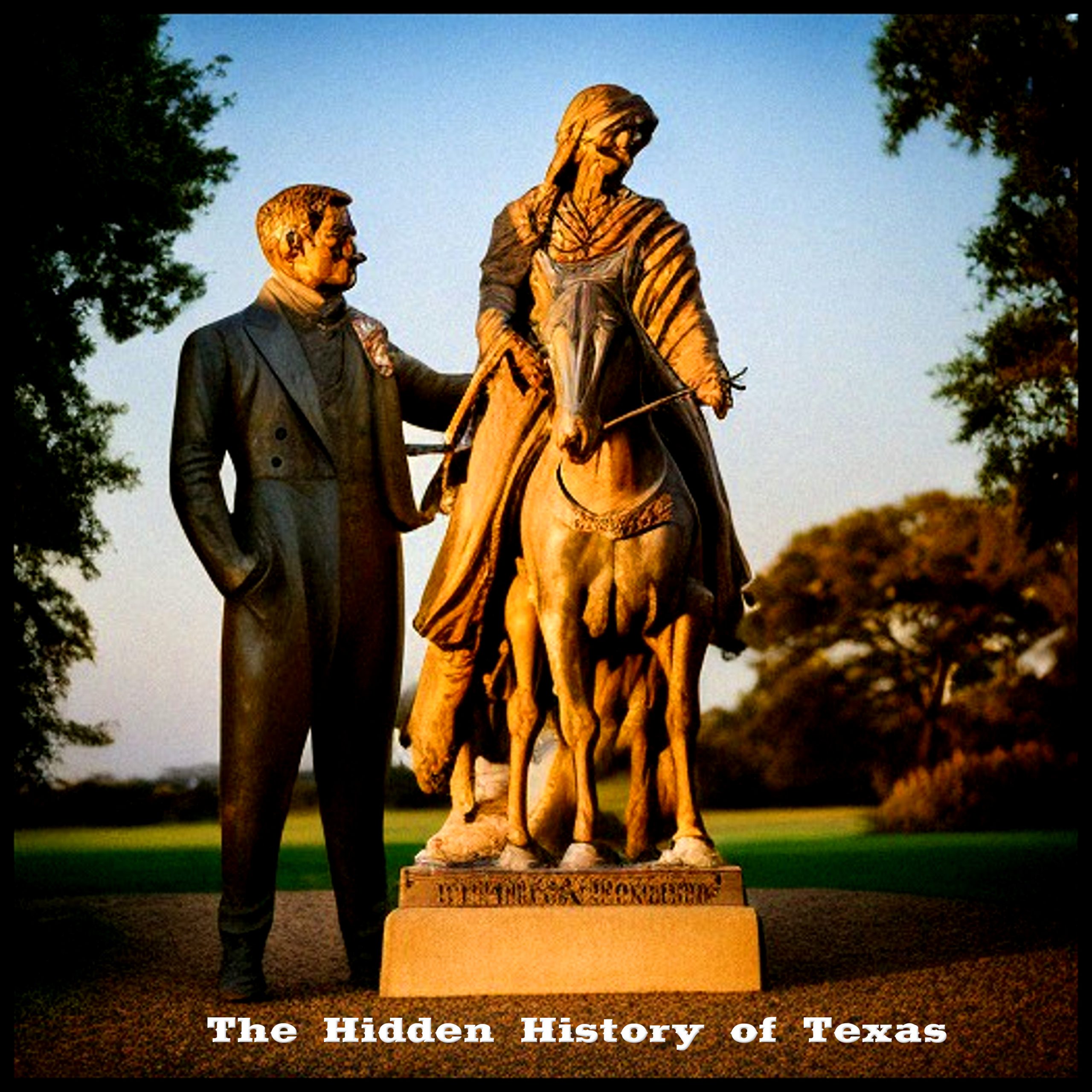
Imagine somebody knocks on your door. They've got an interesting proposition. Pack up your family. Sell what you can't carry. Leave your home. Travel hundreds of miles into a country you've probably never seen. The roads aren't really roads. There aren't many towns. There are no hospitals. No grocery stores. No police department. And once you arrive, you're pretty much on your own. But... There's land. A lot of land. And you can have some. There's just one other little detail. You're leaving the United States. You're immigrating to Mexico. Interested? Apparently, quite a few people were. This is the Hidden History of Texas. And today we're going to meet the people who looked at that proposition... and said yes. Hello, I’m Hank Wilson and Welcome to Episode 99 of the Hidden History of Texas We've talked before about Stephen F. Austin. We've talked about the Old Three Hundred. And if you grew up in Texas, you probably heard at least some version of the story. Moses Austin received permission to bring three hundred families into Texas. Moses died. His son Stephen took over. The settlers came. And eventually they became known as the Old Three Hundred. That's all true. But it makes the whole thing sound remarkably organized. It wasn't. In fact, when this began, nobody could have been completely certain which government was going to be in charge by the time everybody arrived. The story really begins with Moses Austin. Austin had been involved in lead mining and banking in Missouri, and like a lot of Americans, he was hit hard by the Panic of 1819. He needed another opportunity. Texas looked like one. But Texas wasn't American territory. It belonged to Spain. So in 1820, Moses Austin traveled to San Antonio and asked Spanish authorities for permission to bring families from the United States into Texas. Initially, the answer wasn't particularly encouraging. But Austin had previously lived in Spanish territory and had become a Spanish citizen. Eventually his proposal was accepted. In January 1821, Spanish authorities approved a plan allowing Austin to bring three hundred families into Texas. They wanted families who were hardworking, respectable, and Catholic. From the Spanish government's perspective, this wasn't charity. Texas was enormous. It was sparsely populated by Spanish and Mexican settlers. And Spain wanted people living there who could farm the land, create communities, strengthen the economy, and help secure the frontier. Moses Austin headed home to begin organizing the venture. He never got the chance. He became ill and died in June 1821. The Texas project passed to his son. Stephen F. Austin. And almost immediately, the ground shifted underneath him. Mexico became independent from Spain. Think about that. The government that had authorized the colony no longer existed. Austin had settlers preparing to move to Texas under an agreement made with Spain... and Texas wasn't Spanish anymore. It was Mexican. Stephen Austin went to San Antonio and persuaded Governor Antonio María Martínez to recognize him as his father's successor. Austin and Martínez worked out terms for distributing land. A head of household could receive 640 acres. There could be additional acreage for a wife and children. Even additional acreage for enslaved people brought into the colony. Austin returned east and began advertising. And people responded. Why wouldn't they? America was still recovering from the Panic of 1819. People had lost farms. Banks had failed. Credit had collapsed. Land in the United States was becoming more expensive and, in some places, harder to obtain on favorable terms. Then somebody tells you that enormous amounts of fertile land are available in Texas. Cheap. Very cheap. For a farmer with little money and several children, that wasn't simply an investment opportunity. It was a chance to start over. The first colonists began arriving late in 1821. Some traveled overland. Others came by sea. And their experiences tell us something about what moving to Texas actually meant. One group sailed from New Orleans aboard a small schooner named the Lively. They were supposed to meet Austin at the mouth of the Colorado River. Instead, bad weather blew them off course. After weeks at sea they reached the Texas coast... and mistook the Brazos River for the Colorado. That was frontier GPS in 1821. Eventually they made their way upriver. Their food supplies dwindled. They planted corn. They waited. They couldn't find Austin. And most of them eventually became discouraged and went back to the United States. That's something worth remembering. Not everybody who came to Texas stayed. And not everybody who tried succeeded. Those who did stay discovered that the advertisements couldn't possibly describe everything they were getting themselves into. The land could be magnificent. Rich bottomland stretched along the Brazos and Colorado rivers. There was timber. Grassland. Wildlife. And enough acreage to make somebody who had struggled to acquire a small farm back east feel unimaginably wealthy. But acreage isn't the same thing as prosperity. First you've got to survive long enough to do something with it. You need shelter. You need food. You need tools. You need seed. You need livestock. You need neighbors. And when something breaks, there isn't a hardware store fifteen minutes away. If somebody gets seriously injured, there's no ambulance coming. If your crop fails, there isn't necessarily another source of food. If the river floods, you're dealing with it. If disease arrives, you're dealing with that too. And then there were the people already living here. This is another place where the traditional Texas story can become misleading. Texas wasn't empty. It wasn't simply unused land waiting for American farmers. Indigenous peoples had lived, hunted, traded, traveled, and fought across this country for generations. The Karankawa lived along portions of the Gulf Coast. Tonkawa groups occupied and traveled through areas farther inland. Wichita peoples lived and hunted farther north. And beyond the settlements were Comanche-controlled regions whose political and military power could not simply be ignored. When Austin's colonists arrived, they weren't moving into empty wilderness. They were moving into an already occupied human landscape. And conflict followed. Austin organized militia forces. Settlers and Indigenous groups raided one another. There were killings on both sides. Austin ordered and participated in military expeditions against Indigenous communities. There were also negotiations, trade, agreements, and periods of cooperation. The frontier was never as simple as the old movies made it. Meanwhile, Stephen Austin had another problem. Paperwork. Lots and lots of paperwork. Because Mexico still had to decide whether the agreement originally made under Spanish rule was valid. Austin traveled all the way to Mexico City. And then waited. And negotiated. And waited some more. Mexico itself was undergoing enormous political change. There had been a war for independence. Then an empire. Then the empire collapsed. Then a republic. Imagine trying to get a subdivision approved while the entire national government keeps changing. Eventually Austin succeeded. In 1823, the Mexican government confirmed his authority to establish the colony and introduce three hundred families. The arrangement became the foundation of what we remember as the Old Three Hundred. But the people receiving those grants were not Americans establishing American territory. Legally, they were colonists in Mexico. And Mexico had expectations. Religion was one of them. The colonists were expected to be Catholic. For some immigrants that wasn't a problem. For others... Let's just say enforcement could be flexible. Many settlers coming from the United States were Protestants. Austin understood that. Mexican officials understood it too. What mattered in practice was often less straightforward than what appeared in the law. But the requirement existed. And there was another issue that would become far more serious. Slavery. Many immigrants came from the American South. Some brought enslaved men, women, and children with them. Slavery therefore became embedded in the economic development of Austin's colony, particularly in the cotton-growing regions. But Mexico's relationship with slavery was changing. Mexican law increasingly restricted it. Texas colonists repeatedly sought ways around those restrictions. Austin himself worked to protect slavery within the colony because he believed attracting settlers from the southern United States—and developing the cotton economy—depended upon it. That conflict didn't disappear. It became one of several increasingly serious differences between many Anglo settlers in Texas and the Mexican government. But in the early 1820s, those later conflicts weren't predetermined. The people arriving weren't marching toward a Texas Revolution they knew was coming. They were trying to build farms. And Mexico was offering them an extraordinary incentive. Land. Under the evolving Mexican colonization system, settlers engaged in farming or ranching could receive grants measured not in dozens of acres... but hundreds or thousands. Later colonization laws could provide a ranching family with a league of land. That's more than 4,400 acres. ...
Embed this episode
Ready to play
Before the Old Three Hundred: Who Would Move to Texas?
No transcript for this episode yet
Similar Episodes
No similar episodes found.
Similar Podcasts
No similar podcasts found.