Behind the Lean: How "Gluteal Amnesia" and Modern Life are Forcing Us Forward episode artwork

EPISODE · May 10, 2026 · 26 MIN

Behind the Lean: How "Gluteal Amnesia" and Modern Life are Forcing Us Forward

from The Hypothesis · host 128596915

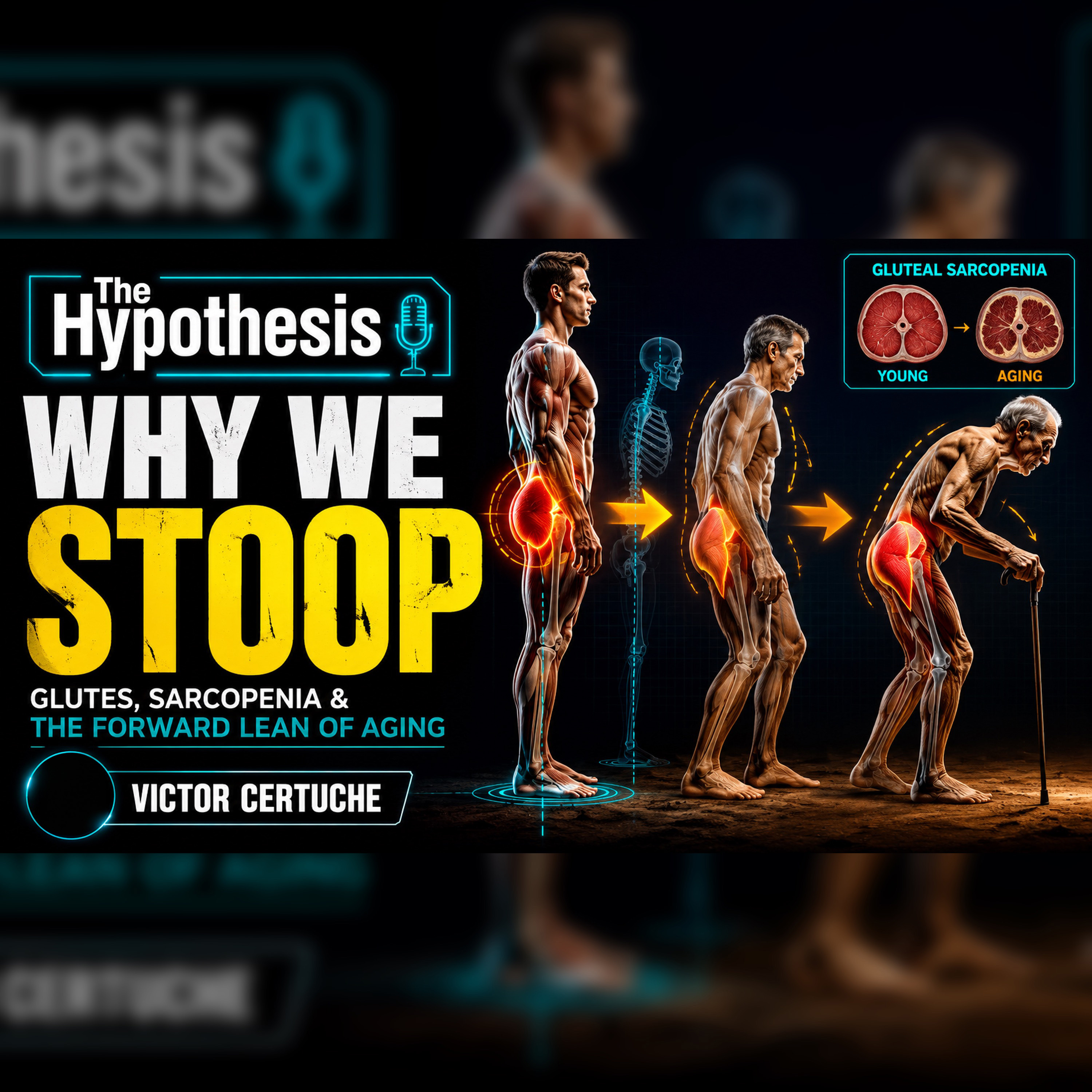
Why do we lean forward as we age? While many assume a stooped posture is an inevitable part of growing older, the real culprit might be hiding right behind us.In this episode, we dive deep into a fascinating biomechanical mystery: the decline of the human glutes. The human gluteus maximus is an evolutionary marvel designed to act as a crucial "pitch-controller" that prevents our torsos from tipping over when we move. However, in our modern, chair-centric world, chronic sitting triggers "gluteal amnesia"—literally causing our most powerful posture-supporting muscles to thin, accumulate fat, and functionally fall asleep.When the glutes shut down, the hamstrings and lower back are forced to overwork in an unstable game of muscular compensation. This kinetic chain collapse shifts our center of gravity, slowly dragging the aging body into a permanent forward lean.We explore the fascinating gender differences in this postural decline—revealing why women experience more pronounced pelvic tilt shifts while men suffer from direct muscle shrinkage. But it’s not all bad news. We look to global cultures for the cure: from the Hadza hunter-gatherers, whose active ground-squatting postures keep their muscles naturally primed , to the therapeutic, full-body benefits of daily active movements like the Islamic Salat prayer.Tune in to discover why reclaiming your glutes is the ultimate evolutionary key to standing tall, staying balanced, and aging with strength.

Why do we lean forward as we age? While many assume a stooped posture is an inevitable part of growing older, the real culprit might be hiding right behind us.In this episode, we dive deep into a fascinating biomechanical mystery: the decline of the human glutes. The human gluteus maximus is an evolutionary marvel designed to act as a crucial "pitch-controller" that prevents our torsos from tipping over when we move. However, in our modern, chair-centric world, chronic sitting triggers "gluteal amnesia"—literally causing our most powerful posture-supporting muscles to thin, accumulate fat, and functionally fall asleep.When the glutes shut down, the hamstrings and lower back are forced to overwork in an unstable game of muscular compensation. This kinetic chain collapse shifts our center of gravity, slowly dragging the aging body into a permanent forward lean.We explore the fascinating gender differences in this postural decline—revealing why women experience more pronounced pelvic tilt shifts while men suffer from direct muscle shrinkage. But it’s not all bad news. We look to global cultures for the cure: from the Hadza hunter-gatherers, whose active ground-squatting postures keep their muscles naturally primed , to the therapeutic, full-body benefits of daily active movements like the Islamic Salat prayer.Tune in to discover why reclaiming your glutes is the ultimate evolutionary key to standing tall, staying balanced, and aging with strength.

NOW PLAYING

Behind the Lean: How "Gluteal Amnesia" and Modern Life are Forcing Us Forward

0:00 26:34

No transcript for this episode yet

We transcribe on demand. Request one and we'll notify you when it's ready — usually under 10 minutes.

No similar episodes found.

No similar podcasts found.

Frequently Asked Questions

How long is this episode of The Hypothesis?

This episode is 26 minutes long.

When was this The Hypothesis episode published?

This episode was published on May 10, 2026.

What is this episode about?

Why do we lean forward as we age? While many assume a stooped posture is an inevitable part of growing older, the real culprit might be hiding right behind us.In this episode, we dive deep into a fascinating biomechanical mystery: the decline of the...

Can I download this The Hypothesis episode?

Yes, you can download this episode by clicking the download button on the episode player, or subscribe to the podcast in your preferred podcast app for automatic downloads.
URL copied to clipboard!