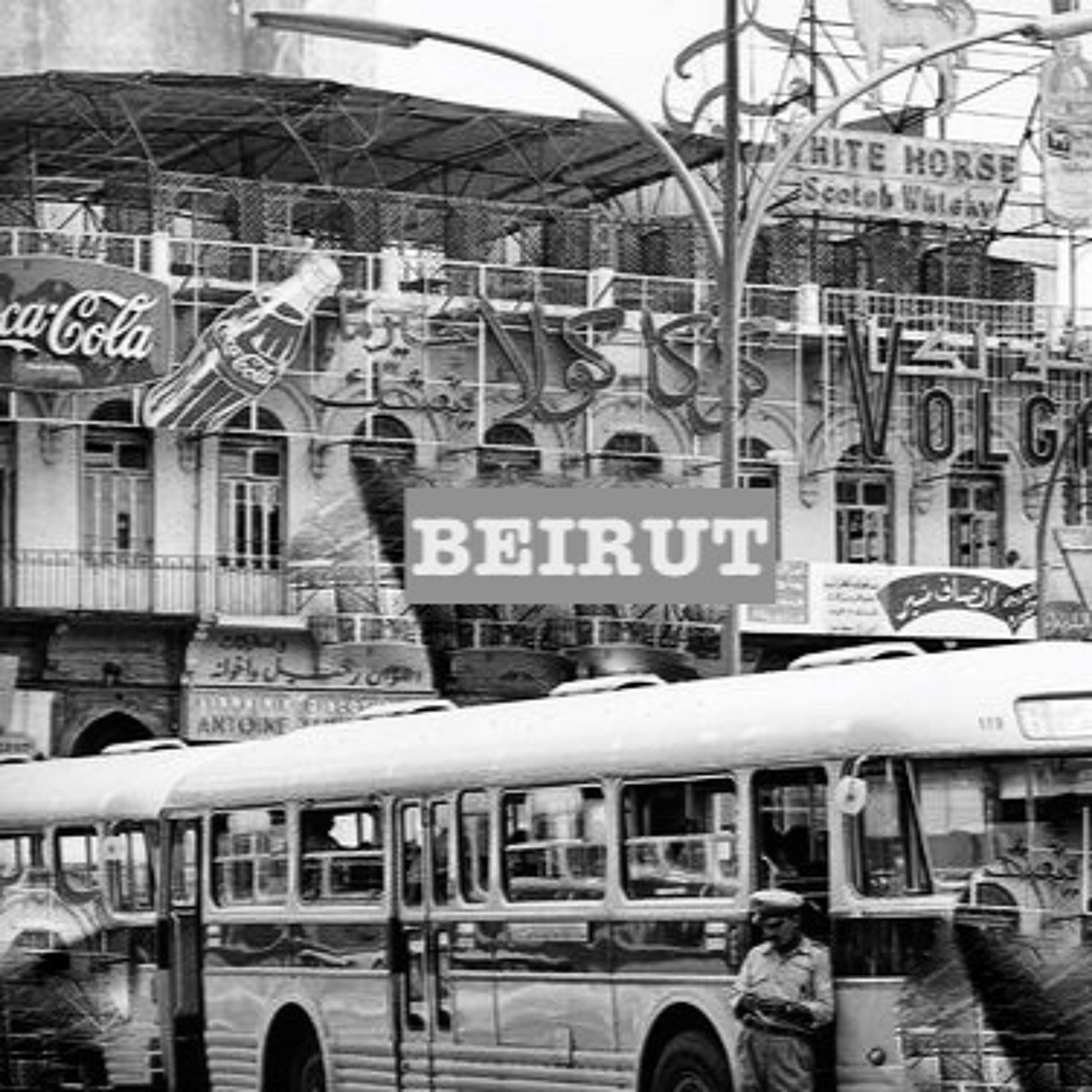
Beirut - Remastered 1/9/23
from Davor's Music Hosted by Davor's Music
Composed, played, recorded and mixed by Davor Dojchinovich. Recorded and mastered at Happy Cloud Studio Seattle 9/16/17 Davor: Piano, Bass Guitar, Fretless Bass Guitar, Keyboards, Percussions, Drum Programming, and Production. Acoustic Guitar Samples. Vilayet of Beirut In 1888, Beirut was made capital of a vilayet (governorate) in Syria, including the sanjaks (prefectures) Latakia, Tripoli, Beirut, Acre and Bekaa. By this time, Beirut had grown into a cosmopolitan city and had close links with Europe and the United States. It also became a centre of missionary activity that spawned educational institutions, such as the American University of Beirut. Provided with water from a British company and gas from a French one, silk exports to Europe came to dominate the local economy. After French engineers established a modern harbor in 1894 and a rail link across Lebanon to Damascus and Aleppo in 1907, much of the trade was carried by French ships to Marseille. French influence in the area soon exceeded that of any other European power. The 1911 Encyclopædia Britannica reported a population consisting of 36,000 Muslims, 77,000 Christians, 2,500 Jews, 400 Druze and 4,100 foreigners. At the start of the 20th century, Salim Ali Salam was one of the most prominent figures in Beirut, holding numerous public positions including deputy from Beirut to the Ottoman parliament and President of the Municipality of Beirut. Given his modern way of life, the emergence of Salim Ali Salam as a public figure constituted a transformation in terms of the social development of the city. Beirut: The capital of Lebanon After the collapse of the Ottoman Empire following World War I, Beirut, along with the rest of Lebanon, was placed under the French Mandate. Lebanon achieved independence in 1943, and Beirut became the capital city. The city remained a regional intellectual capital, becoming a major tourist destination and a banking haven, especially for the Persian Gulf oil boom. This era of relative prosperity ended in 1975 when the Lebanese Civil War broke out throughout the country. During most of the war, Beirut was divided between the Muslim west part and the Christian east. The downtown area, previously the home of much of the city's commercial and cultural activity, became a no man's land known as the Green Line. Many inhabitants fled to other countries. About 60,000 people died in the first two years of the war (1975–1976), and much of the city was devastated. A particularly destructive period was the 1978 Syrian siege of Achrafiyeh, the main Christian district of Beirut. Syrian troops relentlessly shelled the eastern quarter of the city, but Christian militias defeated multiple attempts by Syria's elite forces to capture the strategic area in a three-month campaign later known as the Hundred Days' War. Another destructive chapter was the 1982 Lebanon War, during which most of West Beirut was under siege by Israeli troops. In 1983, French and US barracks were bombed, killing 241 American servicemen, 58 French servicemen, six civilians and the two suicide bombers. Since the end of the war in 1990, the people of Lebanon have been rebuilding Beirut, and by the start of the 2006 Israel-Lebanon conflict the city had somewhat regained its status as a tourist, cultural and intellectual center in the Middle East and as a centre for commerce, fashion, and media. The reconstruction of downtown Beirut has been largely driven by Solidere, a development company established in 1994 by Prime Minister Rafic Hariri. The city has been host to the Asian Club Basketball Championship and the Asian Football Cup and has hosted the Miss Europe pageant eight times, 1960–1964, 1999, 2001–2002.
Embed this episode
No transcript yet.