
EPISODE · Jan 21, 2021 · 1H 17M
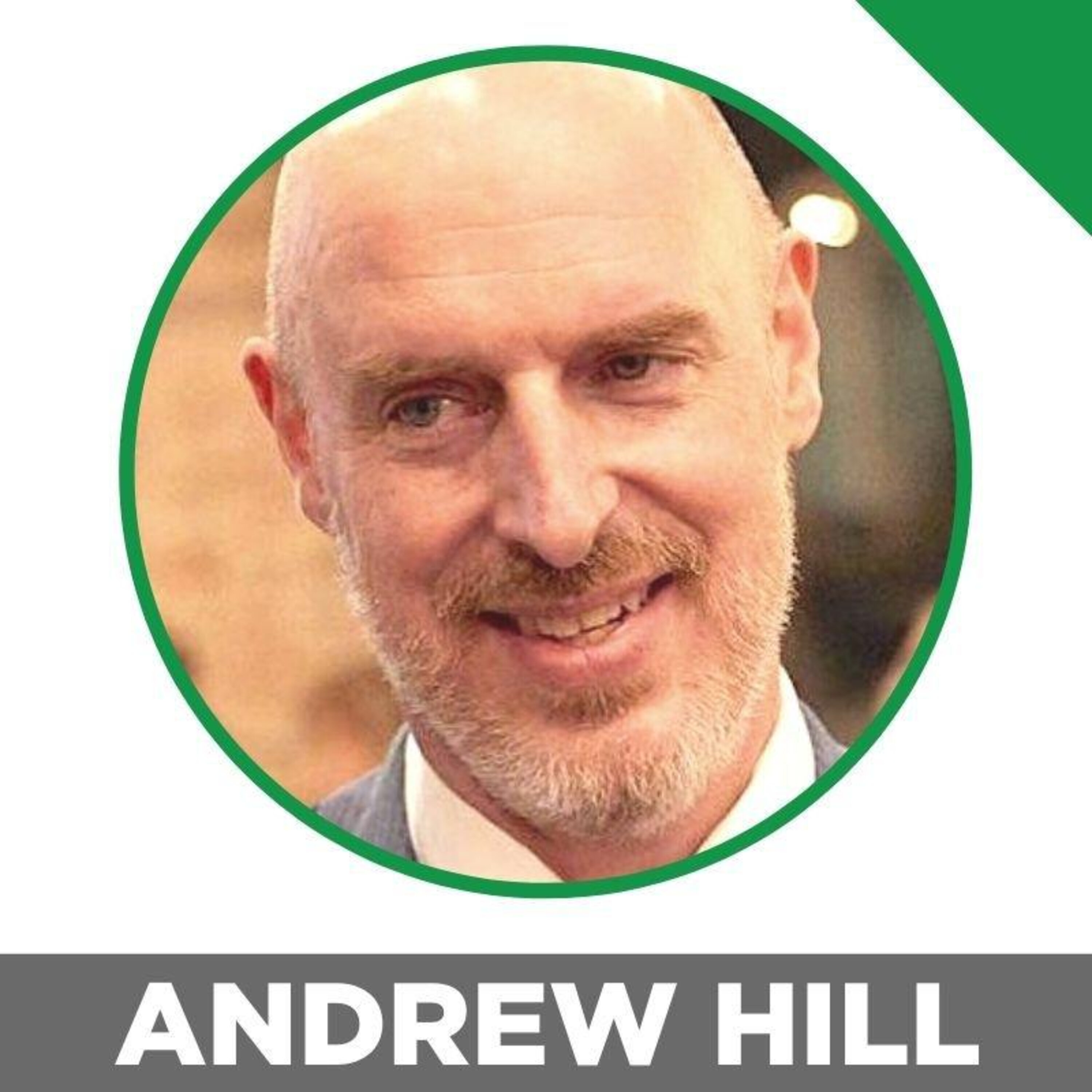
Ben Got COVID (& What He Did About It), How To Fix Issues With Your Brain, The "God Cap" For Neurofeedback, Do Home Neurofeedback Devices Work & More With Dr. Andrew Hill.
from Boundless Life · host Ben Greenfield
bengreenfieldfitness.com/peakbrainpodcast Special Announcement: In the beginning of this episode, I describe how I got COVID and what I did about it. Enjoy! Back in 2017, I visited the Peak Brain Institute in Los Angeles, California for a special type of advanced brain scan and brain mapping system called a quantified electroencephalography, or “QEEG”, and I was shocked at what they discovered in my brain. Dr. Andrew Hill, my guest on today's show, oversaw the entire mapping protocol. Dr. Hill, a UCLA trained cognitive neuroscientist, lecturer, discovered what he described as some pretty severe patterns of excess stressful beta waves, excess theta waves, and excess delta waves in my brain. What's that mean, exactly? Basically, it suggests that I had some history of concussions and traumatic brain injury (which I indeed have had, in everything from football to mountain biking to kickboxing), as well as built-up deficits of attention, increased distractibility, limited sleep potential and less-than-optimal cognitive performance from life, travel, toxins, head injuries and beyond. Two months after the scan, I hopped on a plane back to LA, and ventured back into the Peak Brain Institute for three days of intensive training to fix my brain, returning to Spokane with a briefcase packed with a laptop, electrodes, conducting gel, and everything I needed to use neurofeedback to fix my brain. The next three months I trained for 30 minutes every other day using a style of neurofeedback I can best describe as “meditation on steroids”. Mostly, my protocol involved flying a spaceship with my mind. Each time my brain subconsciously shifted into brainwave patterns considered to be unfavorable, the spaceship would stop flying and the music generated by the neurofeedback software would fade away, very much like a cognitive “slap on the wrist”. So how exactly does neurofeedback work? Technically, it’s a non-invasive form of what is known in the medical industry as “central nervous system biofeedback”. It trains the brain to develop new resources by encouraging certain areas to raise or lower the amplitude and ratios of particular brainwaves. To a very large extent, and unlike peripheral biofeedback such as practicing a physical exercise like a handstand, neurofeedback is an entirely non-voluntary process in which you are shaping the brain giving the brain feedback only when it’s doing certain things. Professional clinicians report that about 90% of users notice a significant positive impact from this style of training, and it can be used for everything from decreasing anxiety and stress to inducing faster sleep onset to even resetting tolerance to marijuana and alcohol. Neurofeedback training simply involves the placement of electrodes on the scalp, which produces a signal then picked up by an EEG amplifier. These signals are fed into software that then sends back to the user some form of visual and/or auditory “feedback” or reward. This reward stimulus is given when the brain produces desired brainwave changes in amplitude or frequency. Unlike many books and magazines would have you to believe, this type of protocol is slightly risky, and not just something you download a free neurofeedback app to do. Neurofeedback is a powerful tool and every brain is different, so the single most crucial aspect of neurofeedback training is selecting the proper protocol. Although the QEEG provides crucial information about one person’s brain, the training plan itself needs to be adaptive and iterative, based upon how someone responds to the training, which is why it's important to have the entire testing and training process overseen by a neurofeedback practitioner. Heck, when I did my three months of training with the Peak Brain Institute, Dr. Hill and I were text and email buddies nearly every day. Neurofeedback can produce side effects, although they are generally minor and short lasting – and also informative to a neurofeedback practitioner. If you get adverse effects, protocols can be adjusted to steer the brain in a different direction. But if you are training yourself with no supervision and no sense of what’s actually happening in your brain, you can easily produce negative side effects and if you keep doing it you can cause these negative effects to become permanent. So proceed with caution, but with the understanding that neurofeedback is one of the more powerful pieces of headgear that can be used to enhance or change your brain. During our discussion, you'll discover: -A brief overview of the Peak Brain Institute...8:36 -Why a home device isn't enough for optimal brain performance...11:18 -How close we are to a "god cap" that can track brain waves without gel, electrodes, etc...25:35 -How the Peak Brain Institute tracks individual's brain waves virtually...35:45 -How diet affects a person's neurofeedback...42:40 -Nootropics or smart drugs that promote neurofeedback...1:01:45See omnystudio.com/listener for privacy information.
Embed this episode
What this episode covers
bengreenfieldfitness.com/peakbrainpodcast Special Announcement: In the beginning of this episode, I describe how I got COVID and what I did about it. Enjoy! Back in 2017, I visited the for a special type of advanced brain...
NOW PLAYING
Ben Got COVID (& What He Did About It), How To Fix Issues With Your Brain, The "God Cap" For Neurofeedback, Do Home Neurofeedback Devices Work & More With Dr. Andrew Hill.
No transcript for this episode yet
Similar Episodes
No similar episodes found.
Similar Podcasts
No similar podcasts found.