
EPISODE · Feb 24, 2026 · 1 MIN
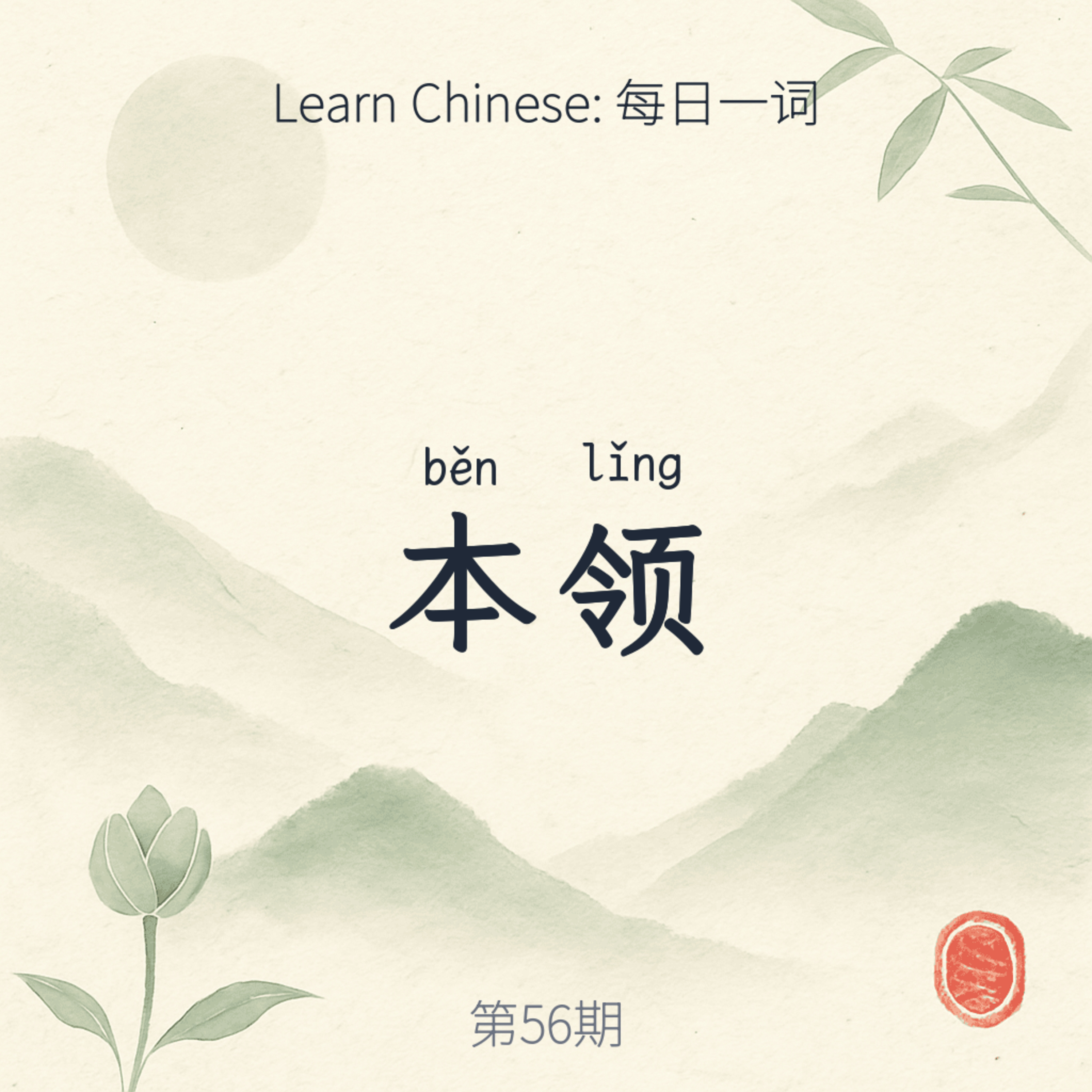
本领 (běn lǐng)
from Chinese Word of the Day | 每日一词 · host Gallant Guo
特师的每日一词,2026年2月24日的词汇是:本 běn 领 lǐng释义 Definition本领的意思是指一个人或事物所具备的技能、能力或本事。本领 (běn lǐng) refers to the skills, abilities, or capabilities that a person or thing possesses.例句 Example《凤凰周刊》中,有篇文章是这样用这个词的:「智人的出现时间要晚得多,大约在30万年前。但人类寻找最佳原材料来制造简单工具的本领可追溯至近300万年前。」这里说的是人类很早就有制造工具的能力。In Phoenix Weekly, an article uses this word like this: 'The emergence of Homo sapiens was much later, around 300,000 years ago. But humans' 本领 (ability) to find the best raw materials to make simple tools can be traced back to nearly 3 million years ago.' Here, it talks about humans having the ability to make tools very early on.你知道吗? Did You Know?本领和技能、能力意思相近,但本领更强调实际应用和掌握的程度,常用于口语。例如,可以说「他有做饭的本领」,而技能更偏向技术性,如「编程技能」。本领的起源与「本」和「领」结合,表示从基础掌握的能力。更多例子:学习外语需要耐心和本领;医生要有治病救人的本领。本领 (běn lǐng) is similar in meaning to 技能 (jì néng) and 能力 (néng lì), but 本领 (běn lǐng) emphasizes practical application and mastery, often used in spoken language. For example, you can say '他有做饭的本领 (tā yǒu zuò fàn de běn lǐng)' (He has the ability to cook), while 技能 (jì néng) leans more towards technical aspects, such as '编程技能 (biān chéng jì néng)' (programming skills). The origin of 本领 (běn lǐng) combines 本 (běn) and 领 (lǐng), indicating abilities mastered from the basics. More examples: Learning a foreign language requires patience and 本领 (běn lǐng); doctors must have the 本领 (běn lǐng) to treat illnesses and save lives.
Embed this episode
Ready to play
本领 (běn lǐng)
No transcript for this episode yet
Similar Episodes
No similar episodes found.
Similar Podcasts
No similar podcasts found.