Berkeley scholars unpack what's at stake for U.S. democracy episode artwork

EPISODE · Aug 8, 2025 · 1H 1M

Berkeley scholars unpack what's at stake for U.S. democracy

from Berkeley Talks

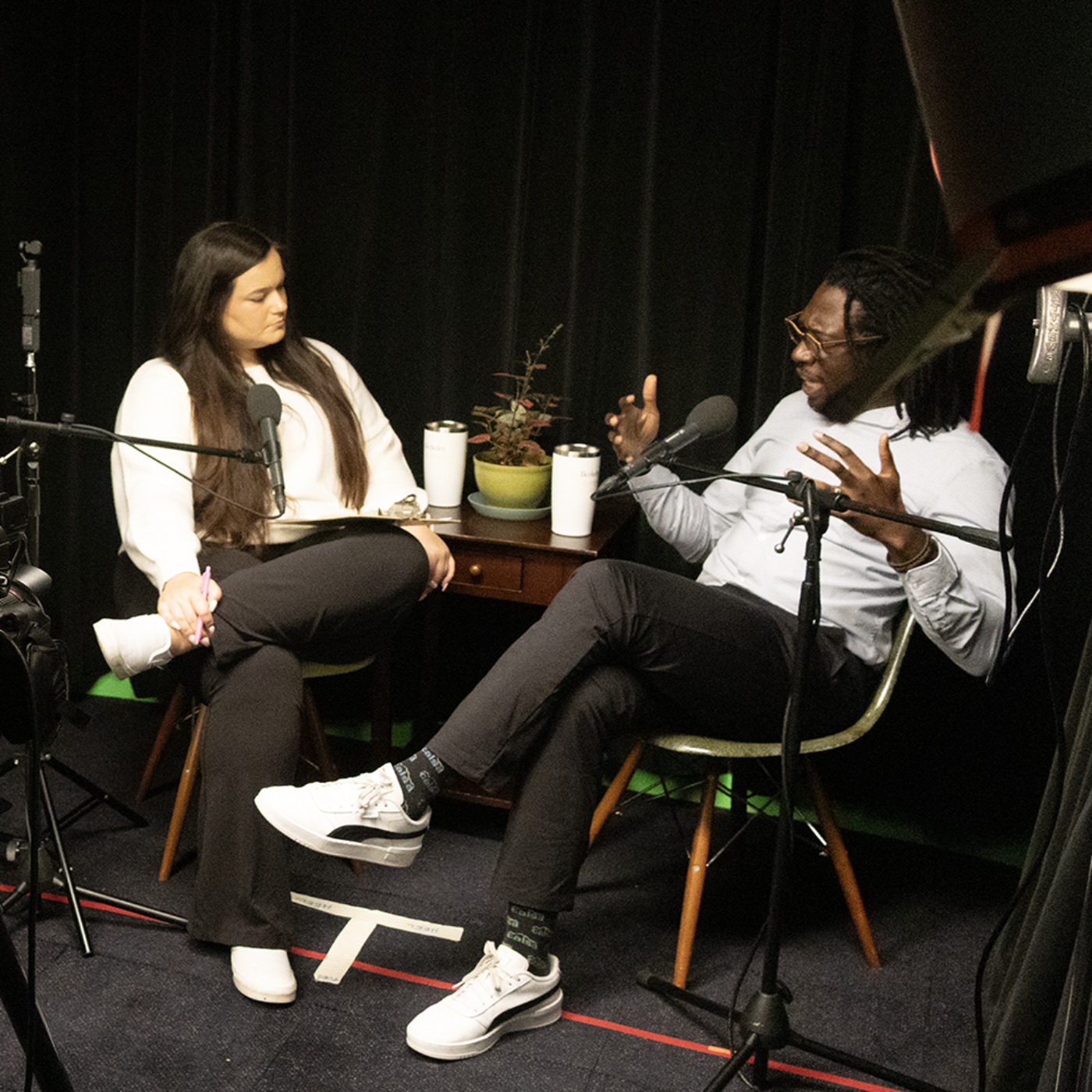
Every spring semester, UC Berkeley Assistant Professor Shereen Marisol Meraji teaches a class on race and journalism. In the course, she and her students explore how colonialism and the legacy of its systems — including forced displacement of Native tribes, slavery and Jim Crow — continue to affect us as a society, and how journalists can meaningfully report on race in America today.“It has led to persistent racial disparities in wealth, in education, housing, healthcare, in policing and incarceration,” said Meraji, who leads the audio program at Berkeley’s Graduate School of Journalism. “I firmly believe that you can't meaningfully report on any of those issues, here in the United States, without an understanding of how race operates.”When President Trump signed a surge of executive orders in January 2025, many that directly intersect with race, Meraji suggested that her students interview experts at Berkeley to help make sense of these new anti-DEI policies, immigration enforcement changes and regulatory rollbacks. Those interviews, which aired on KALW, became The Stakes Explained, a multimedia series where Berkeley professors, frontline journalists and community members unpack President Trump’s executive orders and actions to see what’s at stake for U.S. democracy.In this Berkeley Talks episode, we’re sharing an hourlong special about The Stakes Explained that aired on KALX in July. In it, we hear several interviews with Berkeley scholars featured in the series, including law professor Sarah Song and Travis Bristol, an associate professor in the School of Education. They and other experts break down some of Trump’s executive orders, from those targeting diversity, equity and inclusion in education to others that are reshaping the immigration system and immigration enforcement. Learn more about The Stakes Explained and watch videos of the interviews on UC Berkeley Journalism’s website.Listen to the episode and read the transcript on UC Berkeley News (news.berkeley.edu/podcasts).Music by HoliznaCC0.Photo by Alicia Chiang/UC Berkeley Journalism. Hosted on Acast. See acast.com/privacy for more information.

Every spring semester, UC Berkeley Assistant Professor Shereen Marisol Meraji teaches a class on race and journalism. In the course, she and her students explore how colonialism and the legacy of its systems — including forced displacement of Native tribes, slavery and Jim Crow — continue to affect us as a society, and how journalists can meaningfully report on race in America today.“It has led to persistent racial disparities in wealth, in education, housing, healthcare, in policing and incarceration,” said Meraji, who leads the audio program at Berkeley’s Graduate School of Journalism. “I firmly believe that you can't meaningfully report on any of those issues, here in the United States, without an understanding of how race operates.”When President Trump signed a surge of executive orders in January 2025, many that directly intersect with race, Meraji suggested that her students interview experts at Berkeley to help make sense of these new anti-DEI policies, immigration enforcement changes and regulatory rollbacks. Those interviews, which aired on KALW, became The Stakes Explained, a multimedia series where Berkeley professors, frontline journalists and community members unpack President Trump’s executive orders and actions to see what’s at stake for U.S. democracy.In this Berkeley Talks episode, we’re sharing an hourlong special about The Stakes Explained that aired on KALX in July. In it, we hear several interviews with Berkeley scholars featured in the series, including law professor Sarah Song and Travis Bristol, an associate professor in the School of Education. They and other experts break down some of Trump’s executive orders, from those targeting diversity, equity and inclusion in education to others that are reshaping the immigration system and immigration enforcement. Learn more about The Stakes Explained and watch videos of the interviews on UC Berkeley Journalism’s website.Listen to the episode and read the transcript on UC Berkeley News (news.berkeley.edu/podcasts).Music by HoliznaCC0.Photo by Alicia Chiang/UC Berkeley Journalism. Hosted on Acast. See acast.com/privacy for more information.

NOW PLAYING

Berkeley scholars unpack what's at stake for U.S. democracy

0:00 1:01:03

No transcript for this episode yet

We transcribe on demand. Request one and we'll notify you when it's ready — usually under 10 minutes.

Carnivores Don't Get Sunburn - Carnivore Diet Talks Carnivores Don't Get Sunburn - Carnivore Diet Talks Welcome to “Carnivores Don’t Get Sunburn,” where we have fun and explore the carnivore diet and its transformative power. Join us as we uncover real stories from individuals who have thrived on this diet, defying convention and embracing optimal health. Plus, stay tuned for our upcoming documentary featuring diverse carnivores overcoming health challenges. Learn more at www.carnivoredietdocumentary.com.Excitingly, we’re working on an upcoming documentary where we’ll feature carnivores from various walks of life, conquering diverse health challenges. Join us on this journey and learn more at www.carnivoredietdocumentary.com.Join us in uncovering the power of the carnivore diet. Prepare to be inspired, informed, and empowered to embrace optimal health and well-being.Welcome to “Carnivores Don’t Get Sunburn: Unveiling Real Stories of the Carnivore Diet.” Stay tuned for our upcoming documentary. Discover how this lifestyle can transform lives. Learn more at www.carnivoredietdocumentary.com IT IS WHAT IT IS with SHALLZ - SHALLY ZOMORODI Shally Zomorodi What?  "It is what it is" with ShallZ – Shally ZomorodiWhen? WeeklyHow long? 35 minutesEvery week, Mother of 4, wife, morning TV news anchor and ultimate hostess, Shally Zomorodi talks about life - its up's and downs and how to stay on track in her weekly podcast, ‘It is what it is.’  Known for her high energy, infectious smile and ability to see the cup as half full Shally talks about all things in life and how to work through its challenges. From parenting, marriage, friendships, current events to how to smile when it just seems impossible ‘It is what it is’ is the perfect podcast to help inspire you to dance through the rain. Tracking Nuclear Weapons Programs Center for Strategic and International Studies The CSIS Proliferation Prevention Program talks to experts about transparency and nuclear weapons. Cover Stories with Chess Life US Chess Chess Life Editor John Hartmann talks to the authors of each month's Chess Life cover story.

Frequently Asked Questions

How long is this episode of Berkeley Talks?

This episode is 1 hour and 1 minute long.

When was this Berkeley Talks episode published?

This episode was published on August 8, 2025.

What is this episode about?

Every spring semester, UC Berkeley Assistant Professor Shereen Marisol Meraji teaches a class on race and journalism. In the course, she and her students explore how colonialism and the legacy of its systems — including forced displacement of Native...

Can I download this Berkeley Talks episode?

Yes, you can download this episode by clicking the download button on the episode player, or subscribe to the podcast in your preferred podcast app for automatic downloads.
URL copied to clipboard!