
EPISODE · May 4, 2026 · 38 MIN
Best Environmental Monitoring Kits for Citizen Science Projects
from The STEM Lab
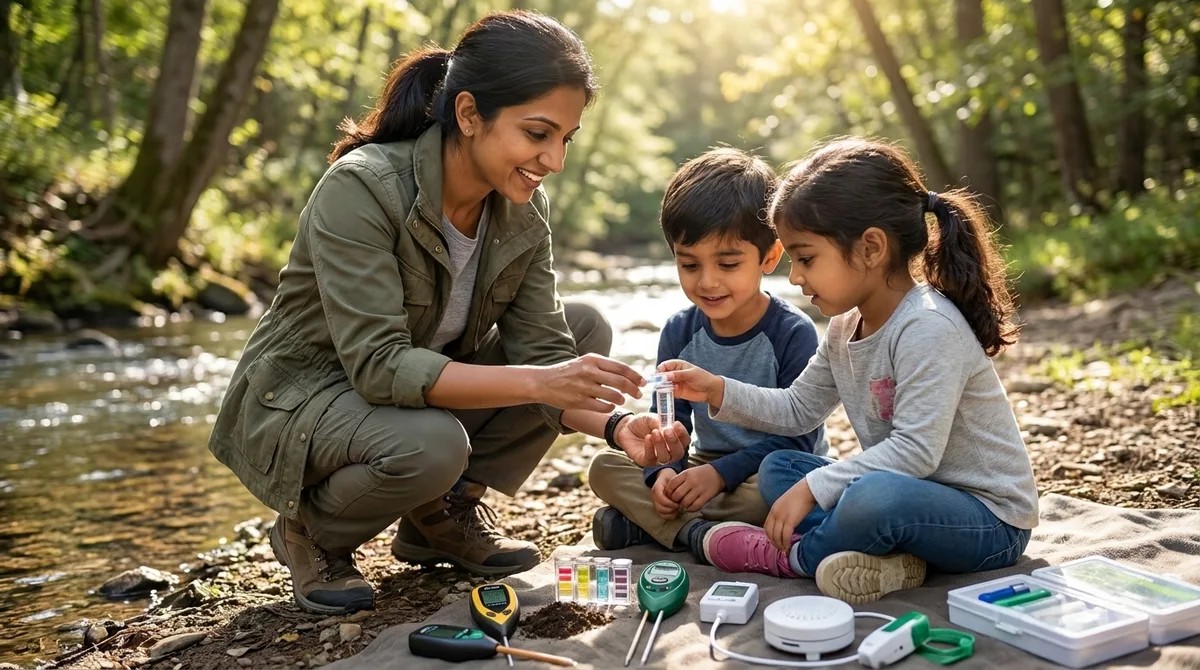
When your kid needs to collect real environmental data for a school project, the equipment you choose can mean the difference between a forgettable poster and genuine scientific discovery. In this episode, National Board Certified science educator Lakshmi Venkataraman breaks down how to select environmental monitoring kits that let young researchers contribute actual data to real scientific databases. Whether your child is eight or fourteen, this guide helps you find tools that grow with them and teach the same skills professional environmental scientists use every day. Look for kits that work with different programming levels. The best kits let younger kids drag and drop simple code blocks like moving puzzle pieces, while older students can write real programming code on the exact same equipment. This means one kit can last for years as your child's skills grow. Check if the kit actually works on your devices. Some kits say they work everywhere but secretly need specific computers or constant internet connection. If you want to collect data at a park or stream where there's no Wi-Fi, make sure the kit can save information on its own. Sensor accuracy determines what your child can actually learn. A thermometer that's only accurate within two degrees is like a ruler where every inch might be off by half an inch. More precise sensors let kids detect tiny changes that matter for real science, not just rough guesses. Calibration is a feature, not a hassle. Professional scientists regularly check that their tools measure correctly, like zeroing a kitchen scale before baking. Kits that include calibration steps teach kids how real research works and why we can trust scientific data. Modular kits protect your investment. Choose systems where you can swap out or add sensors without buying everything new. If your child drops a sensor in a puddle, you want to replace just that piece instead of throwing away the whole kit and starting over. Show Links Affiliate Disclosure: As an Amazon Associate I earn from qualifying purchases. Full article: https://stemlabguide.com/best-environmental-monitoring-kits-for-citizen-science-projects micro:bit Smart Citizen Kit - https://www.amazon.com/s?k=micro%3Abit%20Smart%20Citizen%20Kit&tag=stemlab-20 Arduino Environmental Science Bundle - https://www.amazon.com/s?k=Arduino%20Environmental%20Science%20Bundle&tag=stemlab-20 Vernier Go Direct Air Quality Sensor - https://www.amazon.com/s?k=Vernier%20Go%20Direct%20Air%20Quality%20Sensor&tag=stemlab-20 Raspberry Pi Environmental Monitoring HAT - https://www.amazon.com/s?k=Raspberry%20Pi%20Environmental%20Monitoring%20HAT&tag=stemlab-20 Kestrel DROP D3 Environmental Data Logger - https://www.amazon.com/s?k=Kestrel%20DROP%20D3%20Environmental%20Data%20Logger&tag=stemlab-20 SparkFun Environmental Combo Board - https://www.amazon.com/s?k=SparkFun%20Environmental%20Combo%20Board&tag=stemlab-20 Related Articles STEM Toys for 10 Year Olds That Teach Real Skills: Skill-Building Guide - https://stemlabguide.com/stem-toys-for-10-year-olds-that-teach-real-skills How to Choose a Citizen Science Kit for Your Child's Skill Level - https://stemlabguide.com/how-to-choose-a-citizen-science-kit-for-your-child-s-skill-level Best 3D Printers for Kids and Teens: Complete Buyer's Guide for Educational STEM Learning - https://stemlabguide.com/best-3d-printers-for-kids-and-teens Best Robotics Kits for Kids: Complete Guide to Building Real Engineering Skills - https://stemlabguide.com/best-robotics-kits-for-kids Home STEM Lab Safety Checklist: Power, Ventilation, and Storage Requirements - https://stemlabguide.com/home-stem-lab-safety-checklist
Embed this episode
NOW PLAYING
Best Environmental Monitoring Kits for Citizen Science Projects
No transcript for this episode yet
Similar Episodes
No similar episodes found.
Similar Podcasts
No similar podcasts found.