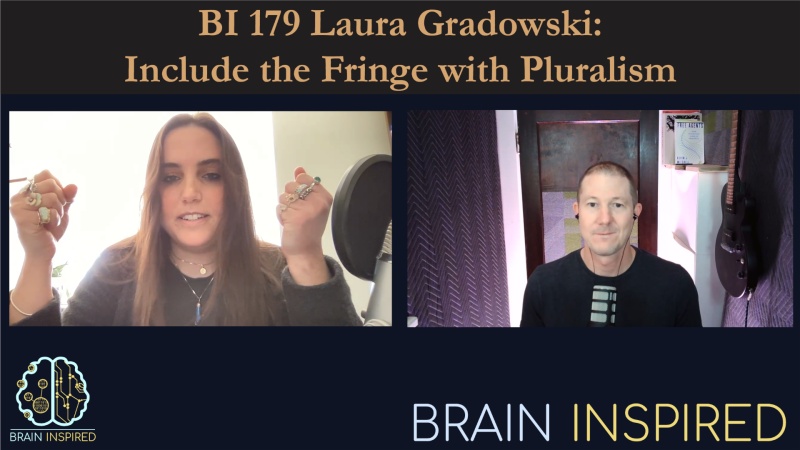
BI 179 Laura Gradowski: Include the Fringe with Pluralism episode artwork

EPISODE · Nov 27, 2023 · 1H 39M

BI 179 Laura Gradowski: Include the Fringe with Pluralism

from Brain Inspired · host Paul Middlebrooks

Support the show to get full episodes, full archive, and join the Discord community. Check out my free video series about what's missing in AI and Neuroscience Laura Gradowski is a philosopher of science at the University of Pittsburgh. Pluralism is roughly the idea that there is no unified account of any scientific field, that we should be tolerant of and welcome a variety of theoretical and conceptual frameworks, and methods, and goals, when doing science. Pluralism is kind of a buzz word right now in my little neuroscience world, but it's an old and well-trodden notion... many philosophers have been calling for pluralism for many years. But how pluralistic should we be in our studies and explanations in science? Laura suggests we should be very, very pluralistic, and to make her case, she cites examples in the history of science of theories and theorists that were once considered "fringe" but went on to become mainstream accepted theoretical frameworks. I thought it would be fun to have her on to share her ideas about fringe theories, mainstream theories, pluralism, etc. We discuss a wide range of topics, but also discuss some specific to the brain and mind sciences. Laura goes through an example of something and someone going from fringe to mainstream - the Garcia effect, named after John Garcia, whose findings went agains the grain of behaviorism, the dominant dogma of the day in psychology. But this overturning only happened after Garcia had to endure a long scientific hell of his results being ignored and shunned. So, there are multiple examples like that, and we discuss a handful. This has led Laura to the conclusion we should accept almost all theoretical frameworks, We discuss her ideas about how to implement this, where to draw the line, and much more. Laura's page at the Center for the Philosophy of Science at the University of Pittsburgh. Facing the Fringe. Garcia's reflections on his troubles: Tilting at the Paper Mills of Academe 0:00 - Intro 3:57 - What is fringe? 10:14 - What makes a theory fringe? 14:31 - Fringe to mainstream 17:23 - Garcia effect 28:17 - Fringe to mainstream: other examples 32:38 - Fringe and consciousness 33:19 - Words meanings change over time 40:24 - Pseudoscience 43:25 - How fringe becomes mainstream 47:19 - More fringe characteristics 50:06 - Pluralism as a solution 54:02 - Progress 1:01:39 - Encyclopedia of theories 1:09:20 - When to reject a theory 1:20:07 - How fringe becomes fringe 1:22:50 - Marginilization 1:27:53 - Recipe for fringe theorist

Support the show to get full episodes, full archive, and join the Discord community. Check out my free video series about what's missing in AI and Neuroscience Laura Gradowski is a philosopher of science at the University of Pittsburgh. Pluralism is roughly the idea that there is no unified account of any scientific field, that we should be tolerant of and welcome a variety of theoretical and conceptual frameworks, and methods, and goals, when doing science. Pluralism is kind of a buzz word right now in my little neuroscience world, but it's an old and well-trodden notion... many philosophers have been calling for pluralism for many years. But how pluralistic should we be in our studies and explanations in science? Laura suggests we should be very, very pluralistic, and to make her case, she cites examples in the history of science of theories and theorists that were once considered "fringe" but went on to become mainstream accepted theoretical frameworks. I thought it would be fun to have her on to share her ideas about fringe theories, mainstream theories, pluralism, etc. We discuss a wide range of topics, but also discuss some specific to the brain and mind sciences. Laura goes through an example of something and someone going from fringe to mainstream - the Garcia effect, named after John Garcia, whose findings went agains the grain of behaviorism, the dominant dogma of the day in psychology. But this overturning only happened after Garcia had to endure a long scientific hell of his results being ignored and shunned. So, there are multiple examples like that, and we discuss a handful. This has led Laura to the conclusion we should accept almost all theoretical frameworks, We discuss her ideas about how to implement this, where to draw the line, and much more. Laura's page at the Center for the Philosophy of Science at the University of Pittsburgh. Facing the Fringe. Garcia's reflections on his troubles: Tilting at the Paper Mills of Academe 0:00 - Intro 3:57 - What is fringe? 10:14 - What makes a theory fringe? 14:31 - Fringe to mainstream 17:23 - Garcia effect 28:17 - Fringe to mainstream: other examples 32:38 - Fringe and consciousness 33:19 - Words meanings change over time 40:24 - Pseudoscience 43:25 - How fringe becomes mainstream 47:19 - More fringe characteristics 50:06 - Pluralism as a solution 54:02 - Progress 1:01:39 - Encyclopedia of theories 1:09:20 - When to reject a theory 1:20:07 - How fringe becomes fringe 1:22:50 - Marginilization 1:27:53 - Recipe for fringe theorist

NOW PLAYING

BI 179 Laura Gradowski: Include the Fringe with Pluralism

0:00 1:39:06

No transcript for this episode yet

We transcribe on demand. Request one and we'll notify you when it's ready — usually under 10 minutes.

Carnivores Don't Get Sunburn - Carnivore Diet Talks Carnivores Don't Get Sunburn - Carnivore Diet Talks Welcome to “Carnivores Don’t Get Sunburn,” where we have fun and explore the carnivore diet and its transformative power. Join us as we uncover real stories from individuals who have thrived on this diet, defying convention and embracing optimal health. Plus, stay tuned for our upcoming documentary featuring diverse carnivores overcoming health challenges. Learn more at www.carnivoredietdocumentary.com.Excitingly, we’re working on an upcoming documentary where we’ll feature carnivores from various walks of life, conquering diverse health challenges. Join us on this journey and learn more at www.carnivoredietdocumentary.com.Join us in uncovering the power of the carnivore diet. Prepare to be inspired, informed, and empowered to embrace optimal health and well-being.Welcome to “Carnivores Don’t Get Sunburn: Unveiling Real Stories of the Carnivore Diet.” Stay tuned for our upcoming documentary. Discover how this lifestyle can transform lives. Learn more at www.carnivoredietdocumentary.com Living Out Loud Podcast: Entrepreneurship | Blogging | Work-Life Balance | Travel Lifestyle Valerie Fidan: Online Entrepreneur, Social Media Expert, Blogger Living Out Loud (LOL) is a podcast about living vibrantly with health and wellness blogger, digital strategist Valerie Fidan. Each week, LOL is bringing you episodes with interesting interviews and guests in the health and wellness industry. We discuss everything from Millennial entrepreneurship, wellness hacks and topics, key industry advice while keeping it a fun, light-hearted conversation, inviting to feel like you are having out with friends. This is a breeding ground for ideas and excitement for a balanced and inspired lifestyle for living out loud! Submit your questions and topics of interest to [email protected]. And, for more fun, healthy recipes, blog posts and travel visit www.livethelittlethings.com // social media: craveablesocial.com / [email protected] Naturally Inspired Podcast: Health. Freedom. Lifestyle. Tammy Cuthbert Garcia Naturally Inspired Podcast is a weekly podcast where we interview health practitioners, authors, filmmakers, scientists and leading experts in the fields of health and wellness. Guests are on the cutting edge and our conversations aim to inspire listeners to think critically about health choices for better life results. Learn More At https://naturallyinspiredpodcast.com/ Made You Think Neil Soni, Nat Eliason, and Adil Majid Made You Think is a podcast by Nat Eliason, Neil Soni, and Adil Majid where the hosts and their guests examine ideas that, as the name suggests, make you think. Episodes will explore books, essays, podcasts, and anything else that warrants further discussion, teaches something useful, or at the very least, exercises our brain muscles.

Frequently Asked Questions

How long is this episode of Brain Inspired?

This episode is 1 hour and 39 minutes long.

When was this Brain Inspired episode published?

This episode was published on November 27, 2023.

What is this episode about?

Support the show to get full episodes, full archive, and join the Discord community. Check out my free video series about what's missing in AI and Neuroscience Laura Gradowski is a philosopher of science at the University of...

Can I download this Brain Inspired episode?

Yes, you can download this episode by clicking the download button on the episode player, or subscribe to the podcast in your preferred podcast app for automatic downloads.
URL copied to clipboard!