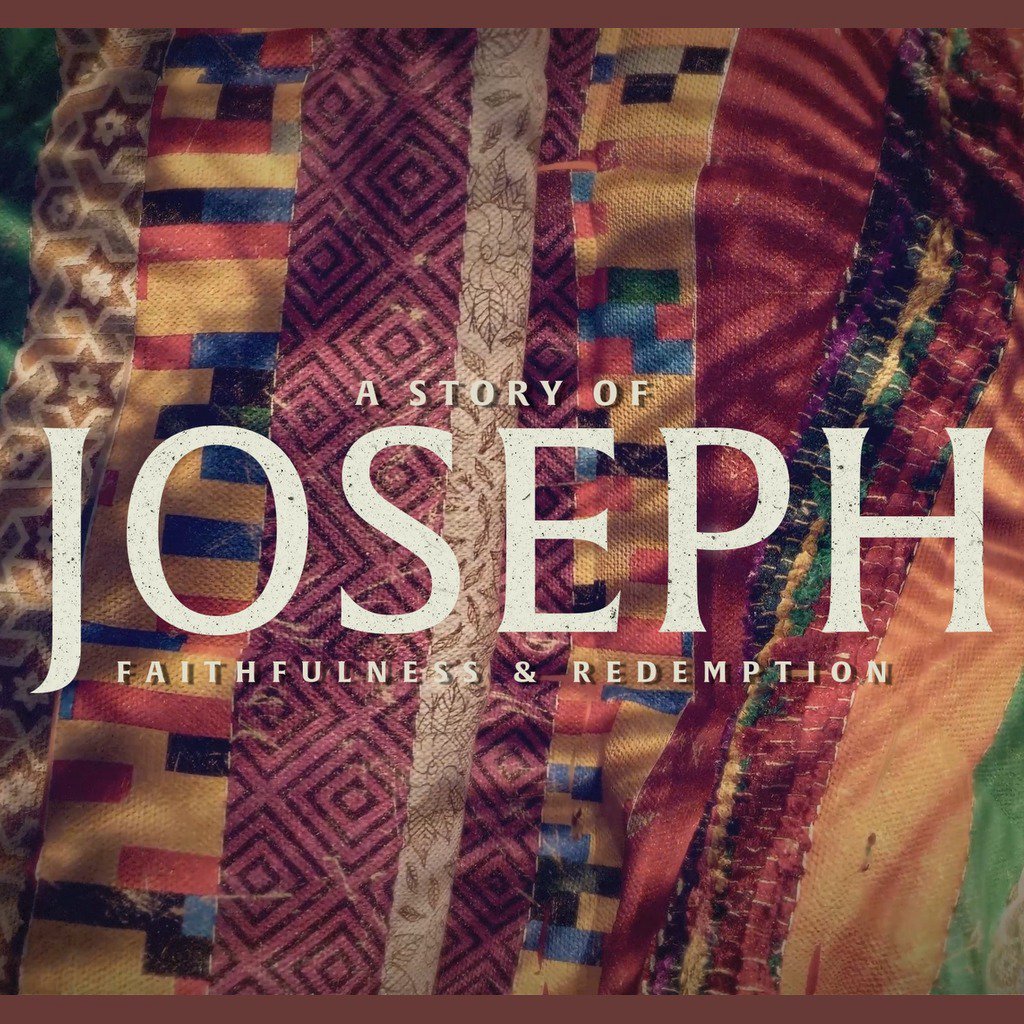
Good morning, nice to meet you, family. Good morning. So good to be with you this morning. You might have noticed what a new series is going to be in the book with Joseph.
If you want to find your way this year after 37, we'll be looking at the first few verses. I had a couple of private conversations this week which are now going to become public. A couple of times I was asked the same question. How do you really feel about Steve coming in to take this job?
And what I said was something long in line. I said this. There are times when you have to think about how to make the best of a situation. This is not one of those times.
There are times when you cannot think of a better situation. And that's how I think about this. It may sound like we're trying to promote a guy, but if that's our job is going, it couldn't be easier. A couple of years ago, I talked about what kind of friends are you, what kind of friends you want to be.
And I gave the picture of the bar, the tavern. I said I could go in that door and I could find a friend. Then I showed a different door which was this guy's office. And I said I could find that kind of friend.
I'm telling the kind of friend that we need is the kind that I found in that man's office right there. It's the kind of friend I want to be. So that's where we're at. We're going to be in Joseph.
We got to get after this morning. There's a lot to cover. We're jumping in the middle of a big story that's unloading here. So let's just get to our text and pray and then we'll carry on.
If I could have you stand as an art custom here, we'll read a few verses from Genesis 37. Jacob lived in the land of his father's soldierines in the land of Canaan. These are the generations of Jacob. Joseph being 17 years old was pastoring the flock with his brothers.
He was a boy with sons of Bill Ha and Zilpah, his father's wife. And Joseph brought a bad report to them to their father. Now Israel loved Joseph more than any other of his sons because he was the son of his old age. And he made him a robe of many colors.
But when his brothers saw that their father loved him more than all his brothers, they hated him and could not speak peacefully to him. Please pray with me. Father, we are entering into a series about a story, about a man who many would say is a type of Christ. And he's found himself in a world that is a lot like our world.
What I would ask of you, our father this morning, as we have your word open in front of us, your spirit active in and around us that you would help us to see ourselves, where we need to see ourselves, help us to see Jesus, where we need to see him. We need you for that. And we thank you for what you will do this morning. And Jesus, amen, please be seated.
So we're in a crazy story. And there's going to be a time or two as we go through this 10 week series where we're going to have to kind of give a disclaimer. Like there's going to be some sensitive content here. And you think about that.
It's kind of funny because when you offer a disclaimer, you're saying your kids may not want to hear this. And we're not saying your kids may not want to read the Bible. We're saying there's things in your Bible that are quite startling. Kind of things you just kind of gloss over when you're reading.
And there's something weird about us how we publish things. And we're not going to do that. We're going to have a story, be the story. So what we have coming is some mature themes.
What we're going to be looking at is the life of Joseph founded the book of Genesis. And this is going to be a little bit unique for us. I just need to say this out loud. We spent a lot of time in the New Testament.
And New Testament, it's kind of, I would say it's easier, right? It's pretty clear to find the application and you can see what where the error is. But when you jump into the Old Testament, you're reading a grand narrative. And we see things that are there.
And there's not a lot of times where there's a value put on it. We just notice it like multiple wives or murder or annihilation of a nation. You see these things and we just, it takes, it's a little bit different lengths to go through that. So I just want to say, we're going to be a little bit different.
We, when we come to a book and study like Joseph, we're going to bump into a problem. And that is going to be familiar to you. And when something is familiar to you, especially with the story of Joseph, you're going to realize it's familiar to you because you learned it when you were in children's ministry. And what we do in children's ministry often is we kind of marginalize the darker stuff and we find the moral attribute that we want to talk about.
Right? So the story kind of gets a little bit distorted as we talk about that. So you might have in mind a very flashy coat, some mean brothers and some things. But there's a lot more going on in that.
So I was asking you to kind of suspend what you think you know and enter into it with us together. Another reason I'd be familiar to you because you watched the amazing Technicolor Dreamcoat, right? So pop culture will fill in the blank source. And again, both of these things can leave some things out and we will try to find those things.
So I would come up with a couple of questions actually, I have a couple of questions which would help us understand this and walk through maybe a familiar but less familiar text. And that is what is wrong with my understanding of this text. I was talking to somebody this week, we were talking about Joseph and he's like, he seemed like a little brown. I'm like, why would you think he's a little brown?
Other than you were eight years old when you learned about Joseph and at that same time in life you were told not to tell. And we have what looks like Joseph tattling. But nowhere in the Bible it says Joseph was tattling or he was doing something wrong by bringing it to report against his brothers. You want to just, like I said, be careful of it.
There might be something wrong with our understanding of this. You might think you already know the story. There's too many hard to pronounce names so leave that heavy lifting to me. The cultural and historical divide is too big.
I just can't get those people back then. Maybe you're thinking Jesus isn't present. And so this doesn't mean as much to me. Or maybe you're going to say I saw the music.
The second question is a little harder that will help us. And that is what is wrong with me that this text wants to reveal. And I'm sorry for bringing you two negative questions. I do not know that are questions to bring when we open up the Holy Living Word of God and it connects with my life.
It's probably going to pull some of these things. But with the, what's the one thing to do to me? There's a thing that we do. We put people on petals.
You do this and you shouldn't do this. You do this to me. We do it with Bible characters. You do it as you look across the pew.
And that family, you tell yourself that family is better than my family. Your kids are better than my kids. That marriage might be better than my marriage. That husband is better than my husband.
We just tell ourselves stories all the time. In doing so we don't tell the true stories. About ourselves. It's a pretty good trick of the devil.
It gives the belief something about somebody else. I won't tell what's going on in here. You got to be careful of that. Because when I share two stories, when you share two stories, what's it doing?
It breaks down the why. I'm not going to allow somebody to believe something like that about me. They're going to learn that life is hard. God is good.
So there's two things I would like to share. We had two questions. Two things I would like to share as we jump into this. And you can see Jesus from the Old Testament.
We can find Jesus in his divinity at creation. John, the apostle would tell us he is the Creator. He is there. We can meet Jesus in his humanity, in his human lineage going all the way back to Adam.
We can meet Jesus also in typology as we look at a guy like Joseph and we see things that are our types of Jesus and that and we will talk about that in some time this morning. The second thing is we can meet ourselves as we look into the Old Testament and we look at these characters. We can meet ourselves in our nobility, in our courage, in our endurance, in our long suffering, in our conflict, in our dysfunction, in our immorality, in our personal and relational brokenness. Often we find ourselves in those latter categories and in the former.
But all of this, in all of this, with a value of getting into this, we can see the sovereignty of God working over this broken human family from which Christ's human line came out of. We see it at the cross, didn't we? As in those final words series we went through, man met evil and God sovereignly worked over that to achieve his purpose in putting forth his son as a sacrifice for our sin. So as we read our Bibles, we do see this time and again I want to summarize what I just been saying.
God is sovereign, mankind is broken and we can make, he can make much out of the broken as he works out his purpose and plan for those who love him. This truth is so helpful to me. It's so hopeful and this is a gift I would love for you to open up that we can look into history and find God at work. And if we can look into history and find God at work in these pages, we can be honest about our brokenness and invite God to work in our own life.
Sorry, are you ready? Let's get into the first one. Jacob lived in the land of his father's soldierines in the land of Canaan. So instantly we're jumping into chapter 7 or 37 and we're meeting Jacob.
There's actually three people in this verse and I want to point them out to you. There's Jacob and then his father, Isaac and then Canaan. Canaan is a land named after people and it's a people that came out of one of the sons of Noah. So we have three people here, that's just fun, we're going to get into that a little bit.
But what I really wanted to point out here is he lived in the land. And this is kind of a philosophical thing, one of those things that kind of spurs my interests once in a while. And then is that God is doing something in space and time. He lived, he actually lived, this Jacob lived and he lived in a land.
What I'm saying is we can see that God has embedded salvation's history in a verifiable human family record. And we're in that family record looking at it right now. It sets it apart, it sets Christianity apart from mythology. It sets Christianity apart from pulling a God out of sin air and not being able to philosophically even anchor him in space and time at all.
Genesis is many things, but it is a family record. We see that these are the generations of Jacob. It's the word the ESV uses and what it means is account. This is the account of Jacob.
Now account is a record of a person and their descendants. So when we see these are the generations of Jacob, this is the account of Jacob and his descendants. What would that look like today? My dad's name is Ron.
And if we were going to put this in story form, we would say this is the account of the generations of Ron Bellamy. And the next sentence would be he had two sons, groups of Brett. Or if we went to my grandpa's name, his name was Oliver, the cool name. But we could say these are the generations of Oliver Bellamy.
He had five children, Jean and Malin, Dale and Ron and a daughter Beth. We see this throughout the book of Genesis. There are these generations, these accounts. There are before you.
There's accounts of the making of the heavens and the earth of Adam and Noah. Then the sons of Noah. Then a particular son of Noah. Then Abraham and Ishmael and Isaac and Esau and Jacob.
In that we can see salvation's history embedded in human form. And I want to just kind of walk that through for a minute. Adam and Eve were the first people created. They had two children, King and Abel.
And King and Abel each brought a sacrifice to the Lord. And the Lord looked with favor on Abel's sacrifice, but not on Cain's. This made Cain very angry. And he killed his brother Abel.
And then Cain was banished. And so we have Adam now with one dead descendant and then one banished descendant. And as we read the generations of Adam, we find out he had another son. And then nine generations later, Noah shows up.
I'm glad he showed up then because I was getting concerned last week that we might need another arc. But we have a promise. Interesting with Noah. I don't know if you read this, but they were in the ark.
He had just three sons, John, Ham and Jacob. They each had a wife, a father and each of the three sons. And when they come out, it says, Noah was a man on the earth. And he planted a vineyard.
And he made wine. And he got drunk. And drunk means drunk. And there he was intoxicated so much that he went in his tent and laid there naked.
And one of his sons, Ham, comes in to the tent and sees that something weird is going to happen. And we don't know much about that other than it was weird and it was wrong. Ham kind of gazed on his father's nakedness. And he went out and told his brothers.
He's like, hey, that's the tent naked. Come and see. And the brothers were like, no. And the other two brothers, they put a blanket on the corner of their shoulders.
They walked in backwards in the tent and they, in honor, they covered their father. But when Noah woke up, he realized what had happened. And he cursed him. And this curse goes something like this.
Curse of the Canaan, which means the scene in that. Canaan's the land that God is going to dispossess for his people in Israel. At the time of them, he murdered from the ark. Something was going on that was affecting the trajectory of all this.
So we see the line of this abre coming from Adam into Noah into Shem. And then Shem, several generations. There was this son named Tara. And he had three sons.
And one of those sons was named Abraham. And Abraham received this promise from God. It was a great promise. Abraham was fatherless.
And God says, I'm going to make you a great nation. He says to a single man. Out of view, all the nations of the world will be blessed. Hinting that.
What he's going to do through Jesus. There's a promise given. Abraham not having any children. He says, hey, maybe my servant could be the heir.
God's like, no, it's not going to be your servant. But he was married to Sarah. And Sarah couldn't have children. And they began to get nervous because they were getting older and older.
And Sarah has this idea of, hey, why don't you sleep with Hagar? My maid servants. And we can have an heir through him. Abraham listened to him and he had a son.
But God's like, this is not how we're going to do this. Through you and your wife, you're going to have a son. That son's going to be the one through the promise goes through. Each male then is not of that line.
It ends up being Isaac. And Isaac has this promise we issued to him from God. He says, I'm going to make a great nation out of you and through you, all the nations of the earth are going to be blessed. Isaac has twins.
And these twins were kind of not ordinary twins. They were fighting in the womb. And as they were being born, Esau comes out first. He's all red and hairy.
And Jacob is found grabbing a hold of his heel as an infant coming out of the moon. Jacob gets called a heel grabber. So what we're doing now and is dropping into the generations of Jacob. I just covered a lot.
But we're going to find out of the sons of Jacob, this son Joseph emerges as a major character in the rest of Genesis. These are the generations of Jacob. I want to pause before we go much further and think about Jacob's family. The family stories are fun, aren't they?
Remember this family? Here's a story. A lovely lady who was bringing up the very lovely girls. All of them are here alone.
We like their mother. We young as one in girls. It's a story of any brain who has been seen with three boys as all. They were four men living all together.
If they were all up to the one day when the lady met this memo. And they knew that it was much more than a hunch. That this room mustn't perform a fast away. We all became the Brady Bunch, the Brady Bunch.
Isn't that fun? The family, they had to traumatic times. It was a dramatic show. Remember when the girls kept fluffy?
They got in a fight at the wedding and made a mess of the reception. It was such a hard day. How about when Alice, the housekeeper, Alice, she was telling herself a story that she wasn't needed anymore. They made this big, happy family.
She had to quit and leave. She said, no, we love you. We need you. Please stay, Alice.
I love how that turned out. Remember when Jan thought she was allergic to her new stepdad? Me neither. It happened.
It turns out it was the dog. It was the different shampoo. How about when Cindy's dowel went missing and the body got away for it? And then they got really crazy when the bodies disappeared.
All these heavy, heavy stories, they were resolved within 30 minutes. Then we had this nice moral lesson coming out of it. They took challenging situations, a real challenging situation, and they idealized it. I did spend any time on this, trust me.
Their off-screen normal lives were very complicated. Nothing like their on-screen lives. There's a story of Jacob. That tune kind of got in my head, so I'm going to share something with you.
Here's a story about a man named Jacob who was running for fear of his life. They called him heel grabber and deceiver, and he had no wife. This Jacob was not good. He was shady.
He took his brother's blessing as his own. Now his brother was trying to kill him, and he was all alone. One day while escaping, he met Rachel. He found her to be a pretty, pretty dear.
He asked her dad if she could marry. He said she can if you work for seven years. Seven years later they had a wedding. Jacob was a happy, happy dude.
He woke up startled on the next day. Something happened that was very, very rude. The rest of it is paper deal. But I want to continue this story.
He met Rachel, and he loved her. And he worked seven years to get this love. And veil, darkness, weirdness, I don't know how. He has his bridal night with her.
And he wakes up the next morning and he rolls over and Leah's there. And Leah was not as pretty as Rachel. And he was disappointed. So he goes back to the father-in-law and he's like, what are you doing?
And he's like, oh no, it's not our custom to get the younger. We get the older first. And he's like, well, how do I get Rachel? And he's like, what?
Like I said, you worked for seven years. So he had to work another seven years and he gets Leah. No. That's not a gift.
To get two wives. One is all we can handle guys. And then, I didn't mean that the best way. We're finite and we're weak.
That's what I'm saying. But Rachel has a handmaiden and her name is Bill Ha. And Leah has a handmaiden and her name is Zil Ha. And now Jacob has four wives.
And it turns out Leah was very, very fertile. And she has a son named Ruben and Jacob loves Rachel. But Leah has another son named Simeon and Jacob loves and wants to have children with Rachel. And Leah has another son named Levi and then Leah has another son named Judah.
As you look at those names, you might recognize a couple of those Christ our brothers. And so those Christ our King came out of the kingly lying of Judah. Levi is the priestly lying. Well, Rachel can't stand it.
She can't get pregnant either. So she has a problem. There's a problem in there marriage a few. So she takes Bill Ha and says he or sleep with my maids, they're Bill Ha.
And Bill Ha can have kids. So she has Dan and then she has naphthaline. Leah, she may not be pretty, but she's smart. And she's like, well, if I can't get any more right now, I bet your Zil Pa had gad and then she had Asher.
And then for whatever reason, God allows Leah to get to conceive and she has a car and Zil Pa. Meanwhile, Rachel is buried. Finally, years and years later, Rachel conceives and bears the son named Joseph. And he is in our story today.
And then a little later, she has a son named Benjamin. And Benjamin is the last son and Rachel dies having him. And then there's a daughter court. So this is the Jacob Dutch.
And you might remember Dina's name. She goes visiting that village and she ends up getting sexually assaulted. And a couple of her brothers end up killing all the males in the village. There's a lot of stuff going on here.
We find ourselves a few years into all of this. The children are born. Rachel's dead. And in some way, these hand days, taking it back to the very lunch, you can say they're Alice's.
And their moms and dads, their moms and step-moms here. This is how they became the Jacob Dutch. What could go wrong? Oh, he needs 30 minutes, right?
Let me go. Joseph, Dan, we find him 17 years old. He was a pastor in the flock with his brothers. He was a boy with the sons of Bill Ha and Zilpa, his father's wife.
And Joseph brought a bad report of them to their father. 17-year-old boy, interesting that they call him boy, but relative to the rest of his brothers, he was young. And we notice here he was with his step-brothers out in the field in this shepherding. And me to this point where it says they bring a bad report and a little bit of a sidebar here is, did Joseph do anything wrong as you look at that?
It's interesting that we want to tell ourselves, Joseph's doing something wrong by bringing a bad report. But the bad is attached to the action of the step-brothers. It's not attached to what Jacob is doing. It's not attached to the truthfulness of what Jacob is saying.
Think about this way, if you had a family business, a family enterprise, and you got some natural-born sons and some step-brothers working in this enterprise, and if some of the offspring are doing something that would affect a family name or the family enterprise, that's a report that should be reported, right? It's kind of like the family of God. We're not after sin with a hammer, we're after it because of the good name of Jesus that we carry and because of the good care that we have for one another. I just want to destigmatize what Joseph is doing here by bringing this report to his father.
We find Israel loves Joseph more than any other of his sons because he was a son of his old age, and he made him a robe of many colors. Who's Israel? Israel is Jacob. During all of this, God meets Jacob and he changes his name.
He's the kind of God we're talking about, who's sovereign over all situations. He took a heel grabbing, deceiving person in the game of the name called Israel. No longer are you Jacob, no longer are you heel-grabber, and God extended the promise through Jacob that all the peoples of the earth will be blessed. Joseph is the son of his old age.
He's not attached to his Rebecca son, and my mind swamps to attach it. No, he was longing to be with Rebecca and him a family through her, and that's why he loves the son so much. Maybe that's part of it, but he had his son in his very old age, and he had a lot of love for his son. And he made him a coat of many colors.
And here I want to step away from a rainbow coat and think about a coat that has different colors in it, made of different pieces of cloth. And he's a teenager. You ever been a teenager with a favorite thing to wear? And maybe you have one of those, or maybe you could remember?
I dated my wife who was a teenager. We were laughing about this last night, how we had things that we would wear, at some point you should stop. Okay. So he's wearing this coat that says, he had loves you more, and he loves to wear it.
He's wearing it all the time. If you could put a tag on this coat, as he's walking around, the coat says enough, but this tag would say, to Joseph would love. And if you turn that tag over, it would say, you're going to be hated. You're going to be despised.
This is going to make people jealous. This is what we find when they were pastoring the flock. He was out there with his brothers. And all this is coming together in this household.
Joseph, to see this, he's with his step brothers, wearing this special coat from a common father that says, dead, loves you most. And there's three step mumps in the picture. And Joseph's mom's F said, because she's dead. And Joseph brought a bag of pork.
I'm going to go back to Joseph's character here in a minute, and how we want to tell ourselves that he's doing something wrong. One of the kind of a rule of reading through a text is you don't assume bad character unless it's revealed. It's pretty good. I probably should do that with each other, right?
Don't assume the worst. And we gently will tell ourselves a negative story at times. But don't assume bad character. We don't see any bad character.
We feel that Joseph. It's already clear about that. Now, you've heard snitches get stitches, right? Hopefully you haven't said it.
Because who says that, generally, is gang members and people in prison. Who doesn't say that is supervisors, right? Because it's their job to assess and learn. Where's the weakness?
How can we improve? How can we carry on the enterprise with efficiency and honor? This is a supervisor talk. This is respected and honored talk as Joseph views this bad report.
He respects an honors father who loves him. This is a preserving and a purifying conversation, I believe, that he's bringing to his father. This is costing us something. This is costing your name something.
What's going on out here in the field? So this coat, this love from the father collides with these boys, and we find it affects all the sucks. And it says in the text, all of his brothers hate him. So all we need now is 30 minutes and tomorrow and time over on this and we can just finish this with a happy, happy, too, right?
Well, when his brother saw their father loved him more than all his brothers, they hated him and could not speak peacefully to him. Doesn't that interesting to see those two words in the same sentence? What you have there is a bit of a picture of this function. Man, we'll be a picture of it, actually.
But if you ever consider the word dysfunction, the disc, when it's in front of function, says function isn't functioning, right? There is something interrupting function. Here's the tricky part about not living on TV. We have sin in our minds.
And it means that you and I are not living functional. And what is out of function here in this family and it is peace. You see that word peacefully? That word shalom is what the Hebrew word is in there?
What is shalom? But God's vision and dream, a peace for you and for his people. God's vision and dream for the people was broken because the father loved him and his brothers hated him. Interesting, doesn't it?
I hope you can just step right into this because you're dysfunctional. There's love in you. There's good in you. And there's something in you that speaks hatred, that speaks condemnation and that speaks less befitting things.
I don't want to say you, I mean, it's the classic thing, right? I was talking about driving. She was like, I just don't understand where this energy of hatred came from me because this person was following me so close in the car. That's something that is functional, right?
We all have it. What do we do with it? Well, what we're doing here is this morning is an introduction. I just want to get our heads into this space, how to be in an Old Testament space, how to test and taste character of ourselves and of Jesus and the people in it.
And there's a couple things I want to start to point out. We can see Jesus here. We see him in his human lineage in the sons of Jacob, kind of messing his mouth. Pretty broken.
I use that. That's an amazing thing about this. God used that. And we can also see ourselves in a way.
Again, I would want to invite you into this space. Where's peace absent in your life this morning? And where peace is absent, there's some form of dysfunction present. There's a mixture.
So as we come to communion, we've looked at a type of Christ here. We've seen Joseph. He's loved a lot by his father. And we're saying that for communion.
That reminds me, if you did not get the illness this morning, you would like to take communion as a believer here with us. You are totally welcome to. If you missed that, please put your hand up and we have some men that can get that into your hands. But again, we've seen Joseph.
He's loved a lot by his father. And we can remember Jesus who was loved greatly by his father. We've seen Joseph despised by his brothers. And we remember Jesus despised by those he came to save.
We see Joseph had this special coat. And we remember Jesus has a robe of righteousness that he offers for us to wear. It's his righteousness. Like the brothers in the story, there's a bad report about us.
And it's accurate. Jesus didn't run to his father with our bad report and say, look at them. He took that report upon himself and he carried that to the cross. And he took the penalty for what is true about us.
And that is our sin. And he died in our place. He took our bad report and carried that zone. Because of these things, we could dare to look at our current bad report.
I mean, what I'm talking about now is what's going on in your life. The thing that's disrupting your peace. You can look at that. Not across the aisle and tell yourself a story.
We can look at our own heart because we have God who can work with that. So as we prepare for communion, these are thoughts I would like to encourage you with. He knows how in his sovereignty to take the brokenness of our lives, even what some might have meant for evil and turn it to good. I'll only give a couple minutes for just a meditation on that.
For I receive from the Lord what I also deliver to you. That the Lord Jesus on the night when he was betrayed took Greg. And when he had given thanks, he broke it and said, this is my body, which is for you. Do this in remembrance of me.
In the same way also, we took the cup after supper saying, this cup is the new covenant in my blood. Do this as often as you drink it in remembrance of me. For as often as you eat this bread and drink the cup, you proclaim the Lord's death until he comes. Please pray with me.
Our Father, our God, we thank you for the record found in the Old Testament of your working through people and in people. Your words mean spoken over them. Thank you that in Christ we find ourselves to be the people of the earth that has been blessed through Abraham and Isaac and Jacob. We have been so blessed as we have just taken the cup and the bread.
This is where we really find our blessing where our body was broken and blood was shed for the bad report, the true bad report that is found in each one of us. And we get this coat of many colors from the Father that you look upon that has a tag on it that says love greatly. Bye God. Thank you so much Lord Jesus.
Amen.