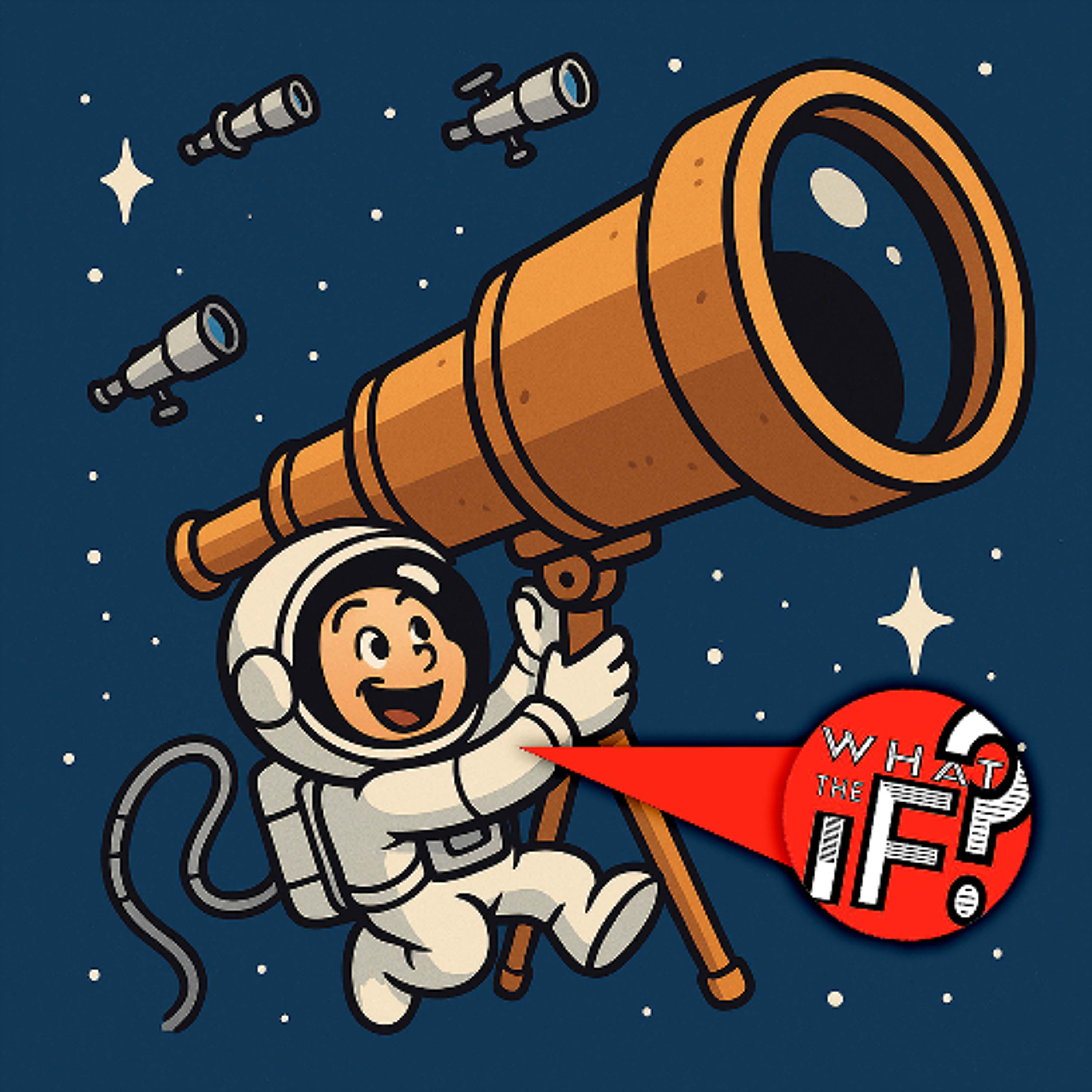
BIG Telescopes! episode artwork

EPISODE · Jul 25, 2025 · 27 MIN

BIG Telescopes!

from What The If? · host Philip Shane, Matt Stanley, Gabrielle Paniccia

What the if we just kept making telescopes bigger and bigger until they're the size of entire planetary orbits? Starting with the new Vera Rubin Observatory's 21-foot camera that immediately spotted 2,000 asteroids, explore a world where astronomers drop telescopes throughout Earth's orbit to create a synthetic lens 200 million miles wide. Discover how gravitational lenses could let you see taxi cabs on distant planets, why you'd need to be a billion miles from the Sun to use it as a magnifying glass, and how synthetic aperture telescopes work like having two eyes but separated by the width of solar systems. From spotting individual continents on exoplanets to taking year-long exposure photographs of alien worlds, turns out the universe's ultimate camera might already be built into the fabric of space itself. Based on "Earth's Largest Camera Takes Three Billion Pixel Images of the Night Sky" by Jonathan Corum and Kenneth Chang, published in The New York Times on June 19, 2025: https://www.nytimes.com/interactive/2025/06/19/science/rubin-observatory-camera.html?unlocked_article_code=1.XU8.oT2z.kiE9AZtjeDDr&smid=url-share --- Find out more about Gaby's science fiction short story! Here are the links for the anthology. The physical copy can be ordered here : https://www.neonhemlock.com/books/luminescent-machinations-queer-tales-of-monumental-invention The ebook can be ordered here: https://www.neonhemlock.com/ebooks/luminescent-machinations-queer-tales-of-monumental-invention

Episode metadata supplied by the publisher feed · Published Jul 25, 2025

What the if we just kept making telescopes bigger and bigger until they're the size of entire planetary orbits? Starting with the new Vera Rubin Observatory's 21-foot camera that immediately spotted 2,000 asteroids, explore a world where astronomers drop telescopes throughout Earth's orbit to create a synthetic lens 200 million miles wide. Discover how gravitational lenses could let you see taxi cabs on distant planets, why you'd need to be a billion miles from the Sun to use it as a magnifying glass, and how synthetic aperture telescopes work like having two eyes but separated by the width of solar systems. From spotting individual continents on exoplanets to taking year-long exposure photographs of alien worlds, turns out the universe's ultimate camera might already be built into the fabric of space itself. Based on "Earth's Largest Camera Takes Three Billion Pixel Images of the Night Sky" by Jonathan Corum and Kenneth Chang, published in The New York Times on June 19, 2025: https://www.nytimes.com/interactive/2025/06/19/science/rubin-observatory-camera.html?unlocked_article_code=1.XU8.oT2z.kiE9AZtjeDDr&smid=url-share --- Find out more about Gaby's science fiction short story! Here are the links for the anthology. The physical copy can be ordered here : https://www.neonhemlock.com/books/luminescent-machinations-queer-tales-of-monumental-invention The ebook can be ordered here: https://www.neonhemlock.com/ebooks/luminescent-machinations-queer-tales-of-monumental-invention

PodParley-generated summary based on available episode metadata and transcript content.

NOW PLAYING

BIG Telescopes!

0:00 27:27

No transcript for this episode yet

We transcribe on demand. Request one and we'll notify you when it's ready — usually under 10 minutes.

Frequently Asked Questions

How long is this episode of What The If??

This episode is 27 minutes long.

When was this What The If? episode published?

This episode was published on July 25, 2025.

What is this episode about?

What the if we just kept making telescopes bigger and bigger until they're the size of entire planetary orbits? Starting with the new Vera Rubin Observatory's 21-foot camera that immediately spotted 2,000 asteroids, explore a world where astronomers...

Can I download this What The If? episode?

Yes, you can download this episode by clicking the download button on the episode player, or subscribe to the podcast in your preferred podcast app for automatic downloads.
URL copied to clipboard!