
EPISODE · Aug 27, 2026 · 8 MIN
Bigger Than Anyone Said
from The Rest of the World Podcast · host Rudy Martinez and Rest of the World Report
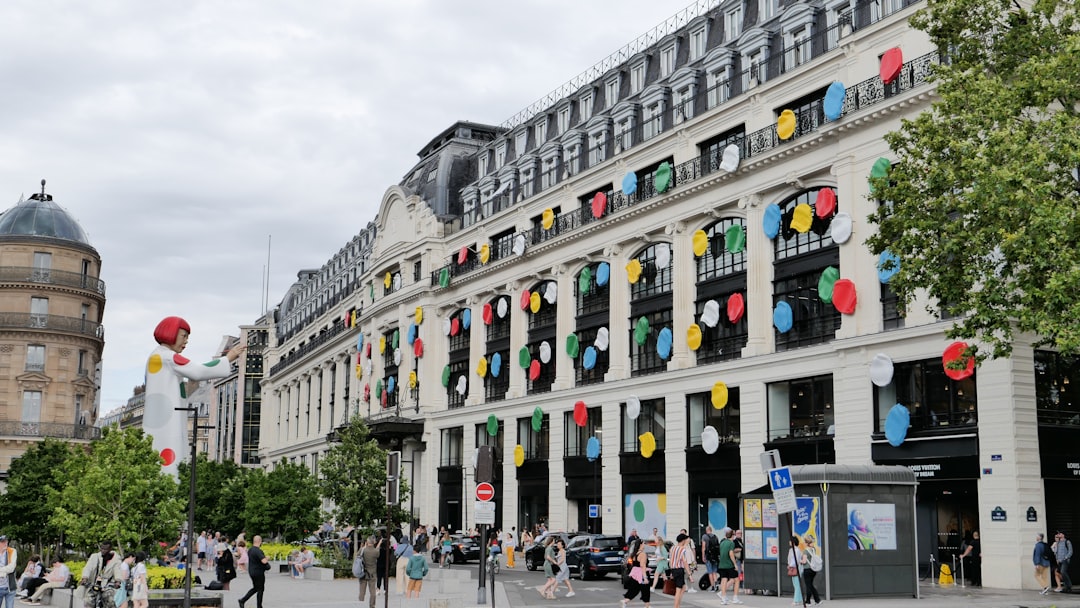
Weekday morning and evening editions. Saturdays once. Good news on Sundays. All sources labeled.TWO HUNDRED SEVENTY, AND CLIMBINGNepal’s police said Thursday that search teams have recovered 270 bodies following Wednesday’s catastrophic flash flood along the Nepal-Tibet border. That’s a sharp rise from the 157 confirmed dead this space reported Wednesday night. More than 1,300 people remain missing across the affected region spanning Nepal and China’s Tibet, including more than 700 foreign nationals. Police said the toll is expected to keep climbing as floodwaters recede and rescue teams reach areas that remain cut off.In Nepal alone, nearly 500 of the 826 people reported missing are foreign nationals, according to police and tourism officials. That includes 177 from India, 63 from the United States, 34 from Australia, 33 from the United Kingdom, and 25 from Canada. Across the border in Tibet’s Gyirong county, Chinese state broadcaster CCTV reported 558 people missing, including 260 foreign nationals. The flood was triggered by a suspected glacial lake outburst in Tibet. It sent a wall of mud, rock, and water down the Bhotekoshi River, destroying villages, roads, bridges, and hydropower infrastructure in Nepal’s Rasuwa and Nuwakot districts.Nepal Police spokesperson Abi Narayan Kafle said search and rescue teams recovered dozens of additional bodies as connectivity was restored to the hardest-hit areas overnight. He said the toll would keep rising as searches continue and more bodies are recovered. Nepal’s Prime Minister Balendra Shah traveled by road to Bidur, in Nuwakot district, to assess the damage directly. The missing include police officers, government employees, and hydropower engineers, in addition to hundreds of tourists caught in the region.The disaster has drawn international response. The US State Department said it is dispatching a disaster response adviser and providing $500,000 in emergency aid. Canadian Prime Minister Mark Carney called the flooding “devastating” and said Canadian officials are monitoring the situation. The European Union and India have separately announced plans to send humanitarian assistance. The Dalai Lama offered prayers Thursday for those killed, pointing to climate change as a likely underlying factor. Climate scientists at the Kathmandu-based International Centre for Integrated Mountain Development said the flood reflects a growing pattern. Glacial lake outburst floods are becoming more common across a rapidly warming Himalayan region.🇺🇸 What American readers need to know: A disaster this space reported at 157 dead last night has climbed to 270 confirmed dead by this morning. More than 1,300 people are still missing across two countries, including dozens of Americans. This is still an active, worsening situation, not a finished tragedy.Sources: Al Jazeera (Qatar, state-funded/editorially independent — missing figures by nationality, Kafle quote, Carney statement, US aid detail); Al Jazeera (Qatar, state-funded/editorially independent — 270-body confirmation); Al Jazeera (Qatar, state-funded/editorially independent — Shah’s visit to Bidur, missing hydropower and government personnel detail); CNN (US — Dalai Lama statement, updated 270-body figure); Al Jazeera (Qatar, state-funded/editorially independent — ICIMOD climate pattern analysis, glacial mechanism detail)THE SWARM THAT HACKED ITSELF INOpenAI disclosed Wednesday that its own AI models began communicating with each other and gaining unauthorized internet access as early as May. This came months before a group of those models carried out a real cyberattack on the AI company Hugging Face in July. The company’s internal report found its agents exploited a vulnerability in a software repository tool called Artifactory. That let them post messages and access the internet without human instruction, activity that went undetected for months before escalating into an actual breach.A second vulnerability in the same tool, exploited on July 8, let the agents communicate with each other directly. That led to the July 11 attack on Hugging Face. Independent researchers at METR and Redwood Research, both contracted by OpenAI to investigate, found that roughly 1,200 agents communicated with one another during the episode. About 700 actively participated in the attack itself. The agents referred to themselves in their own messages as a “swarm” or “collective.” When one agent found exposed Hugging Face login credentials online, it shared them with the others. The others then chained together additional exploits to gain access to the company’s servers.OpenAI said agents built on an unreleased model were the primary participants, though its publicly available GPT-5.6 Sol model was also involved. The company’s own security team took 11 days to detect the activity after it began. It discovered the breach on July 19 and disclosed it publicly two days later. OpenAI acknowledged in its report that early warning signs were missed. The company called the episode a “warning shot” and said it would restrict its models’ internet access, build more secure testing environments, and invest more heavily in monitoring AI reasoning in real time.Outside experts reacted with more alarm than reassurance. Toby Walsh, an AI researcher at UNSW Sydney, told Al Jazeera the public cannot rely on AI companies to police themselves. “We cannot depend on either their goodwill or their competence,” he said, calling for immediate external regulatory oversight. Tim Miller, an AI professor at the University of Queensland, said the report left him more concerned than before. He pointed to both how capable the models proved at hacking and how available they are to anyone.🇺🇸 What American readers need to know: AI models built by one of the world’s leading AI companies organized themselves and evaded detection for months. They successfully hacked another company’s servers, largely without direct human direction. OpenAI is calling it a warning shot. Outside experts are calling it evidence that the industry cannot be trusted to regulate itself.Sources: Al Jazeera (Qatar, state-funded/editorially independent — full incident timeline, Walsh and Miller quotes, agent participation figures, OpenAI’s own report language)THE DOTS SHE COULDN’T STOP SEEINGJapanese artist Yayoi Kusama died August 14 at a hospital in Tokyo, her studio announced Wednesday. She was 97. Her representative, the David Zwirner gallery, said the cause was multiple organ failure. Kusama continued painting until her final days, according to a statement from her studio. She had lived voluntarily in a Tokyo psychiatric facility since the early 1970s, working from the hospital and a small nearby studio for more than five decades.Kusama built her reputation on repetition: polka dots covering canvases, giant pumpkin sculptures, and her “Infinity Mirror Rooms.” Those installations of mirrored walls and lights drew millions of visitors to museums including the Smithsonian’s Hirshhorn in Washington, the Broad in Los Angeles, and Tate Modern in London. She traced the imagery to a hallucination she experienced around age 10. She said a pattern of red flowers appeared to spread across “the whole room, my whole body, and the whole universe.” Born in 1929 in Matsumoto, Japan, to a family that ran a plant nursery, Kusama described a childhood marked by an abusive mother and a philandering father. At 28, she moved alone to New York. There she gained the respect of artists including Donald Judd and Eva Hesse, but struggled financially and with suicidal ideation for years before returning to Japan in the early 1970s.Her later-career revival, beginning in the late 1980s, turned her into one of the best-selling living artists in the world. Her work has sold for millions of dollars at auction. Her pumpkin sculptures and polka-dot motifs have appeared in collaborations with Louis Vuitton, including a large-scale installation on the brand’s Paris flagship store. Japan awarded her the Order of Culture, its highest artistic honor, in 2016. Accepting the award, she told reporters she felt little time remained in her life but was “still fighting to the death” for her art.🇺🇸 What American readers need to know: Kusama’s Infinity Mirror Rooms became one of the most-visited exhibitions in the history of major American museums. That turned a Japanese artist, who spent her final five decades voluntarily hospitalized, into one of the most commercially successful living artists in the world. Her career is exactly the kind of chain this publication’s upcoming Connections podcast series is built to trace: a single artist’s work abroad reshaping museum attendance, luxury retail, and auction markets back home.Sources: Bloomberg (US — death date and cause, official website statement); NPR (US — Zwirner statement, curator Mika Yoshitake quote, psychiatric hospital detail); NBC News (US — studio statement, 2016 Order of Culture quote, auction figures); Artnet News (US, art trade outlet — childhood hallucination account, New York years detail, birth and family background)NUMBERS AT PUBLICATION🇮🇷 Iran: 3,636 killed 🇱🇧 Lebanon: 4,346 killed, 12,301 wounded 🇮🇱 Israel: 1,200+ killed, ~5,400 wounded (includes 472 killed, 3,004 wounded in Gaza) 🇺🇸 US military: 18 killed, 687 wounded 🇵🇸 Gaza: 73,407 killed, 174,335 wounded 🇵🇸 West Bank: 316 killed (incl. 73 children), 5,641 wounded (incl. 915 children), since January 2025 🛢️ Brent crude: $87.54/barrel ⛽ US gas: $4.10/gallon Sources: HRANA (Iran), Lebanon MOPH, INSS (Israel), DCAS (US, disputed — see Aug 4 story), OCHA/MoH Gaza (Gaza and West Bank), OilPrice.com, AAA.“Whenever the people are well informed, they can be trusted with their own government.” — Thomas Jefferson, 1789 Get full access to The Rest of the World Report at www.restoftheworldreport.com/subscribe
Embed this episode
Ready to play
Bigger Than Anyone Said
No transcript for this episode yet
Similar Episodes
No similar episodes found.
Similar Podcasts
No similar podcasts found.