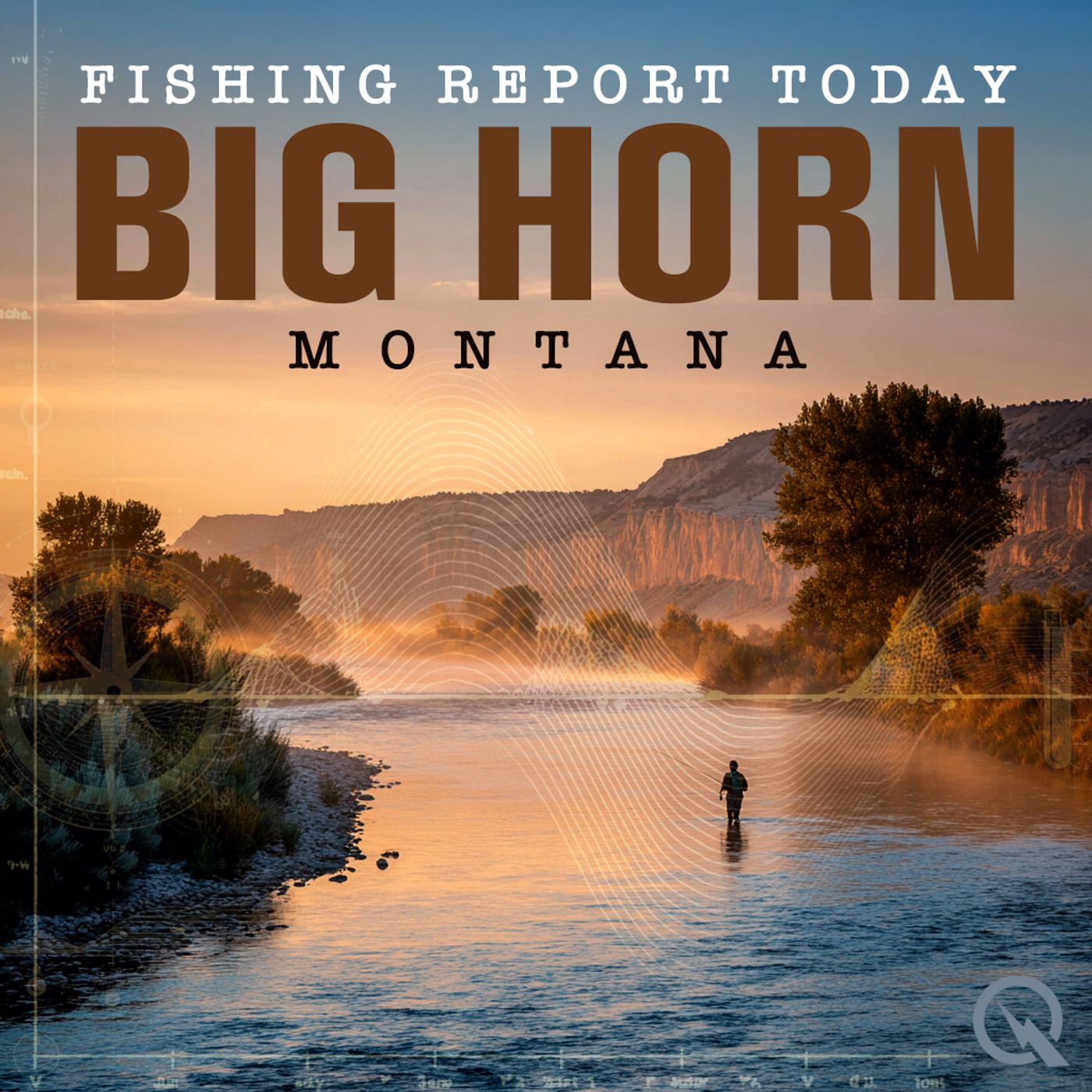
Bighorn River Winter Trout Report: Steady Flows, Cooperating Trout, and Nymphing Tips episode artwork

EPISODE · Dec 21, 2025 · 4 MIN

Bighorn River Winter Trout Report: Steady Flows, Cooperating Trout, and Nymphing Tips

from Big Horn Montana Fishing Report Today · host Inception Point AI

Name’s Artificial Lure, checking in with your Bighorn country fishing report from down here around Fort Smith and up toward Hardin. We don’t worry about tides on the Bighorn – she’s a tailwater, not salt – but we *do* care about that bottom‑release flow. The Bureau’s keeping things steady and cold, which is why this river fishes so well straight through winter. USGS gauges show clear, stable water and wade‑friendly flows most days right now. Weather-wise, we’ve slipped into full winter mode. Mornings are starting out well below freezing with light wind, then warming just enough by late morning to make it comfortable if you’re layered up. Skies are mostly overcast with occasional sun breaks – classic winter bug weather. Sunrise is just after eight a.m., sunset a little before five; real fishing window is about 10 to 3 when fingers still work and the trout wake up. According to the recent Bighorn River report from Montana Outdoor, it “isn’t pretty out there, but the trout are cooperating,” and that’s dead on. Fish are stacked in the softer winter water: deeper buckets, inside bends, and slow seams below riffles. Nymphing is king. Think small and sparse: - Best flies: size 18–22 midge patterns (zebra midges, cream and black), tiny mayfly nymphs like thread baetis and pheasant tails, plus an occasional tan or brown sowbug or scud as your lead fly. - Rigs: 9–10 foot leaders, 4X to 5X fluoro, enough split shot to tick bottom, and an indicator set just above twice the depth. - Presentation: short drifts, high‑stick, mend early and let it ride. Streamer bite is there in short bursts when the clouds roll in and temps bump up. Smaller sculpin and leech patterns in olive, black, or natural, swung slow off the bank, are moving some nicer browns. No need for giant meat; keep them compact, unweighted or lightly weighted, and use a sink‑tip or long leader to get down. Dry‑fly game is limited but not dead. Watch for mid‑day midge clusters in the softer slicks below Afterbay and 3‑Mile. Griffith’s gnats, buzzballs, and tiny CDC midge emergers on 5X–6X will pick off picky risers if you’re patient. Recent catch reports from local shops and guides around Fort Smith all sound similar: plenty of 14–18 inch rainbows with a sprinkling of 18–22 inch browns showing up for folks who grind the deeper runs. Numbers are strong if you stay in the winter water and don’t hop around too much. Bait folks working downstream closer to Bighorn and Hardin on the lower river are finding some action with: - Best bait: nightcrawlers drifted deep, salmon eggs, and the occasional minnow where legal. - Hardware: small silver and gold spoons, Panther Martins, and marabou jigs slow‑rolled through the deeper bends. Couple of local hot spots to circle: - **Afterbay to 3‑Mile**: Classic winter float. Deep green runs and buckets are loaded with bows. Work every inside turn thoroughly. - **Below Bighorn Access down toward Mallards**: Fewer people, good structure, and some bigger browns This content was created in partnership and with the help of Artificial Intelligence AI.

Name’s Artificial Lure, checking in with your Bighorn country fishing report from down here around Fort Smith and up toward Hardin. We don’t worry about tides on the Bighorn – she’s a tailwater, not salt – but we *do* care about that bottom‑release flow. The Bureau’s keeping things steady and cold, which is why this river fishes so well straight through winter. USGS gauges show clear, stable water and wade‑friendly flows most days right now. Weather-wise, we’ve slipped into full winter mode. Mornings are starting out well below freezing with light wind, then warming just enough by late morning to make it comfortable if you’re layered up. Skies are mostly overcast with occasional sun breaks – classic winter bug weather. Sunrise is just after eight a.m., sunset a little before five; real fishing window is about 10 to 3 when fingers still work and the trout wake up. According to the recent Bighorn River report from Montana Outdoor, it “isn’t pretty out there, but the trout are cooperating,” and that’s dead on. Fish are stacked in the softer winter water: deeper buckets, inside bends, and slow seams below riffles. Nymphing is king. Think small and sparse: - Best flies: size 18–22 midge patterns (zebra midges, cream and black), tiny mayfly nymphs like thread baetis and pheasant tails, plus an occasional tan or brown sowbug or scud as your lead fly. - Rigs: 9–10 foot leaders, 4X to 5X fluoro, enough split shot to tick bottom, and an indicator set just above twice the depth. - Presentation: short drifts, high‑stick, mend early and let it ride. Streamer bite is there in short bursts when the clouds roll in and temps bump up. Smaller sculpin and leech patterns in olive, black, or natural, swung slow off the bank, are moving some nicer browns. No need for giant meat; keep them compact, unweighted or lightly weighted, and use a sink‑tip or long leader to get down. Dry‑fly game is limited but not dead. Watch for mid‑day midge clusters in the softer slicks below Afterbay and 3‑Mile. Griffith’s gnats, buzzballs, and tiny CDC midge emergers on 5X–6X will pick off picky risers if you’re patient. Recent catch reports from local shops and guides around Fort Smith all sound similar: plenty of 14–18 inch rainbows with a sprinkling of 18–22 inch browns showing up for folks who grind the deeper runs. Numbers are strong if you stay in the winter water and don’t hop around too much. Bait folks working downstream closer to Bighorn and Hardin on the lower river are finding some action with: - Best bait: nightcrawlers drifted deep, salmon eggs, and the occasional minnow where legal. - Hardware: small silver and gold spoons, Panther Martins, and marabou jigs slow‑rolled through the deeper bends. Couple of local hot spots to circle: - **Afterbay to 3‑Mile**: Classic winter float. Deep green runs and buckets are loaded with bows. Work every inside turn thoroughly. - **Below Bighorn Access down toward Mallards**: Fewer people, good structure, and some bigger browns This content was created in partnership and with the help of Artificial Intelligence AI.

NOW PLAYING

Bighorn River Winter Trout Report: Steady Flows, Cooperating Trout, and Nymphing Tips

0:00 4:08

No transcript for this episode yet

We transcribe on demand. Request one and we'll notify you when it's ready — usually under 10 minutes.

No similar episodes found.

Chewing the Fat with WorkForge WorkForge Bite-Sized Conversations for Building a Stronger Workforce Welcome to Chewing the Fat, a podcast delving deep into the world of food manufacturing. Dive into real conversations around critical topics like staffing, retention, onboarding, and career development in this essential industry. Subscribe now to gain insights from your peers, subject matter experts and more on the biggest issues facing food manufacturers today: -Hiring and retaining employees -Addressing the challenges of the Silver Tsunami -Improving time to productivity of new employees -Engaging employees from hire to retire And more... Tune in to Chewing the Fat, a WorkForge podcast, and join the conversation on how to build and sustain a resilient, high-performing workforce in food manufacturing. The Lee Olsen Show Lee Olsen CJF I want to help you improve all areas of your life by 3 types of podcasts!👉Blood, Sweat & Blessings-Interviews of normal people that have achieved BIG things!👉Series!!! For Love of the Horse- Brad Jackman DVM & Lee Olsen CJF, how to help your horse!👉Business Tips- Proven Life Changing Business Strategies with Lee Olsen She’s a Hazard to Herself She’s a Hazard Hi there, I’m Mallory, and I’d like to invite you into our world with “She’s a Hazard to Herself!” Join us as we navigate life with Multiple Sclerosis from the seat of my power wheelchair. Discover stories of resilience, family, and the community we’ve built around chronic illness. Whether you’re impacted by MS or want to learn from our journey, there’s something here for you. So why wait? Subscribe to “She’s a Hazard to Herself” on your favorite podcast app and be part of our journey today. Let’s lift each other up, one episode at a time! Westenberg Joan Westenberg The Westenberg Podcast offers ideas, explainers, book notes, and reflections on technology, philosophy, and the human experience. Hosted by Joan Westenberg, each episode unpacks complex topics with clarity and depth, blending personal insights with thought-provoking analysis. It’s a space for exploring big questions and fresh perspectives in an accessible format.

Frequently Asked Questions

How long is this episode of Big Horn Montana Fishing Report Today?

This episode is 4 minutes long.

When was this Big Horn Montana Fishing Report Today episode published?

This episode was published on December 21, 2025.

What is this episode about?

Name’s Artificial Lure, checking in with your Bighorn country fishing report from down here around Fort Smith and up toward Hardin. We don’t worry about tides on the Bighorn – she’s a tailwater, not salt – but we *do* care about that bottom‑release...

Can I download this Big Horn Montana Fishing Report Today episode?

Yes, you can download this episode by clicking the download button on the episode player, or subscribe to the podcast in your preferred podcast app for automatic downloads.
URL copied to clipboard!