
EPISODE · Sep 9, 2025 · 3 MIN
Biography Flash: Satya Nadella's AI Revolution at Microsoft | Optical Breakthroughs and White House Influence
from Satya Nadella - Biography Flash · host Inception Point AI
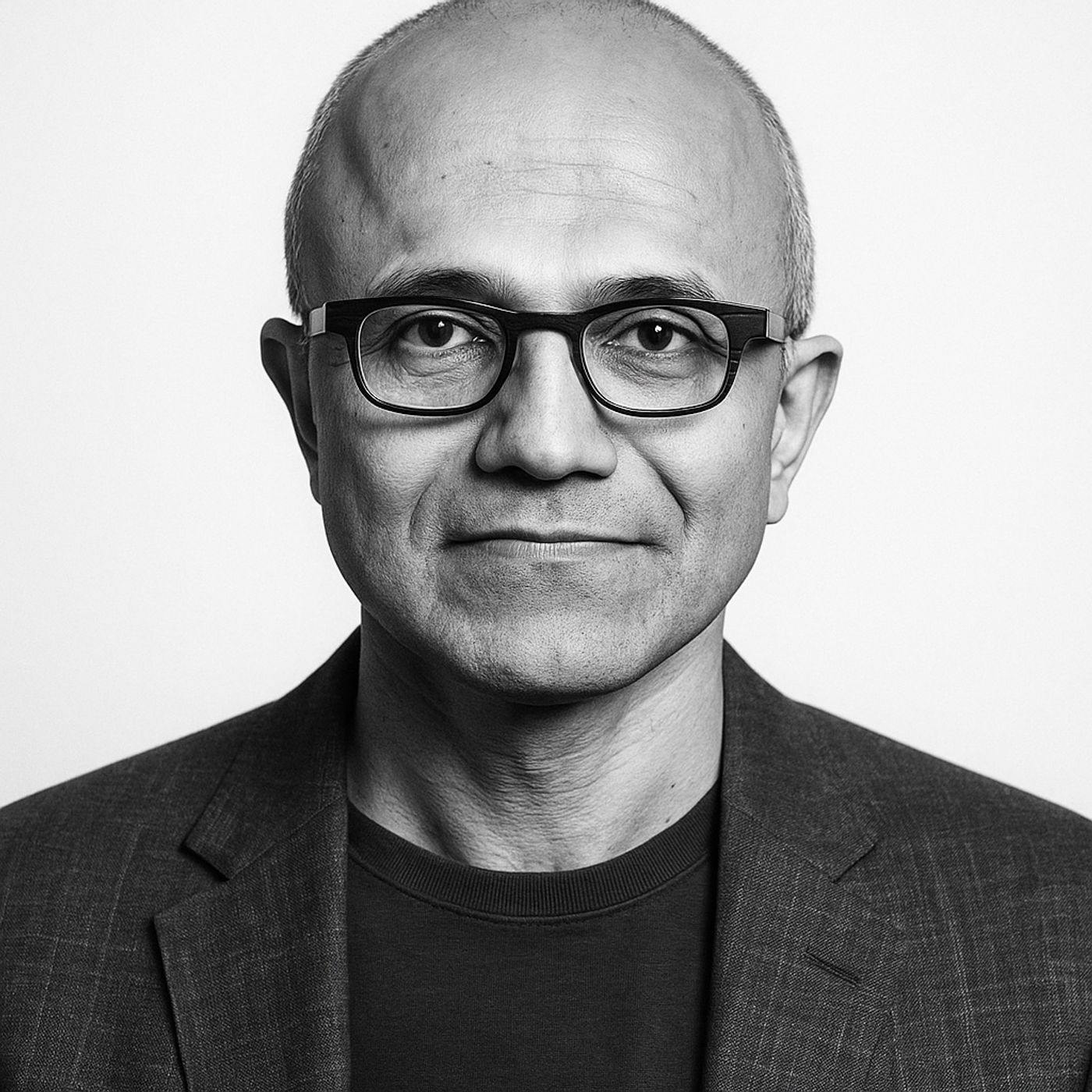
Satya Nadella Biography Flash a weekly Biography. Satya Nadella, the influential CEO of Microsoft, has had an unusually dynamic few days with developments that cut straight to the heart of both his leadership style and Microsoft’s technological innovation. Let’s start with the major news headlines that grabbed attention across the tech world. Microsoft, under Nadella’s stewardship, announced a game-changing breakthrough in optical computing. In a post on X, the platform formerly known as Twitter, Nadella celebrated Microsoft Research’s publication in Nature, highlighting an analog optical computer that uses light rather than electricity to perform calculations. Nadella called this innovation a pointer to “new ways to solve complex real-world problems with much greater efficiency” and emphasized its potential for high-impact applications in finance, logistics, and healthcare. The computer was built using widely available components like micro-LEDs and smartphone camera sensors and, according to Microsoft, could solve certain problems up to 100 times faster than conventional digital machines while being dramatically more energy efficient. But that’s not all. Nadella also made headlines for his social media savvy. Over 7 million people engaged with his recent posts on X and LinkedIn, where he shared details about the five AI prompts he personally uses every day through Microsoft Copilot, powered by GPT-5. These prompts help him prep for meetings, track project status, analyze product launch readiness, audit his own time allocations, and summarize communications. His direct involvement with generative AI tools signals a fundamental shift in executive productivity, suggesting AI will soon become a “thinking partner” not just for Nadella, but for leaders everywhere. The reactions to his posts ranged from enthusiastic praise for Copilot’s utility to some user complaints about pop-ups and overintegration, illustrating the ongoing debate around AI in workplace culture. Nadella’s public appearances have also been headline-worthy. At a recent White House dinner with President Trump, Nadella joined elite tech leaders including Bill Gates, Tim Cook, and Mark Zuckerberg. There, he publicly thanked the President for policies that position the U.S. as a global technology leader and called out the importance of “trust” in American technology. Just hours before, Nadella participated in the White House’s AI Education Task Force meeting, where Microsoft announced sweeping commitments to support the Presidential AI Challenge and the AI Education Executive Order. Nadella described AI as “the defining technology of our time” and unveiled major initiatives: twelve months of free Microsoft 365 Personal and Copilot subscriptions for all U.S. college students, open access to LinkedIn Learning’s AI courses for job seekers and educators, and $1.25 million in grants for outstanding teachers. These measures are designed to democratize AI education and skills across America’ This content was created in partnership and with the help of Artificial Intelligence AI.
Embed this episode
NOW PLAYING
Biography Flash: Satya Nadella's AI Revolution at Microsoft | Optical Breakthroughs and White House Influence
No transcript for this episode yet
Similar Episodes
No similar episodes found.
Similar Podcasts
No similar podcasts found.