
EPISODE · Jun 18, 2026 · 4 MIN
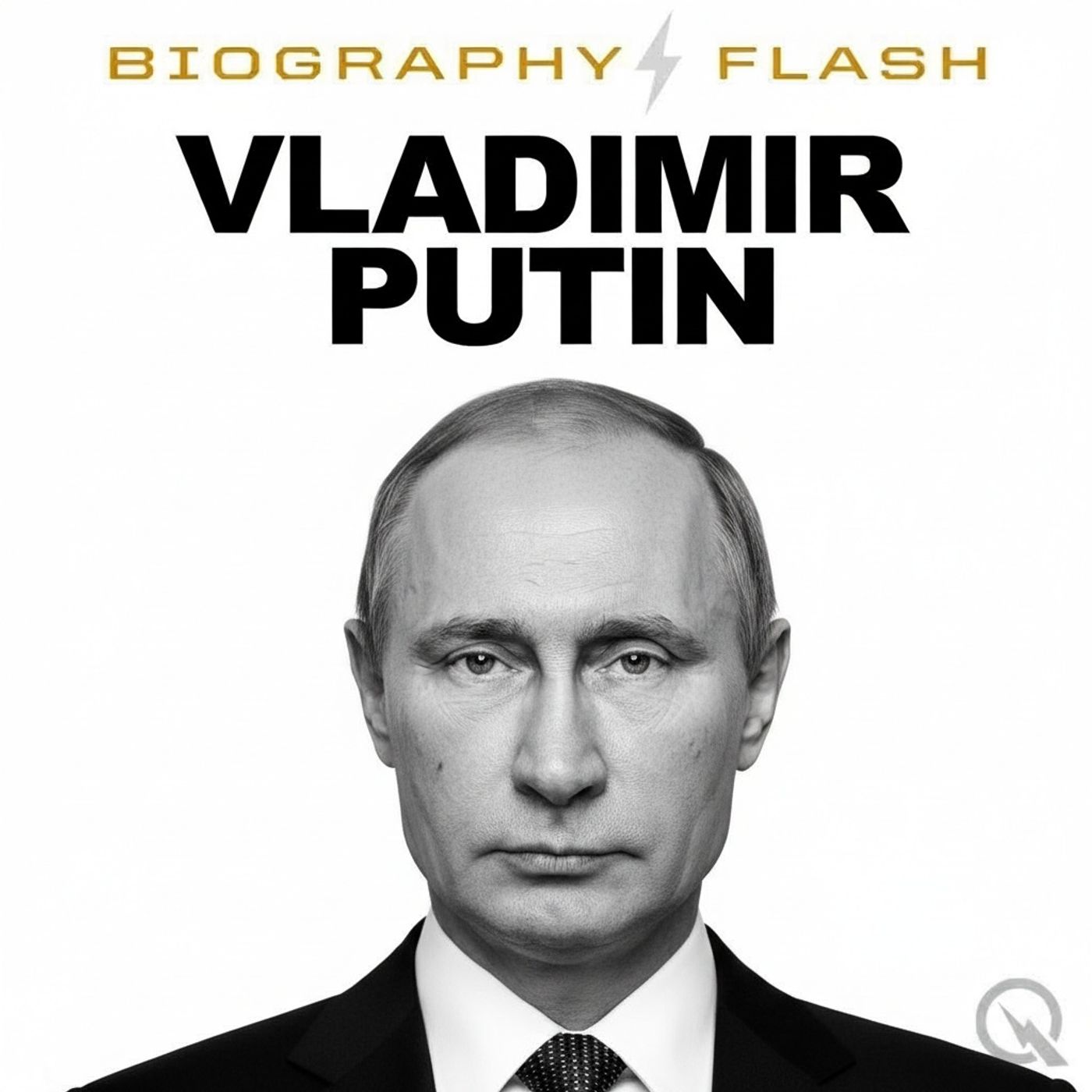
Biography Flash Vladimir Putin Pivots to Asia Weathers Drones and Defies the West
from Vladimir Putin - Biography Flash · host Inception Point AI
Vladimir Putin Biography Flash a weekly Biography. Vladimir Putin has spent the past few days doing what he does best on the world stage: projecting resilience at home while courting new partners abroad, all against the steady drumbeat of war and sanctions. According to coverage from Deutsche Welle, Putin has publicly acknowledged that Ukrainian drone attacks on Russian territory are hitting the economy, especially oil infrastructure, and even forcing the scaling down of public events. In biographical terms, that is a rare admission of vulnerability from a leader who usually insists everything is “under control,” and it underlines how the Ukraine war is now reshaping both his security posture and his public calendar. Commentators note that despite economic strain and pressures on domestic support, he continues to hold power through a mix of propaganda and repression, reinforcing his image as a long‑term survivalist rather than a peacetime manager. On the diplomatic front, the cameras have been focused on Kazan. The Philippine government and Philippine media report that President Ferdinand Marcos Jr. met with Putin on the sidelines of the ASEAN‑Russia Commemorative Summit, marking 50 years of diplomatic relations. In their televised opening statements, Putin highlighted long‑standing “friendship and mutual respect” and pushed for more cooperation in trade, agriculture, and especially energy. Marcos, for his part, stressed food and energy security. For Putin’s biography, this is part of the continuing pivot to Asia narrative: as relations with the West deteriorate, he visibly doubles down on partners in Southeast Asia, trying to prove that Russia is not isolated. Regional outlets also show Putin meeting Brunei’s Sultan Hassanal Bolkiah ahead of the same summit, praising him as “one of the most experienced leaders.” This kind of flattery is classic Putin diplomacy: reinforcing personal ties with long‑standing monarchs and projecting himself as a peer among veteran rulers, which plays well with his cultivated image of staying power. On the rhetorical front, Russian and international clips from his recent public appearances show Putin again framing Russia as standing almost alone against the “collective West” led by NATO, insisting that no one has ever delivered a decisive defeat to Russia and warning outsiders “do not fight Russia.” That line feeds directly into his long‑running biographical arc as the defender of a besieged fortress, and it will likely be quoted in future histories of his rule. Online, the social media chatter is more reflective than revelatory. A widely shared Instagram reel revisits Putin’s past comments to foreign media about the Ukraine war, keeping older confrontational soundbites circulating. Another popular short video shows Donald Trump thanking Xi Jinping and Putin for staying “very neutral” during the Iran conflict, which, while not new policy, keeps Putin’s name in the same breath as other big‑power leaders and reinforces his image as an indispensable geopolitical actor. These pieces are more about narrative maintenance than new moves, but they shape how his persona travels on global feeds. There are also recurring reports from various YouTube and regional news channels about an “emergency briefing” from Putin warning the West against military intervention in Iran. Those segments rely heavily on commentary channels and partial clips; until the Kremlin or major outlets confirm a specific new directive, those dramatic labels should be treated as amplified rhetoric rather than a clearly documented turning point. Finally, Russian and European outlets continue to cover Putin’s irritation with fresh Western sanctions, including those touching even children’s summer camps, which he has dismissed as “nonsense.” It is a small quote with long‑term significance, showing how he weaves sanctions into a broader grievance narrative aimed at rallying domestic sympathy and portraying Russia as unfairly targeted at every level of life. That is the latest chapter in the living biography of Vladimir Putin: still embattled, still performing strength, and still working the phones and photo‑ops to prove he has more friends than enemies. Thank you for listening, and be sure to subscribe so you never miss an update on Vladimir Putin, and search the term Biography Flash for more great biographies. Thanks for listening. This has been a Quiet Please production. Get the best deals https://amzn.to/3ODvOta
Embed this episode
Ready to play
Biography Flash Vladimir Putin Pivots to Asia Weathers Drones and Defies the West
No transcript for this episode yet
Similar Episodes
No similar episodes found.
Similar Podcasts
No similar podcasts found.