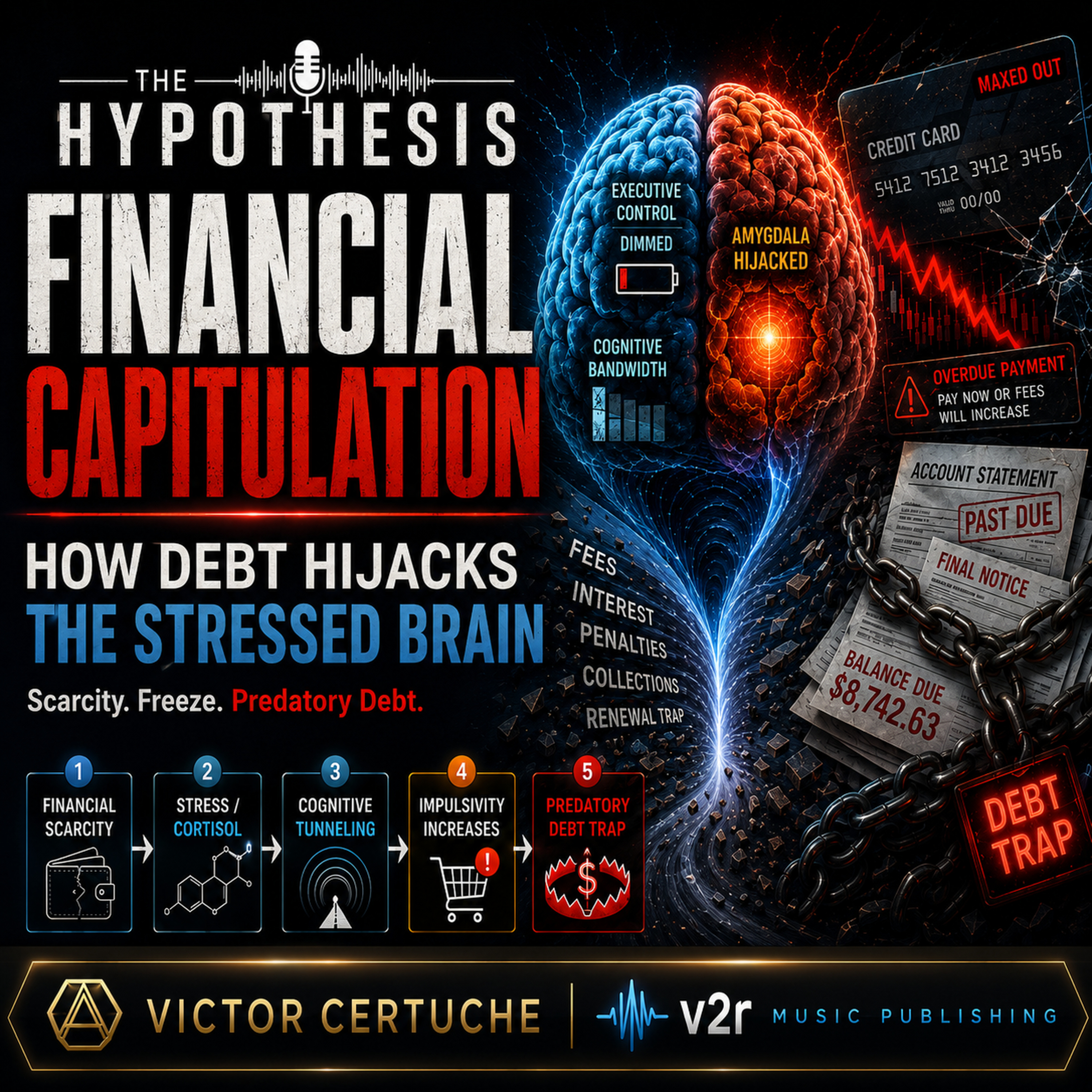
Biologically Bankrupt: How Modern Credit Monetizes the Traumatized Brain episode artwork

EPISODE · Jul 4, 2026 · 54 MIN

Biologically Bankrupt: How Modern Credit Monetizes the Traumatized Brain

from The Hypothesis · host 128596915

Why does looking at a negative bank balance trigger the same physiological panic as facing an actual predator? In this episode, we investigate a provocative hypothesis: that modern credit cards, consumer microloans, and digital "Buy Now, Pay Later" platforms are systematically designed to exploit the cognitive "freeze" states and mental tunneling of financially stressed individuals.We trace how chronic financial anxiety triggers a dorsal vagal shutdown—functionally locking our analytical prefrontal cortex offline and making complex financial planning neurobiologically impossible. Combining insights from evolutionary biology’s "get-it-while-you-can" survival mechanics with the behavioral economics of "shrouded fees" and somatic payment decoupling, we unmask how retail finance monetizes cognitive depletion.Finally, we look at the human side of this dynamic, exploring how historical religious bans on usury and psychological masterpieces like Dostoevsky’s Crime and Punishment have warned us about the devastating toll of debt exploitation for centuries. Tune in to discover how we can shift from blaming individual willpower to demanding structural systems of cognitive and economic safety.

Why does looking at a negative bank balance trigger the same physiological panic as facing an actual predator? In this episode, we investigate a provocative hypothesis: that modern credit cards, consumer microloans, and digital "Buy Now, Pay Later" platforms are systematically designed to exploit the cognitive "freeze" states and mental tunneling of financially stressed individuals.We trace how chronic financial anxiety triggers a dorsal vagal shutdown—functionally locking our analytical prefrontal cortex offline and making complex financial planning neurobiologically impossible. Combining insights from evolutionary biology’s "get-it-while-you-can" survival mechanics with the behavioral economics of "shrouded fees" and somatic payment decoupling, we unmask how retail finance monetizes cognitive depletion.Finally, we look at the human side of this dynamic, exploring how historical religious bans on usury and psychological masterpieces like Dostoevsky’s Crime and Punishment have warned us about the devastating toll of debt exploitation for centuries. Tune in to discover how we can shift from blaming individual willpower to demanding structural systems of cognitive and economic safety.

NOW PLAYING

Biologically Bankrupt: How Modern Credit Monetizes the Traumatized Brain

0:00 54:28

No transcript for this episode yet

We transcribe on demand. Request one and we'll notify you when it's ready — usually under 10 minutes.

No similar episodes found.

No similar podcasts found.

Frequently Asked Questions

How long is this episode of The Hypothesis?

This episode is 54 minutes long.

When was this The Hypothesis episode published?

This episode was published on July 4, 2026.

What is this episode about?

Why does looking at a negative bank balance trigger the same physiological panic as facing an actual predator? In this episode, we investigate a provocative hypothesis: that modern credit cards, consumer microloans, and digital "Buy Now, Pay Later"...

Can I download this The Hypothesis episode?

Yes, you can download this episode by clicking the download button on the episode player, or subscribe to the podcast in your preferred podcast app for automatic downloads.
URL copied to clipboard!