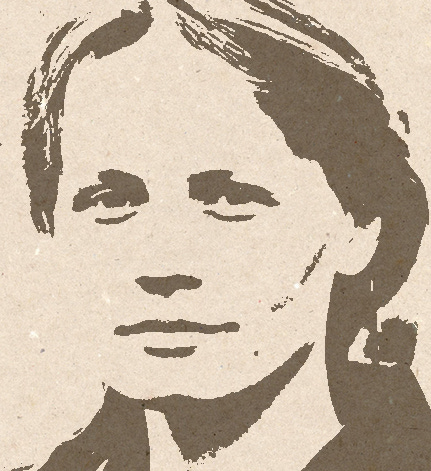
Biotic Pump : Anastasia Makarieva interview
from Climate Water Project Hosted by Alpha Lo
I’m excited in this edition to present a podcast I recorded with Anastasis Makarieva about her work in developing the biotic pump theory, a theory that has gotten a lot of attention in recent years for articulating how forests can bring the rain. The theory describes how forest-evapotranspired water vapor condenses to create a pressure drop that sucks in moisture winds from the ocean. Anastasia Makarieva was working towards her PhD in atmospheric physics in St Petersburg University, when she met physicist Victor Gorshkov. He was doing ground breaking research into how biology modulated the climate and environment to create conditions that support life better. She chose him to become her mentor, and together over the next two and a half decades they would develop a number of theories that furthered this paradigm. In the West in the 1970s, James Lovelock, had been proposing that the earth has a self-regulating feedback loop that helps life create and maintain its own conditions for life. When Lovelock was asked by NASA to look for life on other planets, he came up with the perceptive observation that you could tell of the existence of life by whether the atmosphere was in equilibrium or or not. On earth, gases like oxygen, carbon dioxide, and nitrogen are in nonequilibrium. Geology alone could not create the concentrations of those gases. Microbes, plants, and animals are required. Lovelock proposed that life created the atmospheric composition percentages that was more favorable for life. Lovelock called his idea of a living, self-regulating earth, Gaia. In the East, Victor Gorshkov, who had not heard of Lovelock’s work, was independently working along similar lines. He was working on a systems view of life and earth where climatology, evolutionary biology and genetics were not separate fields. Life evolved climate, and climate evolved life. As Makarieva joined forces with Gorshkov, one of the questions they focused on was the curious nonequilibrium state of water on earth. On other planets, water reached a stationary equilibrium state. For example, on Venus as the planet got hotter, more water evaporated into the air. More water in the air, meant more heating, because water is a greenhouse gas. More heating meant more water evaporating, and so Venus gave rise to a runaway feedback loop until the planet go so hot, that all the water escaped to space. On Mars, it is so cold, that all the water exists in a steady state of ice, never melting. But on earth the water is nonstationary - water vapor will rise, condense, fall as rain, and then rise again. Makarieva and Gorshkov proposed life was helping keep water in this nonequilibrium state on earth. They wrote “Environmental parameters that are favourable for life on Earth are physically unstable. The liquid state of terrestrial hydrosphere, a major prerequisite for functioning of the contemporary living systems, is unstable with respect to spontaneous transition to either complete glaciation of the planetary surface or complete evaporation of the oceans. Without the stabilising biotic impact the environment and climate of Earth would rapidly degrade to a state prohibiting human existence.” Makarieva and Gorshkov wondered if life was helping to bring rain onto the continents. They asked “if organisms can evolve ways to pump oxygen to their body with lungs, is it not also possible that the ecosystem can evolve ways to pump water to where its needed?” They looked at the precipitation data around the globe. Where there were no forests around, rain drops exponentially as it moves inland. Where forests were around, for example, in the bioregions that contain the Amazon rainforests, the Congo rainforests, and the boreal forests of Russia, the amount of rain does not drop as it moves inland. Makarieva and Gorshkov figured the forests were attracting the rain. The Biotic Pump The mechanism they proposed for how forests attracted rain involved the high amount of water vapor evapotranspired by the forests. After rising into the atmosphere, water vapor condenses, leaving a partial vacuum (other gases are still present) where it once was. Water vapor takes up 2000 times the room liquid water does. The pressure drop created sucks in water moisture containing wind from the ocean. Pressure drops can be quite powerful. Here’s an experiment you can do at home to demonstrate this. Fill a bottle with boiling water, then pour the water all out. Stick a straw in it with a sealant for the bottle. Hot water vapor is trapped in the bottle. Turn the bottle over, with the straw sticking into a bowl of water. The hot water vapor inside the bottle cools, which lowers the pressure inside the bottle. The water in the bowl then gets sucked up through the straw into the upside down bottle. Here is a Youtube video illustrating this phenomena: Another experiment to demonstrate the power of water vapor pressure dropping was done by BBC show Earth Lab in a TV segment they did on Newcommen steam engines (the thermodynamic work cycle of the atmospheric circulation loop as the ocean wind blows into land and then back out again may have a lot of similarity to the thermodynamic work cycle of a Newcommen steam engine). In these steam engines when the water vapor condenses it creates a partial vacuum. The show filled a steel oil drum with steam, and then cooled the steam. The oil drum imploded dramatically (scaring the hosts). Below is a picture of the before and after of the oil drum. There were many injuries in the early days of steam engine development. Atmospheric Circulations In an atmospheric circulation loop, water vapor evaporates from the ocean, blows inland, rises up to create clouds, and then flows back out to sea. The conventional meteorology story for what drives this atmospheric circulation is that the land is hotter than the ocean so air will rise, creating a place of lower pressure which then sucks the winds in. Here for example is a diagram from introductory teaching materials. Makarieva and Gorshkov agreed with the basics of this story, but said there was a lot more to it - that it was also important to take into the partial vacuum force created by the condensing water vapor. The pressure drop induced was key in understanding the atmospheric circulation. The biotic pump theory was published in a number of refereed journals. It sometimes was referred to by name as condensation induced atmospheric dynamics. Some of the later papers were published in collaboration with scientists from other universities - Andre Nobre, Ba-Lian Li, Douglas Sheil, Andrei Nefiokov, and Peter Bunyard. As the biotic-pump/condensation-induced-atmospheric-dynamics theory became more well known, some critics argued that the latent heat released by the water vapor condensing would be an even larger effect than the pressure drop from the water vapor condensing. The biotic pump may happen, but it’s a small effect compared to the laten heat effect, they said. Latent heat is the heat given off when water vapor turns to liquid. When thunderstorms begin, you can see a cumulus cloud get taller and taller. Introductory meteorology courses teaches that this is because there is so much water moisture releasing heat when they condense that the air currents start rising up, and the cloud gets taller. A thunderstorm cloud can rise as high as 6km. So latent heat is a significant effect. (The pressure drop might also play a role here in the cloud rise, something that conventional meteorology doesn’t mention.) Makarieva and Gorshkov agree that the latent heat effect is bigger than the pressure drop in isolated systems, but they argue that when you take into account the whole atmospheric loop, then the pressure drop becomes more important than the latent heat. This is because the more heat that is added to air, the longer it will take for the air to cool down so it can sink again on. So latent heat increases the speed on the upward part of the atmospheric loop, but it decreases the s… This is a public episode. If you'd like to discuss this with other subscribers or get access to bonus episodes, visit climatewaterproject.substack.com/subscribe
Embed this episode
No transcript yet.