
EPISODE · Feb 3, 2026 · 16 MIN
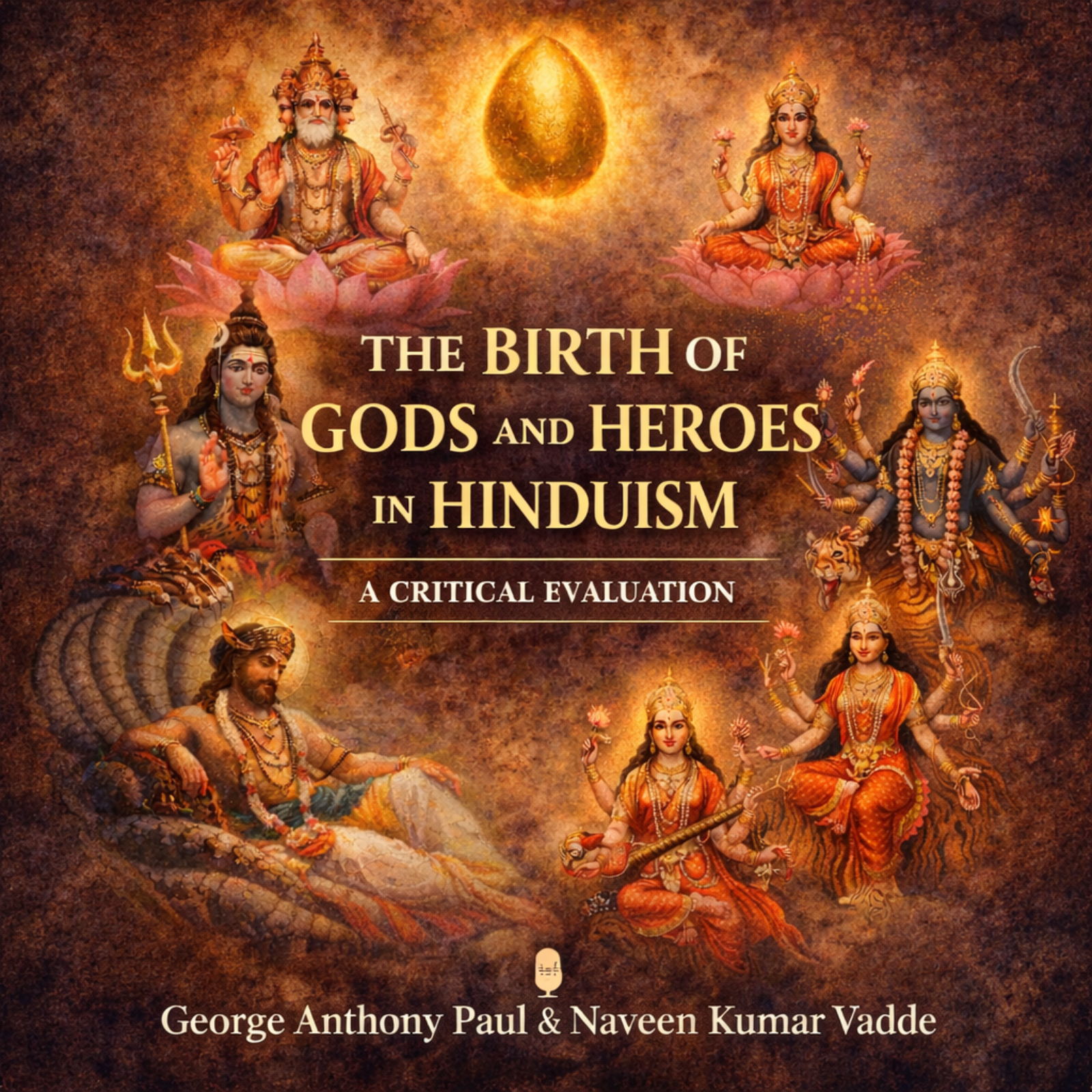
Birth 2: The Cosmic Omelet—Brahma from the Golden Egg (Hiranyagarbha)
from The Birth of Gods and Heroes in Hinduism: A Critical Evaluation
Episode Notes: Birth 2: The Cosmic Omelet—Brahma from the Golden EggEpisode Summary: In this episode, we investigate the second major creation narrative of Brahma: his emergence from the Hiranyagarbha, or the primordial Golden Egg. According to the Manusmṛti and the Rig Veda, the "Self-existent Lord" placed a seed in the causal waters that became a glowing egg, from which Brahma was born after a divine year.We subject this "Cosmic Omelet" to a rigorous scientific and logical prosecution. How can an egg exist without a mother to provide calcium and nutrients? How did an embryo survive submerged in water without oxygen? Furthermore, we explore the internal contradictions of Hindu mythology—if Brahma is born from an egg in one story and a navel-lotus in another, which one is true, and why do they negate each other’s claims to supremacy?Key Topics Covered:The Hiranyagarbha Narrative: Examining the scriptural basis in Manusmṛti 1.9–12 and the famous Rig Veda hymn.The Biological Prosecution:The Maternal Void: Why an egg without a mother violates the fundamental laws of biogenesis and mass conservation.Mitochondrial Impotence: The scientific impossibility of a complex organism existing without maternal Mitochondrial DNA (mDNA).The Atmosphere of the Egg: Applying Fick's Law of Diffusion to show why a "Creator" would have asphyxiated in a submerged cosmic shell.Mechanical Impossibilities: The sheer physical force required for a newborn to shatter a "cosmic" shell and separate the heavens from the earth.The Logical Trap of Self-Creation: The "pre-existence paradox"—how can a being place a seed to cause its own birth if it doesn't already exist?The Mythic Conflict: How the "Golden Egg" story and the "Navel-Lotus" story represent a direct conflict in divine hierarchy between Brahma and Vishnu.The Biblical Contrast: Comparing the "Shell-Born" god to the "Uncreated Eternal" (Exodus 3:14) who does not "become" God but eternally is God.References in this Episode:Hindu Scriptures: Manusmṛti, Matsya Purāṇa, Ṛg Veda (Maṇḍala 10, Hymn 121).Scientific Principles: Biogenesis, Mitochondrial inheritance, Laws of Thermodynamics, Fick's Law of Diffusion.Biblical Verses: Exodus 3:14 (The Self-Existent "I AM"), The Incarnation of Christ.
Embed this episode
Ready to play
Birth 2: The Cosmic Omelet—Brahma from the Golden Egg (Hiranyagarbha)
No transcript for this episode yet
Similar Episodes
No similar episodes found.
Similar Podcasts
No similar podcasts found.