
EPISODE · Feb 5, 2026 · 12 MIN
Birth 7: The Daughter‑Wife — Sarasvatī/Gāyatrī from Brahmā’s Body
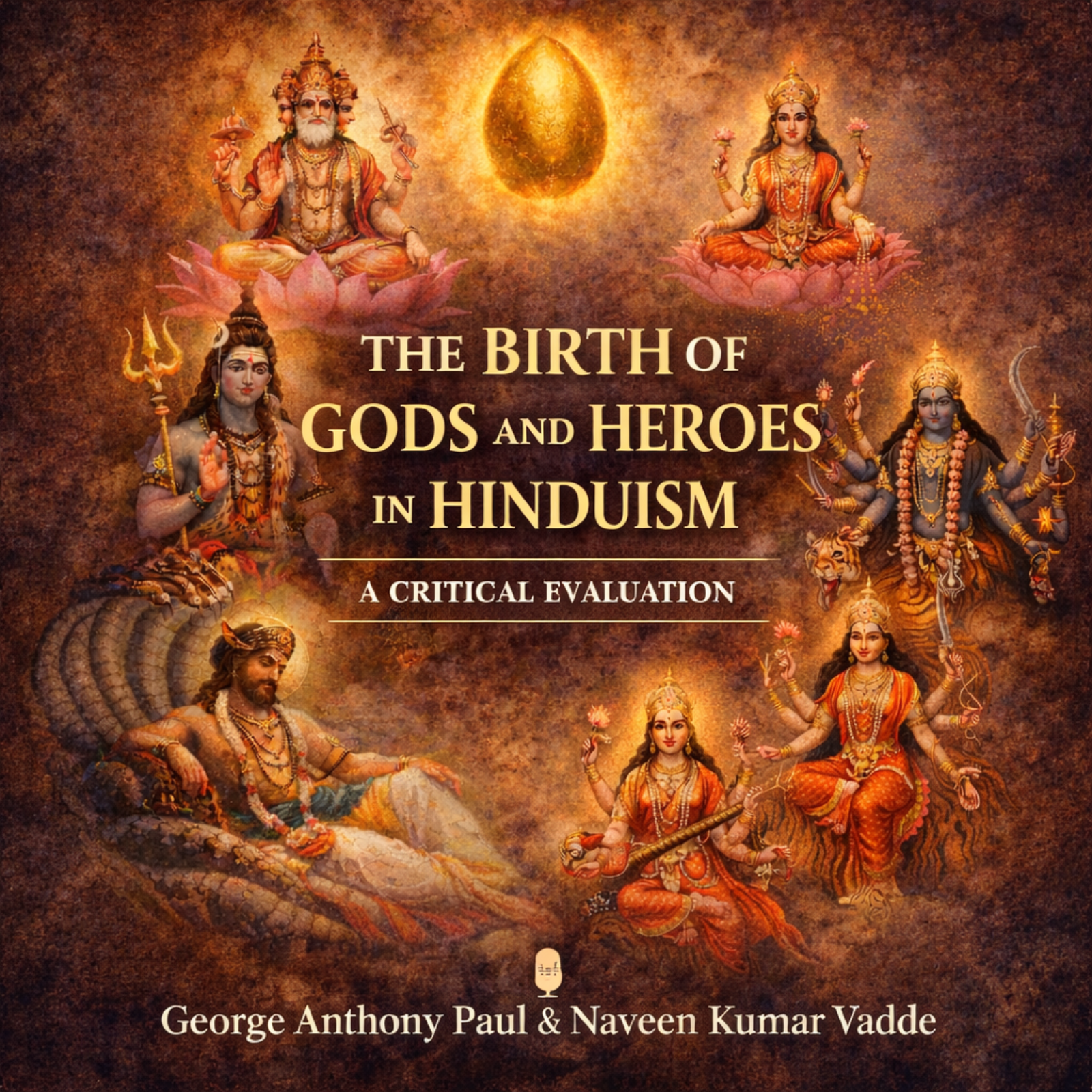
from The Birth of Gods and Heroes in Hinduism: A Critical Evaluation
The Daughter‑Wife — Sarasvatī/Gāyatrī from Brahmā’s BodyEpisode Summary: In the final and perhaps most controversial installment of our "Births of the Gods" series, we examine the narrative of "Auto-Bifurcation." According to the Manusmṛti, Matsya Purāṇa, and Śrīmad‑Bhāgavatam, Brahmā—feeling lonely and desiring to populate the world—literally split his own body in half to create a female counterpart, variously identified as Sarasvatī, Gāyatrī, or Satārūpā.This episode explores the disturbing scriptural accounts of Brahmā becoming sexually captivated by his own "daughter" (the female half of his own substance), resulting in the sprout of multiple heads to keep her in his lustful gaze. We subject this narrative to a biological and genetic prosecution, investigating the "Genetic Clone Trap" and the "mDNA Void." We also discuss the internal moral rebuke found within the Hindu texts themselves and contrast this lust-driven "split" with the holy, purposeful Incarnation of Jesus Christ.Key Topics Covered:The Scriptural Basis: A deep dive into Manusmṛti 1.32 and Matsya Purāṇa Ch. 3, detailing the physical division of the Creator.The Biological Prosecution:The Cellular-Splitting Paradox: How a complex multi-cellular organism could "unzip" its nervous and skeletal systems into two viable bodies without immediate collapse.The Genetic Clone Trap: Analyzing the chromosomal alchemy required for a male genotype to produce a fertile female clone without a maternal source.The mDNA Void: Why a "self-split" deity lacks the maternal mitochondrial DNA necessary for cellular life.The Physics of Lust: The morphological instability of a deity who sprouts new skulls and brains based on transient emotional states.The Moral Failure: Why even Brahmā’s sons, according to the Bhāgavatam, rebuked their father for this "grotesque" behavior.The Body-Part Hierarchy: The severe irony of a deity who stigmatizes the "foot-born" while engaging in auto-incestuous desire.The Biblical Contrast: Comparing the sexual generation of the Puranas with the Holy Incarnation of the Logos. How Christ’s sacrifice provides universal dignity that transcends the "body-part" hierarchy of the caste system.References in this Episode:Hindu Scriptures: Manusmṛti (Ch. 1), Matsya Purāṇa (Ch. 3), Śrīmad‑Bhāgavatam (3.12).Scientific Principles: Binary fission vs. Multi-cellular biology, Chromosomal Sex (XX/XY), Mitochondrial inheritance, Inbreeding depression.Biblical Verses: John 1 (The Eternal Logos), Luke 1 (The Virgin Birth), Genesis 1 (The Imago Dei).
Embed this episode
Ready to play
Birth 7: The Daughter‑Wife — Sarasvatī/Gāyatrī from Brahmā’s Body
No transcript for this episode yet
Similar Episodes
No similar episodes found.
Similar Podcasts
No similar podcasts found.