
EPISODE · Apr 21, 2026 · 1 MIN
Black Doulas, Maternal Health, and the Erasure We've Never Talked About
from Education is Elevation · host The Conscious Lee
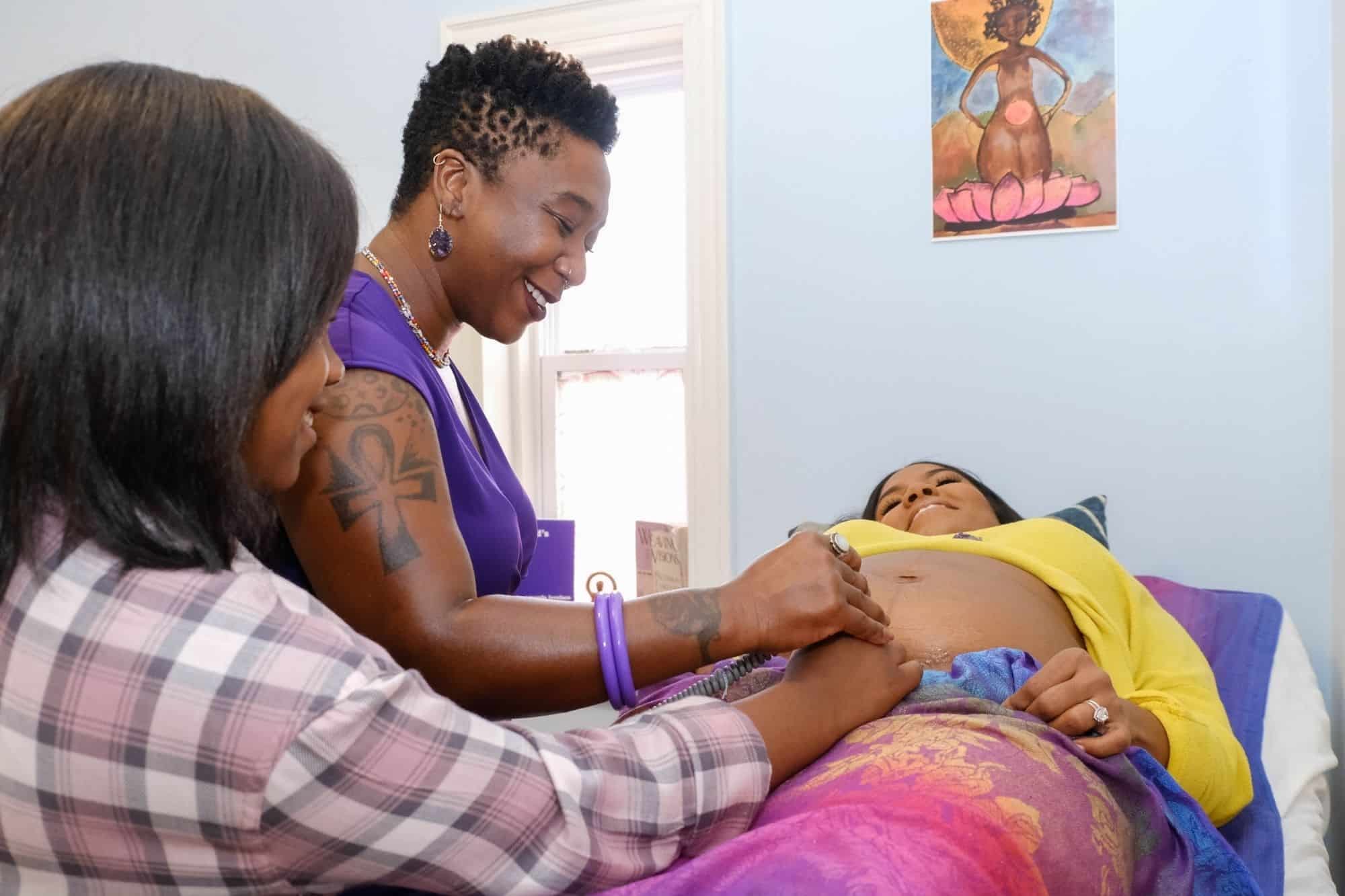
Education Is Elevation is a reader-supported publication. To receive new posts and support my work, consider becoming a free or paid subscriber.This past week I was at the 3rd annual Black Maternal Health Summit in St. Louis. I learned things that should’ve been required curriculum decades ago. The kind of knowledge that makes you sit back and realize what we’ve been robbed of—what generations of Black women were robbed of.Did y’all know that Black doulas and midwives have been a central part of birthing in this country since the 1600s? That’s not a historical footnote. That’s a foundation. But it’s a foundation nobody wants to talk about.When our ancestors were forced into the Middle Passage, they carried something no chains could break: West African birthing knowledge. Generations of inherited expertise. The kind of deep understanding about pregnancy, delivery, and postpartum care that kept communities alive through unimaginable violence. That knowledge didn’t disappear when enslaved Black women arrived on American soil. It transformed. It survived. It became the granny midwives—those respected elders in the rural South who attended to most of the births happening in this country all the way up into the early 20th century.Let that marinate for a second. Most of the births. Black women, relying on other Black women, using African-rooted knowledge to ensure survival in a country determined to see them as disposable.The Medicalization That Changed EverythingHere’s what happened, though. What happened was the medicalization of the birth space. The transformation from women-centered care to men-centered institutions. You see the pattern? Every time we built something that worked—every time Black people created infrastructure, knowledge systems, and care networks that kept us alive—America’s response was to professionalize it, medicalize it, and extract Black people from the center of it.Granny midwives didn’t just deliver babies. They provided comprehensive care. Prenatal support. Delivery. Postpartum care. They accepted payment and goods because—and this is crucial—capitalism does not corner the market on commerce. Black communities had economic systems, knowledge exchange systems, care systems long before Western medicine decided to show up and rebrand everything as “modern.”But when the birth space got medicalized, when it moved from homes and communities into hospitals, when men in white coats started positioning themselves as the “experts,” where did that leave the granny midwives? Marginalized. Criminalized. Pushed to the margins of a system that no longer wanted their knowledge.Resilience Against the MachineryWhat gets me—what really gets me—is the resilience. Despite facing systemic marginalization and criminalization. Despite all the structural racism designed to push them out of practice. Despite a medical establishment that actively worked to delegitimize African-rooted knowledge, these women still provided essential, compassionate care. They still carried their background information forward. They still ensured the safety and security of mothers and infants.And we’re still paying for the loss of that. Look at the numbers. Black maternal mortality rates in this country are unconscionable. Black infant mortality rates are through the roof. We’re in a maternal health crisis that disproportionately devastates Black women and babies. And a lot of that crisis traces directly back to this moment—when we lost access to granny midwife knowledge, when that expertise got criminalized out of existence, when Black women were forced into medical systems that never had our interests at heart.The enslaved Black women who brought expertise from West Africa? That knowledge was relied upon heavily for our survival during the Middle Passage. It was the difference between life and death on the plantation. And we’ve never properly honored that. We’ve never properly centered that. We’ve never built our contemporary maternal health movements around reclaiming that.What We OweThe granny midwives—we are indebted to them forever. Not in some abstract, poetic way. In concrete, material ways. They kept us alive when the machinery was set up to kill us. They maintained African knowledge systems in a place designed to erase them. They cared for Black women’s bodies when nobody else would.And here’s the thing that nobody wants to say out loud: the reason we’re in a maternal health crisis now is because we listened when they told us that granny midwives weren’t “qualified.” We believed them when they said that traditional knowledge was superstition. We let them convince us that the only safe birth was a medicalized birth, a hospital birth, a birth controlled by people who didn’t look like us and didn’t have our survival in mind.The receipts are clear. The data is clear. The history is clear.We need to reclaim that. We need to center Black maternal expertise. We need to look at what the granny midwives understood and ask: what did we lose when we abandoned that? What did our communities lose? What did our babies lose?That’s not nostalgia. That’s not romanticism. That’s survival knowledge. That’s what happens when you pay attention to history—you realize that the answers we’re looking for now were already embedded in the knowledge our ancestors carried.Research over MeSearch. Facts over feelings. The granny midwives got it right. And we’ve been trying to correct course ever since.5 KEY TAKEAWAYS1. Black Doulas and Midwives Are Foundational to American History Black women’s birthing knowledge, rooted in West African traditions, has been central to maternal care in America since the 1600s. This isn’t a side note—it’s foundational. Granny midwives attended to most births in this country through the early 20th century. Understanding American history requires centering this.2. Medicalization Was About Power, Not Progress The shift from women-centered, community-based care to male-centered, institutionalized medicine wasn’t inevitable or natural. It was a strategic erasure of Black women’s authority and expertise. The professionalization of birth was the mechanism through which Black knowledge got delegitimized and criminalized. That matters.3. We Lost Critical Knowledge When We Abandoned Granny Midwives The maternal health crisis disproportionately affecting Black women now is a direct consequence of losing access to granny midwife knowledge and care models. Black maternal mortality and Black infant mortality rates are crisis-level because we were forced to abandon systems that actually worked. The receipts are clear.4. African-Rooted Knowledge Is Sophisticated, Not Primitive West African birthing knowledge wasn’t “unscientific” or “superstitious.” It was tested, refined, and effective across centuries. The epistemological violence of dismissing it as inferior to Western medicine is the real issue. Reclaiming granny midwife knowledge means rejecting the racial hierarchy embedded in what we call “expertise.”5. Reclamation Is Resistance and a Path Forward Contemporary movements centering Black midwifery and Black doulas aren’t nostalgia—they’re resistance and strategy. They’re asking: what becomes possible when we restore Black women’s authority over birthing and maternal health? What’s possible when we build systems rooted in Black expertise rather than systems built to exploit us?PAID SUBSCRIBER CALL TO ACTIONI’m fighting to fill a critical void left by the retreat of public education media. I document and teach the histories, legal frameworks, and cultural knowledge that are being systematically erased or distorted.The granny midwives—those women who kept our communities alive, who brought West African knowledge across centuries of violence, who delivered most of the babies born in this country—their story almost disappeared. It’s still disappearing, erased from textbooks, ignored in medical schools, treated as footnotes to a “progress” narrative that actually made things worse for us.With no corporate backing or wealthy sponsors, this work depends entirely on readers like you.As a Black educator and researcher, my work depends entirely on a community of readers, not corporate sponsors. If everyone reading this became a paid subscriber, we could build a full-time digital sanctuary: a new, independent source of PBS-depth reporting and curriculum, centered on Black expertise. We could do the research that nobody else is doing. We could tell the stories that nobody else is telling.But right now, less than 1% of my followers are paid subscribers.Education Is Elevation is a reader-supported publication. To receive new posts and support my work, consider becoming a free or paid subscriber.* Bridges, Khiara M. The Poverty of Bioethics (Beacon Press, 2011). Analyzes how race shapes bioethical frameworks and maternal health policy; essential for understanding systemic racism in contemporary maternal medicine.* Davis-Floyd, Robbie & Sargent, Carolyn F. (eds.). Childbirth and Authoritative Knowledge: Cross-Cultural Perspectives (University of California Press, 1997). Comparative analysis of how different cultures establish “authoritative knowledge” in birthing; critical for decentering Western medical epistemology.* Gutmann, Amy & Bridges, Khiara M. A Time to Act: Maternal Mortality in Black Communities (Harvard Civil Rights-Civil Liberties Law Review, 2017). Connects historical erasure of Black midwifery to contemporary maternal mortality crisis; data-driven analysis.* Boyd, Robbie D., et al. “On Racism: A Causal Factor in the Etiology of Black Maternal Mortality.” Journal of the National Medical Association 110.2 (2018). Clinical evidence for racism as direct cause of maternal mortality; centers systemic racism framework.* Crenshaw, Kimberle, et al. Say Her Name: Resisting Police Violence Against Black Women (African American Policy Forum, 2015). While focused on police violence, applies intersectional analysis methodology valuable for understanding maternal health as site of multiple oppressions.* Doss, DeShawn & Cáceres, Estelle. The Impact of Midwifery on Maternal Mortality in Black Communities (National Association of Black Midwives White Paper, 2019). Contemporary research on effectiveness of Black midwifery models in reducing maternal mortality. This is a public episode. If you'd like to discuss this with other subscribers or get access to bonus episodes, visit theconsciouslee.substack.com/subscribe
Embed this episode
NOW PLAYING
Black Doulas, Maternal Health, and the Erasure We've Never Talked About
No transcript for this episode yet
Similar Episodes
No similar episodes found.
Similar Podcasts
No similar podcasts found.