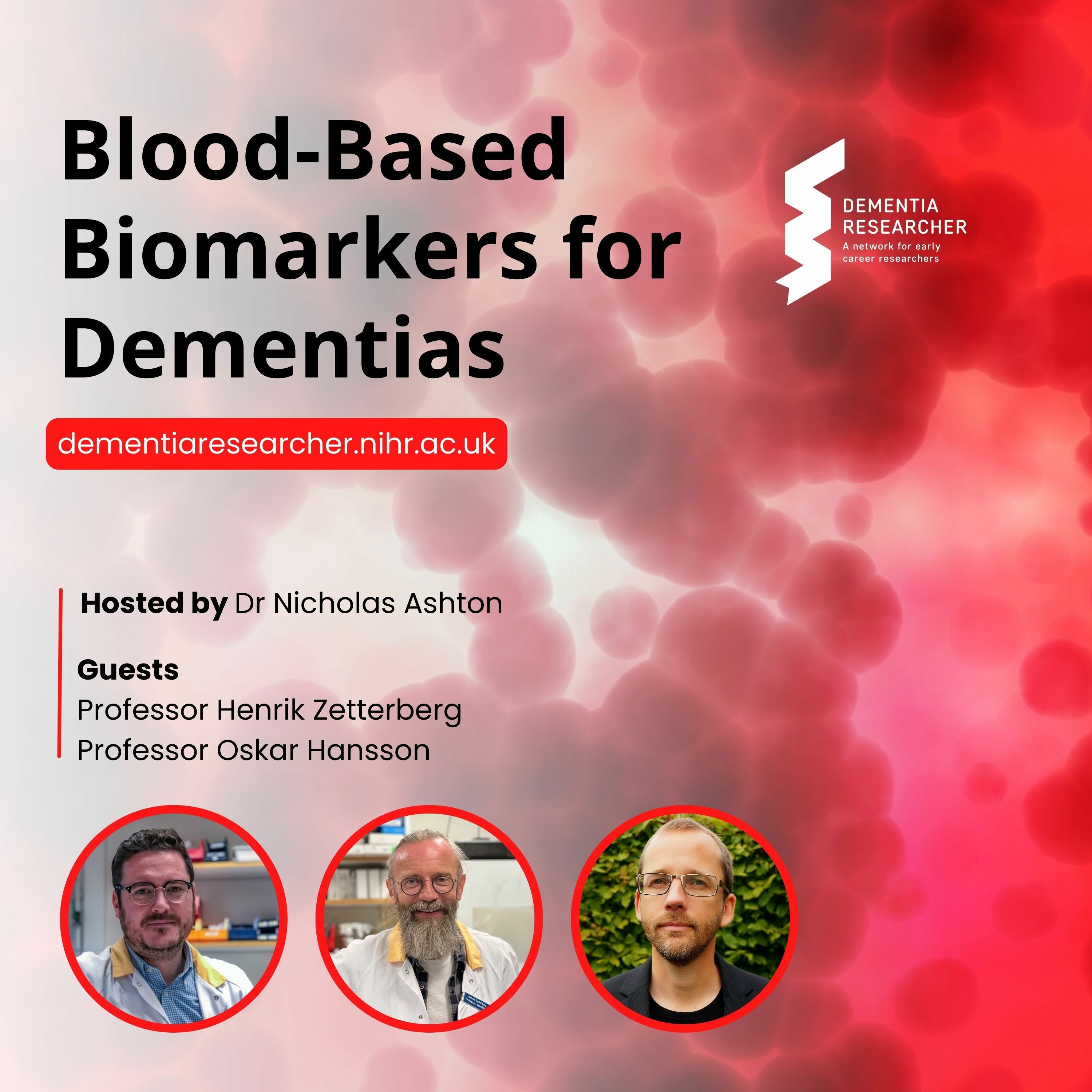
Blood Based Biomarkers for Dementias
from Dementia Researcher Vodcast
Over the past decade, blood-based biomarkers for dementia have been increasingly studied as way to diagnose and track the progress of Alzheimer’s and other neurodegenerative diseases. In this podcast three leading blood-based biomarker pioneers come together to discuss the field, their research and motivations, current challenges and future directions of this field of research (they also reveal a little about themselves as people away from the lab too – find out which if them wants to drive refuse trucks…). In the host chair is Dr Nicholas Ashton, Associate Professor of Neurochemistry from University of Gothenburg and King’s College London. Nicks has more than a decade of experience in biofluid analysis and assay development for Alzheimer’s disease, which ranges from discovery mass spectrometry methods to ultra-sensitive immunoassays. Recently this has produced ultra-sensitive single molecular array (Simoa) assays for phosphorylated tau in blood, which are now widely used in research settings, therapeutics trials and being validated for clinical use. Nick’s guests are: Oskar Hansson, Professor of Neurology & Senior Consultant in Neurology at Lund University in Sweden. Oskar explores fluid and imaging biomarkers for neurodegenerative disorders. His inspiration came at medical school when diagnosing dementias. It became clear to him that we needed to be able to identify these diseases before widespread neurodegeneration and disabling symptoms have already developed. At these early disease stages, we are more likely to substantially slow down or even stop the disease progression by different types of interventions. Henrik Zetterberg, Professor of Neurochemistry, Senior Consultant in Clinical Chemistry, Head of Department at UK Dementia Research Institute at University College London and University of Gothenburg. With a background in molecular biology and medicine, Henrik has have spent the last 15 years developing biomarkers for Alzheimer’s disease and other brain disorders – becoming a world expert in the process. He has published more than 1100 scientific articles and has received numerous awards. If you’re listening to this podcast, you probably already know that Biomarkers are proteins, molecules, or other measurable substances that can provide valuable insight into diagnosing and measuring the progression of a medical condition or disease. For a many years researchers have been exploring the potential of what can discover from blood, to help diagnose Alzheimer’s and other Neurodegenerative diseases. -- A transcript of this show, links and show notes and profile on all our guests are available on our website at https://www.dementiaresearcher.nihr.ac.uk. If you prefer to watch rather than listen, you will find a video version of this podcast on Apple Podcasts, YouTube, and on our website. Leave us a tip: https://dementia-researcher.captivate.fm/support Follow us on social media: https://www.instagram.com/dementia_researcher/ https://www.facebook.com/Dementia.Researcher/ https://www.twitter.com/demrescommunity https://www.linkedin.com/company/dementia-researcher https://bsky.app/profile/dementiaresearcher.bsky.social Download and Register with our Community App: https://www.onelink.to/dementiaresearcher We gratefully acknowledge the support of our funders: Alzheimer’s Association, Race Against Dementia, Alzheimer’s Research UK, Alzheimer’s Society, and the National Institute for Health and Care Research. The views and opinions expressed by guests in this podcast are their own and do not necessarily reflect those of the producers, funders, or sponsors. Subscribe to our sister show 'Dementia Researcher The Blogs': https://podfollow.com/dementia-researcher-blogs
Embed this episode
No transcript yet.