
EPISODE · Jun 5, 2025 · 46 MIN
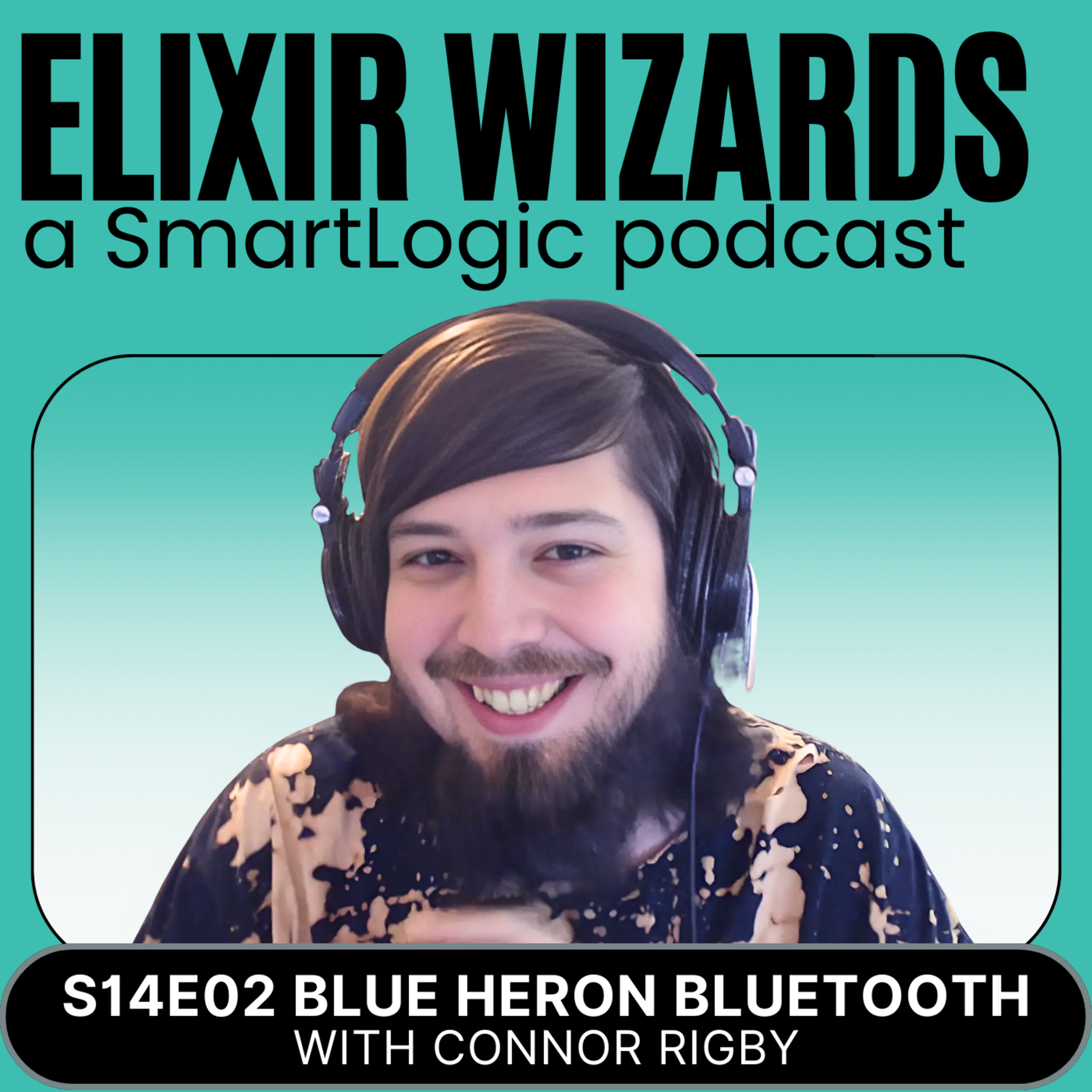
Blue Heron: Bluetooth Low Energy (BLE) for Elixir & Nerves with Connor Rigby
from Elixir Wizards · host SmartLogic LLC
Connor Rigby joins the Elixir Wizards to talk about Blue Heron BLE (Bluetooth Low Energy) support for Elixir apps. Blue Heron implements the BLE specs in pure Elixir, leveraging binary pattern matching and concurrent message processing to handle Bluetooth protocols. Unlike most solutions that require C ports or NIFs, Blue Heron runs entirely in user space, so it works seamlessly in both Nerves-based embedded projects and (eventually) desktop Elixir applications. We discuss how Nerves development differs from building Phoenix apps. Connor shares challenges he's experienced with hardware compatibility, where some chips only partially implement the spec, and he discusses the surprisingly deep (but sometimes incomplete) world of BLE device profiles. His tip for anyone entering the BLE space: read the official spec instead of trusting secondhand blog posts. Tools like Nerves LiveBook give you hands-on examples, so you can get a BLE prototype running on a Raspberry Pi and your phone in no time. Key topics discussed in this episode: Blue Heron origins and “bird” naming convention BLE vs. Bluetooth Classic: core differences Pure Elixir implementation—no C dependencies Binary pattern matching for packet parsing Hardware transport options: UART, SPI, USB, SDIO GenServer patterns in Nerves vs. Phoenix Linux requirement and power-consumption trade-offs GATT (Generic Attribute Table) implementation patterns SQLite integration for Nerves apps Hardware chip quirks and spec compliance Manufacturer-specific commands and workarounds BLE device profiles and spec gaps Security Management Profile (SMP) for encryption Device connection and pairing workflows Web vs. embedded development differences Where to get started: hardware recommendations and docs Links mentioned: https://github.com/ConnorRigby/ https://github.com/blue-heron/ https://nerves-project.org/ BLE (Bluetooth Low Energy) https://en.wikipedia.org/wiki/Bluetooth_Low_Energy https://developer.apple.com/ibeacon/ https://learnyousomeerlang.com/building-otp-applications Linux https://www.linux.org/ HCI (Host Controller Interface) https://en.wikipedia.org/wiki/Host_controller_interface Circuits UART Library https://hexdocs.pm/circuits_uart/readme.html SPI (Serial Peripheral Interface) https://github.com/elixir-circuits/circuits_spi SDIO (Secure Digital Input Output https://en.wikipedia.org/wiki/SDIO Raspberry Pi https://www.raspberrypi.com/ Coral SoM Dev Board https://coral.ai/products/dev-board/ BeagleBone Single-Board Linux Computer https://www.beagleboard.org/boards/beaglebone-black https://www.bluetooth.com/bluetooth-resources/intro-to-bluetooth-gap-gatt/ Genservers https://hexdocs.pm/elixir/1.12/GenServer.html https://hexdocs.pm/ecto/Ecto.html https://github.com/elixir-sqlite/ecto_sqlite3 https://github.com/nerves-livebook/nerves_livebookSpecial Guest: Connor Rigby.
Embed this episode
NOW PLAYING
Blue Heron: Bluetooth Low Energy (BLE) for Elixir & Nerves with Connor Rigby
No transcript for this episode yet
Similar Episodes
No similar episodes found.
Similar Podcasts
No similar podcasts found.