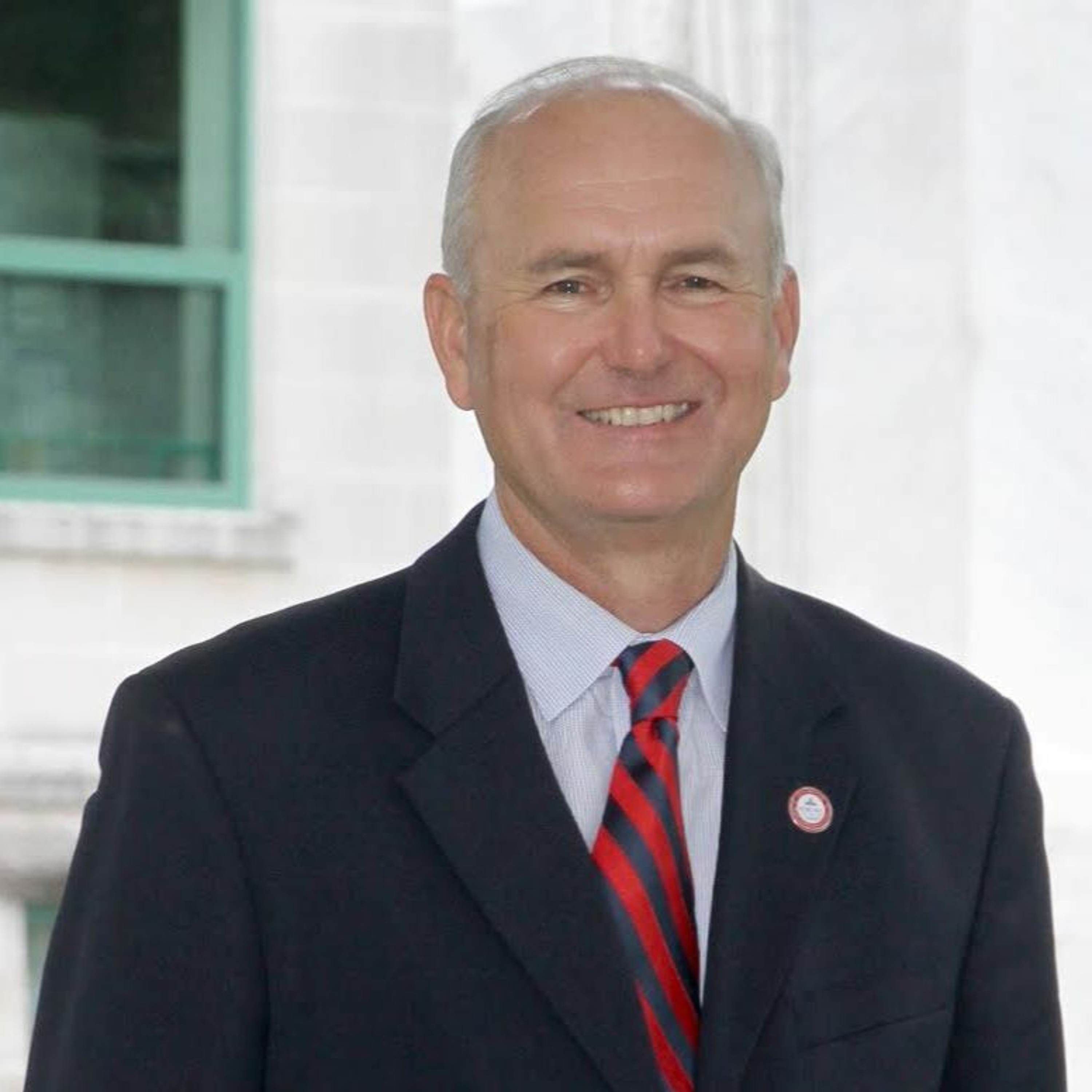
First, I want to thank you for agreeing to do this interview with us, and I'm the deputy editor-in-chief of the newspaper, and I think we should just get started. Okay. So my first question is, what do you see as the biggest problem facing Illinois, and how would you address these problems? Well, without any question, the biggest problem is that today, as you and I are speaking, we have $10 billion of unpaid bills.
Right. And the interest on that is $10 million a day. That's an astronomic deficit to being able to have a budget that makes Illinois whole. So what I recommend that we do is that we take and pay all these bills by a bond program, and we start on a clean slate.
And we put into the FY18 budget, or FY19 budget, the debt interest on those bonds, and we put a principal payment in that budget that pays those bonds down in the term of office that I will serve. And that's how we begin to move the state of Illinois to what I call a solid financial base. We cannot continue down the path that we are on if we are going to improve higher education and better fund it and do what is good for the nature of the state of Illinois by having all these outstanding bills. It's the greatest deficit on not being able to attract people to the state of Illinois, attract business, or to keep students here to go to school.
So that is why I see that as our greatest issue. And that's the most logical way to approach it. I have also laid out a progressive income tax model, and I don't know if you've seen this or not, but it is on my website. And it's a model to review.
I'm not saying that it's perfect, but it's the only model that anybody in the state of Illinois has put out that's got numbers to it. It's a model that I think is adaptable that could generate significant extra revenue, and it closes the loopholes and asks everybody to pay some tax to help Illinois become more financially solvent. Okay. And how long would it be before this model takes place, would you say?
Well, you know, realistically, it's going to be 2021. I'd like to see it FY19. I was asked that question last night. But I don't see the legislature moving forward on a progressive tax model in this session.
You know, I don't mean to talk about other individuals in the race, but Senator Biss continues to say he's been trying to do this since 2010, and he hasn't been very successful. So I don't think it's going to happen in this session as well. Okay? And I think the key thing is, Governor, that's why I put the numbers out there, is because you can't keep talking about it if you're not going to put real numbers to it.
Right. So the significance of my plan is that taxpayers can look at this. The general public can review it. Legislators can review it and say, hey, you know, this is something that's really workable.
This is a competitive tax model with neighboring states. It's less than Wisconsin. It's equal to Missouri. It's less than Kentucky.
You know, people can't say they're going to leave Illinois to go there because our taxes are too high. Okay? Yeah. And that's how I developed the scale.
Okay. And my follow-up questions are two questions. How will this affect the different income levels, and will this impact college students' federal aid in any way? Well, here's what it will do.
No, it will not affect their federal aid in any way. The only thing it could do is it could have college students to pay $250 of income tax because everybody's going to have to pay 1% of the base if you have any earnings. If you have earnings over $2,500, which will be the standard exemption, you're going to owe at least $250 in taxes. Okay.
Okay. And that's fair. I mean, what I am talking about is the real issue in Illinois. And the real issue in Illinois is the reason we have deficit here is we are spending more than we're taking in.
And we have too many people in the state of Illinois that pay no income tax. Zero. And everybody uses the roads, bridges. People want to expand our infrastructure and broadband, which I think is really something that's important that's got to be addressed in the state of Illinois.
We have an aging infrastructure of water lines and sewer lines and utilities, and we have no revenue to begin to fix our municipalities. Okay? Yeah. So I came up with this idea that I believe that we need to also ask the wealthy to pay more, that we have people, and it's not right, that we have got people who make millions of dollars in the state of Illinois that literally pay no income tax because they invest it in offshore investments, which gives them the opportunity to skate through the system and live here tax-free.
And it's not right. It's not right for me. It's not right for any other middle-class person in the state of Illinois. And, you know, the thing that I think is really critical that we ask all gubernatorial candidates on regards to this question, because I fully disclosed my income tax, is how much state income tax did you pay last year?
Right. Okay? And every gubernatorial candidate ought to be able to say how much state income tax they've paid. If they can't answer that question, they're not qualified to become governor.
Okay? I mean, that's pretty basic. Can you answer the question? How much state income tax did you pay last year?
I paid $5,300. Okay? Yeah. So, I mean, if you don't know, you should be aware if you pay state taxes or not.
But that's why we have $10 billion of unpaid bills. And we can't, you know, we talk about free tuition for all college students. How are we ever going to get there if we can't pay our bills? You know, so this is the seriousness of, you know, there's a lot of pie in the sky.
I call them ideas. And there's a reality to the world. And I believe it's all possible. But it starts with getting on solid ground.
And I have a plan to do it. Okay. Thank you. And I'm going to move on to the next question.
Sure. Can you explain what you mean on your website, restructuring categorical funding by demographics and need to allow flexibility in spending? Is this for education? I think so.
It's on your website. Yeah, well, categorical payments are payments like for transportation, special education, title programs, food service programs, and school finance. Okay? Yeah.
So what I recommend that we are able to do is that districts are given greater flexibility in the revenue that they get from the state, that the money is not isolated in silos. Do you get it? Yeah. If you're short on money and you've got plenty of transportation money and you're short on funds to, let's say, bring in an additional special ed teacher, you could do that.
And we have some provisions on one-time transfers already where we're allowing school districts to do this. But we need to empower school districts with the ability to have greater flexibility of their state resources. Okay. And while we're on the topic of education, we here at St.
Xavier care a lot about DREAMers. What ideas can you do to help protect DREAMers, and how do you plan on fighting the national government's threat to remove the DACA program? Well, I consistently say that I'm in support of Illinois being a sanctuary state. Right.
And I believe that we should help every individual who wants to become a citizen of the state of Illinois and a citizen of the United States to achieve that dream. And I will do my diligence to help move citizenship forward for everyone that's affected as governor. And I think that this is something that is part of the problem, is that we're holding back citizenship of individuals that we should be entitling it to. And it's a – I'm going to put it very basic, and that is it's a decision of the individual.
Do you want to become a citizen of the United States? Yes. Well, then let's move forward with citizenship. Let's allow you to become a citizen.
Okay. Great, great. My next question. You have an extensive background in regional planning for residential and business development.
How would you help other communities that are underdeveloped? Well, I would utilize the expertise that I have in economic development by bringing together planners, bringing together individuals who are stakeholders in the community that want to expand business growth and development through leadership initiatives like that I've been part of. The Southwestern Leadership Council, I think, is an excellent model. If you were to go to the Southwestern Leadership Council's website and you look at the nature of the individuals who are involved in that, the movers and the shakers that all collaborate together and their ideas grow on one another and the ideas come forward about how we can do things.
You know, one person can't be, you know, the sole guru. I mean, I was fortunate to be in a capacity where I really was able to facilitate things economically because of a position I was on a county board, the wherewithal I had with budgets. And I also, you know, served as a very powerful position to be chairman of planning and development as far as what I wanted to make sure got pushed through as an agenda item. But that's what you do.
And that's what I would do as governor is bring these stakeholders of these areas together and really target as to what the resources that are needed and, you know, how we can and what we can really do to these economically deprived areas. I'm involved in a project right now in Granite City on redeveloping the downtown. And I opened, I'm just going to tell you this, we opened a Pearson View Testing Center, which is a public-private initiative. Okay, I'm a public entity as a government.
And we brought through there last year over 2,500 individuals that would have never been into that economic region if that one business would not have been operating. Now, you've got to think about 2,500 people coming to an area that would have never came to that area. Now, what did they do? They bought gas.
They bought coffee. They bought a bagel. You know, look at the impact that has on a region's economy. Sales tax, sales, support for local business.
And that's how you do it. I was in Inglewood two weeks ago. I did a Channel 26 sit-down at a coffee shop. A beautiful example of a startup business in an economically deprived part of Chicago.
And, you know, all the time that I was in there, I saw the different people that were coming in there. And that coffee shop was open to operate as a non-for-profit public development that was put out just to improve the economic condition of that neighborhood. And it's stuff like that that local planning groups put forth that really begin to make neighborhoods and communities revived. Yes.
And that's what you have to do. I mean, I could go on and talk about this because I've been involved with this since 2000. I've been doing it, okay? So, you know, I did this and worked on this as part of Team Illinois in 2003 and saw communities that couldn't even sell a gallon of gas to have a quick margin, you know?
And this is what – but it takes effort. It takes work. And that's what my Department of Commerce and Economic Opportunity will do, and my lieutenant governor will spearhead this. Great, great.
Maybe I should go visit that coffee shop in Inglewood. I'm big fan of coffee. It was. It's on 63rd Street, I believe, if I remember.
If you go to my website, okay? It's BobDiver.com. Or let me see. It's on my Facebook page.
Okay, excuse me. Okay. You go to my Facebook page, and you scroll down in the Facebook material that you need to review, and you'll see the interview at the coffee shop from Channel 20 ES6. Okay.
I'll be sure to check that out later. Thank you. Yeah, yeah. How do you plan on addressing gun violence in the state and, more importantly, in the city of Chicago?
Well, you know, the Gun Dealers Licensure Act is paramount that we pass in the state of Illinois because it's going to help us stop illegal trafficking of guns. Right. And we have to give law enforcement the tools, such as what I'm describing, to get this under control because what's happening is this is the trafficking of guns that's making the gun violence continue to grow in our neighborhoods. It's not people that have flight cards.
It's not people that have concealed carry permits. It's all the illegal guns that continue to come in in trunks of cars from Indiana and Missouri and different places that are being sold in our streets. You know? Yeah.
And this is what we do. And then what has to happen is that we need to initiate with our young people what I'm doing in Madison County and that we need to mentor these kids who are at risk to tell them the difference between right and wrong. Yes. Okay?
You know, it's not right to kill somebody. Exactly. Wow, what a statement for a guy running for governor to make. It's not right to kill somebody.
Right. But in the street today, that's why there's so many kids shot. Yeah. I mean, it's like a no – you can say, well, that's a no-brainer.
I mean, I know that. But that's not what goes on in the street. What goes on in the street is that, you know, go wacky. Yeah.
So – and then there's this question that I'm going to ask. Well, who are you? You know, who have you shot? No.
I'm going to show you by. No. No. Well, what's your status?
You know, you've got to at least shot somebody if you want status. Yeah. All the information. Yeah.
Yeah, this is what I'm talking about. So, you know, kids have got to have someone that's mentoring them and telling them, hey, hey, look, this isn't what you want to be. This isn't what you want to grow up to be. You're going to wind up dead just like them before you're 21 years of age.
Yeah. But in the world that we're living in, you know, the idea is when you're 13, if you've got a gun, if they gave you a gun, you're somebody. And when they gave you the gun, you know why they gave it to you? They gave it to you to use.
Yeah. And that's what has to change. And it's hard to talk about it, but I'm talking the truth. It's the truth of power.
We either change the culture or there's only one thing that happens. It gets worse. Yeah. Yeah, exactly.
And it doesn't take millions of dollars to do what I'm talking about. It takes an organized program initiative. And have you heard about my program called Give 30? Yes, I'm pretty sure I have.
Well, Google, if you're really sincere about wanting to understand how we change this, Google Give30.net and read about this mentoring program I began. That I now have nearly 100 corporate people involved in trying to solve juvenile crime in the Metro East. And that's how it's done. Yeah.
Well, since we're on the subject of crime, you call for providing needed support to local law enforcement and first responders to help with crime. Yeah. Do you think this will help people's fear of law enforcement? Well, when I say that, that means training.
Okay? Yeah. I want police officers to be neighborhood friendly. Yes.
I think your best police officer is one who truly understands the neighborhoods in which they are. serving and if there's anything that came out of the ferguson saga when the michael brown shooting took place in st louis was the very fact that uh we did not have a neighborhood friendly police right and that and that police need to be able to communicate in their neighborhoods and understand the issues that are going on and through a non-aggressive approach of of police aggression be able to uh resolve uh these kind of conflicts so uh my whole plan is for citizens to reinvest trust in uh in law enforcement and for law enforcement to develop a a new mentality and an ideology that uh uh under my administration law enforcement will be about helping people right and uh for my final question uh according to federal records illinois ranks among the top 10 states for the amount of industrial air and water pollution releases the environment every year if elected how will you work to improve these conditions well uh you know what's going on is a shame because i don't think it's the administration uh the past administrations have properly adjust uh our environmental control standards yeah uh and that is i mean you can um you know talk a lot about what you're going to do but number one thing environmental control regulations have got to be dealt with in this state that we're just way too lapsed on and that's why currently today we are where we are okay the second thing is yes i and i hear other candidates talking about putting forth better uh clean air policies and upholding the paris cords and and and the rhetoric that goes with that you know i'm very much in favor of lowering carbon emission in the state in any way we possibly can through technological growth innovation i had a great conversation last friday with a um an entrepreneur that's working with a corporation called straight up solar and uh the revolution of i think what you're gonna see with straight up solar the next 10 years is going to be phenomenal and the economics that it's going to bring in in uh new products job growth and um entrepreneurships in businesses uh imagine somebody walking in to uh you know uh you sound like you're a relatively young guy but uh you know uh you're you're the home you buy is going to have a solar photovoltaic panel on it it's going to have a rectifier unit uh in your utility room and it's going to take that solar energy and you're going to be uh lighting your kitchen with it so uh you know you got a rectifier a fuse goes back you'll have to go get one for your photovoltaic panel now you don't have that today do you no but these are the changes that you're going to see uh i say in the next 20 years um and and all those changes like i just described i didn't mean to get so technical in it but that's the true answer is are going to are going to bring about truly the answer to your question lower lower pollutant emissions because of the reduction of the production of energy by fossil fuel burning you you you you