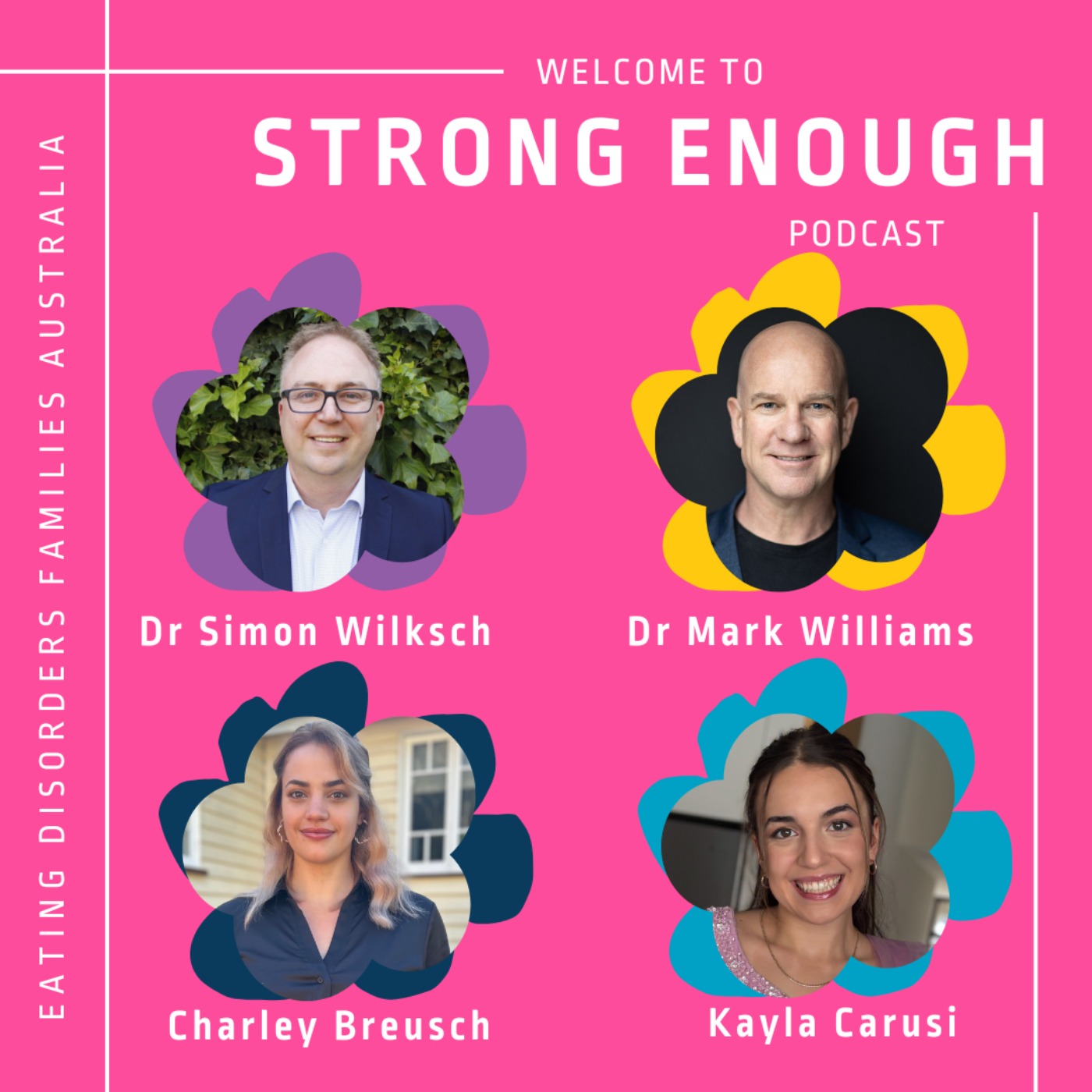
BONUS EP: Social Media Reset episode artwork

EPISODE · Dec 4, 2025 · 1H 11M

BONUS EP: Social Media Reset

from Strong Enough by Eating Disorders Families Australia

In a world first Australia is raising the age of access to social media from 13 to 16.And there are plenty of questions:Why are we changing the age of access to social media?What are the impacts of social media on the brain?Why should parents support the social media ban for teens?How can we help young people with social media withdrawal symptoms?“The current 13 year old minimum age isn’t based on any meaningful development appropriateness for social media. There is not evidence that 13 year olds are in fact ready for social media. The 13 year old minimum came from a law in the US from 1996, which was actually well before smartphones or social media was even fully developed.” – Dr Simon WilkschThis podcast is an edited version of one of EDFA’s live webinar series. It was held just a couple of weeks before the introduction of the social media restrictions.In it we take a closer look at how social media affects the brain, from falling IQ and eating-disorder risk, to what withdrawal can look like when access to social media platforms is restricted. We also hear powerful insights from social media users who’ve been caught up in the algorithms themselves. “We know that when you're on a device you're not socialising, when you're on a device you are not using your working memory in the same way, you're not actually coming up with new ideas or your curiosity and those things are what is really affected in the IQ test as well.” – Dr Mark WilliamsThe panel includes:Dr Simon Wilksch, a leading Australian researcher and psychologist at Advanced Psychology Services. He explains how social media harms mental health, and why these new laws and stronger restrictions really matter, plus has great practical advice about how we can support our young people.Dr Mark Williams, a leading cognitive neuroscientist and author of Screen Smart Children. He’ll unpack how social media is reshaping our brains and how we can reverse some of the damage that been done, not only inside our heads, but to our real life relationships too.We’re also joined by two young women, Kayla Carusi and Charley Breusch, who know firsthand just how powerful and overwhelming social media can be when it comes to disordered eating. These young women share how they believe social media contributed to the development of their eating disorders and also how it hindered their recovery.#edfa#eatingdisordersfamiliesaustralia#socialmediareset#letkidsbekids#socialmediaagerestrictions#socialmediaagechange#socialmediabrain#arfid#eatingdisorders#anorexia#bulimia#eatingdisorderrecovery Hosted on Acast. See acast.com/privacy for more information.

In a world first Australia is raising the age of access to social media from 13 to 16.And there are plenty of questions:Why are we changing the age of access to social media?What are the impacts of social media on the brain?Why should parents support the social media ban for teens?How can we help young people with social media withdrawal symptoms?“The current 13 year old minimum age isn’t based on any meaningful development appropriateness for social media. There is not evidence that 13 year olds are in fact ready for social media. The 13 year old minimum came from a law in the US from 1996, which was actually well before smartphones or social media was even fully developed.” – Dr Simon WilkschThis podcast is an edited version of one of EDFA’s live webinar series. It was held just a couple of weeks before the introduction of the social media restrictions.In it we take a closer look at how social media affects the brain, from falling IQ and eating-disorder risk, to what withdrawal can look like when access to social media platforms is restricted. We also hear powerful insights from social media users who’ve been caught up in the algorithms themselves. “We know that when you're on a device you're not socialising, when you're on a device you are not using your working memory in the same way, you're not actually coming up with new ideas or your curiosity and those things are what is really affected in the IQ test as well.” – Dr Mark WilliamsThe panel includes:Dr Simon Wilksch, a leading Australian researcher and psychologist at Advanced Psychology Services. He explains how social media harms mental health, and why these new laws and stronger restrictions really matter, plus has great practical advice about how we can support our young people.Dr Mark Williams, a leading cognitive neuroscientist and author of Screen Smart Children. He’ll unpack how social media is reshaping our brains and how we can reverse some of the damage that been done, not only inside our heads, but to our real life relationships too.We’re also joined by two young women, Kayla Carusi and Charley Breusch, who know firsthand just how powerful and overwhelming social media can be when it comes to disordered eating. These young women share how they believe social media contributed to the development of their eating disorders and also how it hindered their recovery.#edfa#eatingdisordersfamiliesaustralia#socialmediareset#letkidsbekids#socialmediaagerestrictions#socialmediaagechange#socialmediabrain#arfid#eatingdisorders#anorexia#bulimia#eatingdisorderrecovery Hosted on Acast. See acast.com/privacy for more information.

NOW PLAYING

BONUS EP: Social Media Reset

0:00 1:11:58

No transcript for this episode yet

We transcribe on demand. Request one and we'll notify you when it's ready — usually under 10 minutes.

MG Show MG Show The MG Show, hosted by Jeffrey Pedersen and Shannon Townsend, is a leading alternative media platform dedicated to uncovering the truth behind today’s most pressing political issues. Launched in 2019, the show has grown exponentially, offering unfiltered insights, comprehensive research, and real-time analysis. With a commitment to independent journalism and factual integrity, the MG Show empowers its audience with knowledge and encourages active participation in the political discourse. That Hoarder: Overcome Compulsive Hoarding That Hoarder Hoarding disorder is stigmatised and people who hoard feel vast amounts of shame. This podcast began life as an audio diary, an anonymous outlet for somebody with this weird condition. That Hoarder speaks about her experiences living with compulsive hoarding, she interviews therapists, academics, researchers, children of hoarders, professional organisers and influencers, and she shares insight and tips for others with the problem. Listened to by people who hoard as well as those who love them and those who work with them, Overcome Compulsive Hoarding with That Hoarder aims to shatter the stigma, share the truth and speak openly and honestly to improve lives. Flottengeflüster ALD Automotive Österreich | LeasePlan Beim Flottengeflüster powered by ALD Automotive | LeasePlan präsentieren Jörg Janik und Peter Gutenbrunner alle zwei Wochen spannende Informationen rund um das Thema nachhaltige Mobilität. Beide beschäftigen sich schon lange mit der Thematik und bringen umfangreiches Fachwissen mit. Sollten sie aber doch einmal nicht weiter wissen, werden unsere Expert*innen hinzugezogen, die ihnen gerne mit Rat und Tat zur Seite stehen. The Small Business Startup School – Business Notes | Financial Literacy | Retail Psychology – For Professionals & Entrepreneurs The Small Business Startup School Inc. Starting or buying a small business? While personal circumstances may vary, business patterns remain timeless. On The Small Business Startup School, we explore strategies, insights, and practical solutions to help entrepreneurs confidently navigate their journey.Hosted by Ola Williams—a retail entrepreneur, fintech founder, and financial coach with over two decades of experience—this podcast marries financial awareness and retail psychology with optimism to deliver actionable takeaways.Join us to learn, grow, and connect as we uncover the keys to business success.Let’s continue to learn together and be encouraged to keep on connecting!

Frequently Asked Questions

How long is this episode of Strong Enough by Eating Disorders Families Australia?

This episode is 1 hour and 11 minutes long.

When was this Strong Enough by Eating Disorders Families Australia episode published?

This episode was published on December 4, 2025.

What is this episode about?

In a world first Australia is raising the age of access to social media from 13 to 16.And there are plenty of questions:Why are we changing the age of access to social media?What are the impacts of social media on the brain?Why should parents...

Can I download this Strong Enough by Eating Disorders Families Australia episode?

Yes, you can download this episode by clicking the download button on the episode player, or subscribe to the podcast in your preferred podcast app for automatic downloads.
URL copied to clipboard!