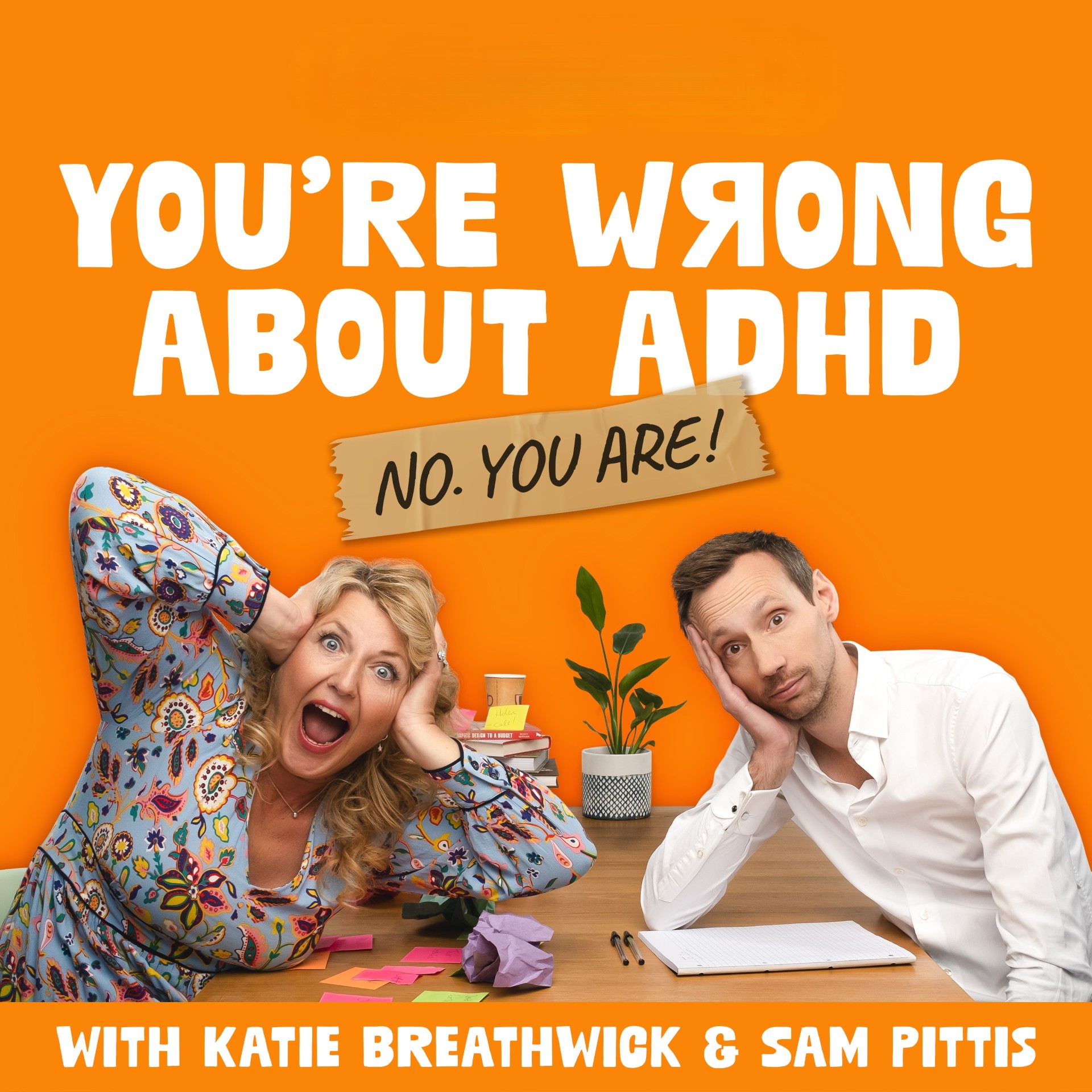
This is a Global Player original podcast. Listen to you and hear you and shut out the light and the noise and everything else and the sensation of my irritating shoes or whatever. But if I twit on my hair, my brain goes calm and quiet and I can look at you and listen to you. When I'm driving, I'm obviously two hands on the wheel, but my bottom fingers, so my little finger and my ring finger, twitch all the time, constantly moving.
So I've got my fingers on the wheel, but my left hand, my ring finger and my little finger are just moving all the time. It's constant movement. And it looks like I've got a sort of claw hand. And it's just, it's just, it sort of helps me to concentrate.
It helps me to focus. It's a sort of nervous energy. It's essentially using some of that nervous energy to give you a bit of a kickstart, isn't it? Dr.
Dean talked about that himself, didn't he, about twisting his leg, about bouncing his leg up and down when he was told not to do it. It meant that he couldn't concentrate. So I mean, that's the sort of positive side of those sensory issues. Obviously, there's a downside as well.
Yeah, there is. And we talked in the episode about, you know, the effects that sensory overwhelm has had on us. But I was not so much surprised, but it just sort of came into clear view what's going on for us when lights or noise are too much. That sense that we are, the adrenaline's running and we're paying attention to everything.
Almost when you get in a stressful situation, that thing that's bothering you, you tune into it. You're focusing on it even more because of the adrenaline. Yeah, and as he said, you then panic. The adrenaline rushes in and that makes it worse.
Yes, you're suddenly, you're more sensorily alert, if that's the phrase, but you can hear it more, you can see it more, you can feel it more. That's the last thing you want. So actually, we need to try really, really hard to be aware, it goes back to awareness again, and to use strategies like breathing or removing ourselves from that situation to make sure we don't get to the state where we have adrenaline running and it's much, much worse. We've talked about fight or flight mode before, about how you get into that panic mode.
But what your body does in that mode is suddenly everything's sort of narrowed into a narrow vision focused on the threat, almost. And that's what's happening. We're getting into this sort of stressed, panicked, defensive situation where our sensations are suddenly going bright. I'm under threat and I'm ready to pounce and I can look at 10 things at once and actually that light, I'm really focusing on it so it's incredibly bright.
Or that noise, hang on a minute, I can hear, you know, extra perception with my hearing because I'm trying to sort of keep away the danger. Actually, there isn't necessarily a danger. And that's the sort of susceptibility of ours to get into fight or flight mode when actually there's no need to because we are using stress hormones all the time. Yeah, and I think, you know, it is about remembering.
That's the difficulty I have in these sorts of situations, is remembering to employ those strategies that we've talked about before. Because by the time you get to that state, I mean, I'm thinking of a really, really silly example I go. I absolutely, I hate, I hate being tickled. I really hate it, really hate it.
I kind of think at this stage in your life there probably aren't too many people who are tickling me, are there? Oh, OK, but there's one element to being tickled that I particularly hate, is having my feet tickled. OK. And my husband finds this hilarious.
Fair enough, fair enough. OK, and it's got to the stage now where he can just give me a look, which by no means I'm going to tickle your feet, that enrages me so much that I will start shouting and swearing at him. I threw a cushion at him across the room the other day and my child came into the room going, will both of you, will both of you grow up because you're being ridiculous? Because it's a form of teasing that, it isn't teasing, it doesn't feel like gentle teasing to me, it feels like bullying, because he knows that I will kick off and I did and I do every time.
It's only about tickling, but even the world makes me want to just clench my fists. It's a wonderful window into your home life. But yes, there's something that you... But it is, I hate being tickled.
Yeah, that's something that you really, really dislike. Yeah, and that upsets me, it's more than that, it's more than dislike, it upsets me. This is what I was trying to explain to him the other day, it's not funny, I don't find it funny, he thinks it's hilarious, it isn't hilarious to me, it's more than that. It's like, you know, somebody who's scared of spiders, it's like putting a spider down their shirt, for me.
And it's a difficulty that I have and I need a little bit more understanding. And that's totally understandable, I find it really difficult to be in noisy, busy environments and I hate being too hot and not having a chance to be able to cool off. I'd much rather be cold than hot. And something we talked to Dr Sadiq about was that quite often it's because there are other things going on under the surface for me.
So that sort of sensation is too much, but that's actually because I'm bottling up lots of other stuff inside and I've maybe been paying attention to too many things at once and I'm starting to get overwhelmed because essentially I'm getting burnt out. And what I was going to say, in relation to what you said, is what I started to learn is sometimes those sensory issues can actually be acute. So sometimes if I come down on a, I don't know, Saturday morning, Sunday morning, coming to the house and suddenly the children are extra loud and somebody's tapping on the table I can hear extra loud, I can go, hang on a minute, something's not right, and I can say, I'm really tired, I'm really tired and I'm really stressed about something, you know, whatever it is, okay, I'm going to have to manage this today, I'm going to have to take myself out of the situation or I'm going to have to have five minutes, I'm going to have to do whatever I need to do to keep myself calm. So sometimes being aware so you avoid those situations is fantastic.
So for example saying, do you know what, tickling, I really, really dislike it and it's really unpleasant and it's not going, can we not do it? That's one thing. The other thing is to say, when you get in a situation where something seems like it's about to overwhelm you, go, hang on a minute, if I feel like this, there must be something else going on inside me. And that's what you do, what I've learned to do is body checking, where you go, okay, how does my body feel?
And quite often I will say, do you know what, I'm holding my breath, do you know what, I'm clenching my jaw, I didn't really realise it, but I'm holding my jaw really tight, clenching it, I'm really stressed and I need to just relax, I need to recognise that I'm going to be on a short fuse today. So that can be quite a useful cue to avoid this answer. Yeah, I can see that, I can see that. And, you know, it comes back to what Dr.
Sadiq talked about and what we talk about all the time, which is awareness. It's about, you know, if you know you have ADHD or you suspect you have ADHD and you're awaiting your diagnosis, if you have that sense of self-knowledge and you can explore it, you can begin to understand your triggers and the things that upset you and the things that cause you problems. And you can begin to either avoid them or to find ways to deal with them. That's everything from us for today and this series of You're Wrong About ADHD.
But don't worry, we'll be back soon with series four with more brilliant guests, lots more fascinating topics to explore. Make sure you're following the podcast so you'll be the first to know when the new series comes out. You can also find us on Instagram at you'rewrongaboutadhd and on TikTok at, let me just get this right, at ywaadhd.com. And don't forget, you can listen and subscribe to You're Wrong About ADHD on Global Player or wherever you go.
Thanks for listening. I'll see you in series four. This is a Global Player original podcast.