PodParley PodParley

Border Trilogy Part 3: What Remains

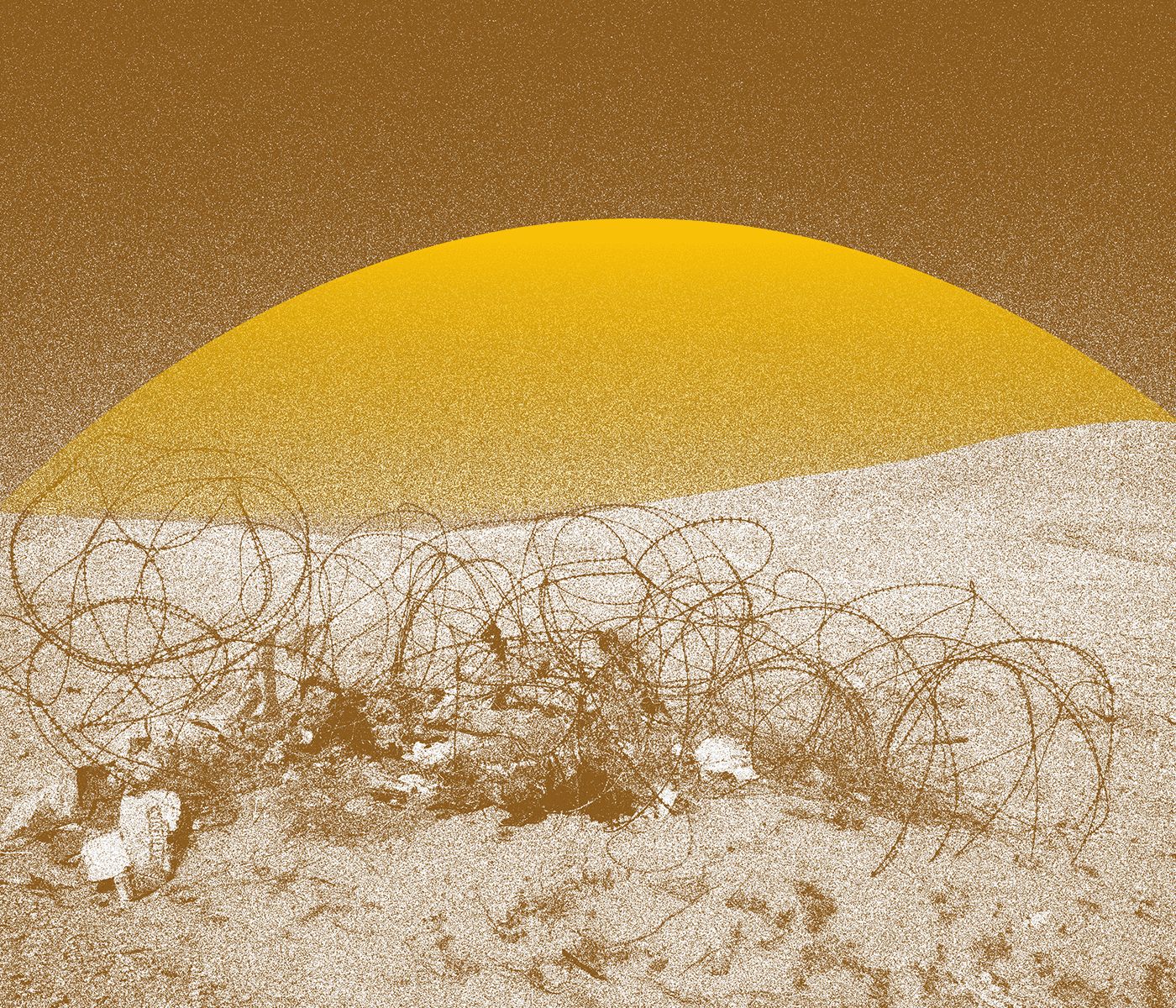
While scouring the Sonoran Desert for objects left behind by migrants crossing into the United States, anthropologist Jason De León happened upon something he didn't expect to get left behind: a human arm, stripped of flesh. This macabre discovery sent him reeling, needing to know what exactly happened to the body, and how many migrants die that way in the wilderness. In researching border-crosser deaths in the Arizona desert, he noticed something surprising. Sometime in the late-1990s, the number of migrant deaths shot up dramatically and have stayed high since. Jason traced this increase to a Border Patrol policy still in effect, called “Prevention Through Deterrence.” First aired in 2018 and over three episodes, Radiolab investigates this policy, its surprising origins, and the people whose lives were changed forever because of it. Part 3: What Remains  The third episode in our Border Trilogy follows anthropologist Jason De León after he makes a grisly discovery in Arivaca, Arizona. In the middle of carrying out his pig experiments with his students, Jason finds the body of a 30-year-old female migrant. With the help of the medical examiner and some local humanitarian groups, Jason discovers her identity. Her name was Maricela. Jason then connects with her family, including her brother-in-law, who survived his own harrowing journey through Central America and the Arizona desert. With the human cost of Prevention Through Deterrence weighing on our minds, we try to parse what drives migrants like Maricela to cross through such deadly terrain, and what, if anything, could deter them. Special thanks to Carlo Albán, Sandra Lopez-Monsalve, Chava Gourarie, Lynn M. Morgan, Mike Wells and Tom Barry.CORRECTION: An earlier version of this episode, when it originally aired, incorrectly stated that a person's gender can be identified from bone remains. We've adjusted the audio to say that a person's sex can be identified from bone remains. CITATIONS: Books:Jason De Léon’s book The Land of Open Graves (https://zpr.io/vZbTarDzGQWK) Timothy Dunn’s book Blockading the Border and Human Rights (https://zpr.io/VTPWNJPusaCn)Joseph Nevin's book, Operation Gatekeeper (https://zpr.io/UTnHFzRstAEw)Articles:Rubio-Goldsmith, Raquel, Melissa McCormick, Daniel Martinez, and Inez Duarte. 2006. “The ‘Funnel Effect’ & Recovered Bodies of Unauthorized Migrants Processed by the Pima County Office of the Medical Examiner, 1990-2005.” (https://zpr.io/R3wSpyVCXQhJ) SSRN Electronic Journal.Check out more of Caitlin Dickerson's reporting for The Atlantic (https://zpr.io/GAfC2nfEaBeK). Our newsletter comes out every Wednesday. It includes short essays, recommendations, and details about other ways to interact with the show. Sign up (https://radiolab.org/newsletter)! Radiolab is supported by listeners like you. Support Radiolab by becoming a member of The Lab (https://members.radiolab.org/) today. Follow our show on Instagram, Twitter and Facebook @radiolab, and share your thoughts with us by emailing [email protected]. Leadership support for Radiolab’s science programming is provided by the Gordon and Betty Moore Foundation, Science Sandbox, a Simons Foundation Initiative, and the John Templeton Foundation. Foundational support for Radiolab was provided by the Alfred P. Sloan Foundation.

Episode 547 of the Radiolab podcast, hosted by WNYC Studios, titled "Border Trilogy Part 3: What Remains" was published on October 27, 2023 and runs 60 minutes.

October 27, 2023 ·60m · Radiolab

0:00 / 0:00

While scouring the Sonoran Desert for objects left behind by migrants crossing into the United States, anthropologist Jason De León happened upon something he didn't expect to get left behind: a human arm, stripped of flesh. This macabre discovery sent him reeling, needing to know what exactly happened to the body, and how many migrants die that way in the wilderness. In researching border-crosser deaths in the Arizona desert, he noticed something surprising. Sometime in the late-1990s, the number of migrant deaths shot up dramatically and have stayed high since. Jason traced this increase to a Border Patrol policy still in effect, called “Prevention Through Deterrence.” First aired in 2018 and over three episodes, Radiolab investigates this policy, its surprising origins, and the people whose lives were changed forever because of it. Part 3: What Remains  The third episode in our Border Trilogy follows anthropologist Jason De León after he makes a grisly discovery in Arivaca, Arizona. In the middle of carrying out his pig experiments with his students, Jason finds the body of a 30-year-old female migrant. With the help of the medical examiner and some local humanitarian groups, Jason discovers her identity. Her name was Maricela. Jason then connects with her family, including her brother-in-law, who survived his own harrowing journey through Central America and the Arizona desert. With the human cost of Prevention Through Deterrence weighing on our minds, we try to parse what drives migrants like Maricela to cross through such deadly terrain, and what, if anything, could deter them. Special thanks to Carlo Albán, Sandra Lopez-Monsalve, Chava Gourarie, Lynn M. Morgan, Mike Wells and Tom Barry.CORRECTION: An earlier version of this episode, when it originally aired, incorrectly stated that a person's gender can be identified from bone remains. We've adjusted the audio to say that a person's sex can be identified from bone remains. CITATIONS: Books:Jason De Léon’s book The Land of Open Graves (https://zpr.io/vZbTarDzGQWK) Timothy Dunn’s book Blockading the Border and Human Rights (https://zpr.io/VTPWNJPusaCn)Joseph Nevin's book, Operation Gatekeeper (https://zpr.io/UTnHFzRstAEw)Articles:Rubio-Goldsmith, Raquel, Melissa McCormick, Daniel Martinez, and Inez Duarte. 2006. “The ‘Funnel Effect’ & Recovered Bodies of Unauthorized Migrants Processed by the Pima County Office of the Medical Examiner, 1990-2005.” (https://zpr.io/R3wSpyVCXQhJ) SSRN Electronic Journal.Check out more of Caitlin Dickerson's reporting for The Atlantic (https://zpr.io/GAfC2nfEaBeK). Our newsletter comes out every Wednesday. It includes short essays, recommendations, and details about other ways to interact with the show. Sign up (https://radiolab.org/newsletter)! Radiolab is supported by listeners like you. Support Radiolab by becoming a member of The Lab (https://members.radiolab.org/) today. Follow our show on Instagram, Twitter and Facebook @radiolab, and share your thoughts with us by emailing [email protected]. Leadership support for Radiolab’s science programming is provided by the Gordon and Betty Moore Foundation, Science Sandbox, a Simons Foundation Initiative, and the John Templeton Foundation. Foundational support for Radiolab was provided by the Alfred P. Sloan Foundation.

While scouring the Sonoran Desert for objects left behind by migrants crossing into the United States, anthropologist Jason De León happened upon something he didn't expect to get left behind: a human arm, stripped of flesh.

This macabre discovery sent him reeling, needing to know what exactly happened to the body, and how many migrants die that way in the wilderness. In researching border-crosser deaths in the Arizona desert, he noticed something surprising. Sometime in the late-1990s, the number of migrant deaths shot up dramatically and have stayed high since. Jason traced this increase to a Border Patrol policy still in effect, called “Prevention Through Deterrence.”

First aired in 2018 and over three episodes, Radiolab investigates this policy, its surprising origins, and the people whose lives were changed forever because of it.

Part 3: What Remains 

The third episode in our Border Trilogy follows anthropologist Jason De León after he makes a grisly discovery in Arivaca, Arizona. In the middle of carrying out his pig experiments with his students, Jason finds the body of a 30-year-old female migrant. With the help of the medical examiner and some local humanitarian groups, Jason discovers her identity. Her name was Maricela. Jason then connects with her family, including her brother-in-law, who survived his own harrowing journey through Central America and the Arizona desert.

With the human cost of Prevention Through Deterrence weighing on our minds, we try to parse what drives migrants like Maricela to cross through such deadly terrain, and what, if anything, could deter them.

Special thanks to Carlo Albán, Sandra Lopez-Monsalve, Chava Gourarie, Lynn M. Morgan, Mike Wells and Tom Barry.CORRECTION: An earlier version of this episode, when it originally aired, incorrectly stated that a person's gender can be identified from bone remains. We've adjusted the audio to say that a person's sex can be identified from bone remains.

CITATIONS:

Books:Jason De Léon’s book The Land of Open Graves (https://zpr.io/vZbTarDzGQWK) Timothy Dunn’s book Blockading the Border and Human Rights (https://zpr.io/VTPWNJPusaCn)Joseph Nevin's book, Operation Gatekeeper (https://zpr.io/UTnHFzRstAEw)Articles:Rubio-Goldsmith, Raquel, Melissa McCormick, Daniel Martinez, and Inez Duarte. 2006. “The ‘Funnel Effect’ & Recovered Bodies of Unauthorized Migrants Processed by the Pima County Office of the Medical Examiner, 1990-2005.” (https://zpr.io/R3wSpyVCXQhJ) SSRN Electronic Journal.Check out more of Caitlin Dickerson's reporting for The Atlantic (https://zpr.io/GAfC2nfEaBeK).

Our newsletter comes out every Wednesday. It includes short essays, recommendations, and details about other ways to interact with the show. Sign up (https://radiolab.org/newsletter)!

Radiolab is supported by listeners like you. Support Radiolab by becoming a member of The Lab (https://members.radiolab.org/) today.

Follow our show on Instagram, Twitter and Facebook @radiolab, and share your thoughts with us by emailing [email protected].

Leadership support for Radiolab’s science programming is provided by the Gordon and Betty Moore Foundation, Science Sandbox, a Simons Foundation Initiative, and the John Templeton Foundation. Foundational support for Radiolab was provided by the Alfred P. Sloan Foundation.

The Vanishing of Harry Pace (Radiolab) WNYC Studios From the creators of Dolly Parton's America, Jad Abumrad and Shima Oliaee, comes a new series produced in collaboration with author Kiese Laymon, scholar Imani Perry, writer Cord Jefferson, WQXR’s Terrance McKnight, and WNYC's Jami Floyd. Based on the book Black Swan Blues: the Hard Rise and Brutal Fall of America’s First Black Owned Record Label by Paul Slade.It was Motown before Motown, FUBU before FUBU: Black Swan Records. The label founded 100 years ago by Harry Pace. Pace launched the career of Ethel Waters, inadvertently invented the term rock n roll, played an important role in W.C. Handy becoming "Father of the Blues," inspired Ebony and Jet magazines, and helped desegregate the South Side of Chicago in an epic Supreme Court battle. Then, he disappeared.  The Vanishing of Harry Pace is a series about the phenomenal but forgotten man who changed America. It's a story about betrayal, family, hidden identities, and a time like no other. Note to Self WNYC Studios Is your phone watching you? Can texting make you smarter? Are your kids real? Note to Self explores these and other essential quandaries facing anyone trying to preserve their humanity in the digital age. WNYC Studios is a listener-supported producer of other leading podcasts, including Radiolab, Death, Sex & Money, Snap Judgment, Here’s the Thing with Alec Baldwin, Nancy and many others.© WNYC Studios RadioLacan.com |Radio Lacan en el VII ENAPOL RadioLacan.com es el sitio de audios y conferencias de la Asociación Mundial de Psicoanálisis. RadioLacan.com |#LacanianosxElMundo: Ginebra. Entrevista a Sofía Guaraguara Comenzamos una serie de entrevistas a los colegas que por distintos motivos han dejado su país de origen y han decidido ejercer el psicoanálisis en otro país, en otra lengua, para que nos cuenten sobre lo que esto implica para cada uno y lo interesante de cómo hacer florecer el psicoanálisis en el mundo. En esta oportunidad Liliana Mauas entrevista a Sofía Guaraguara.
URL copied to clipboard!